Quick FactsOverview
About Rainbow Hot Springs
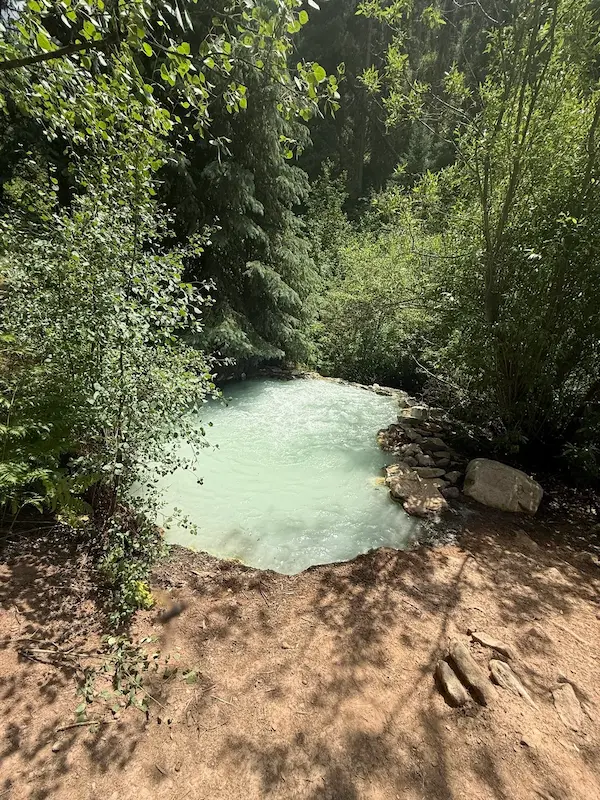
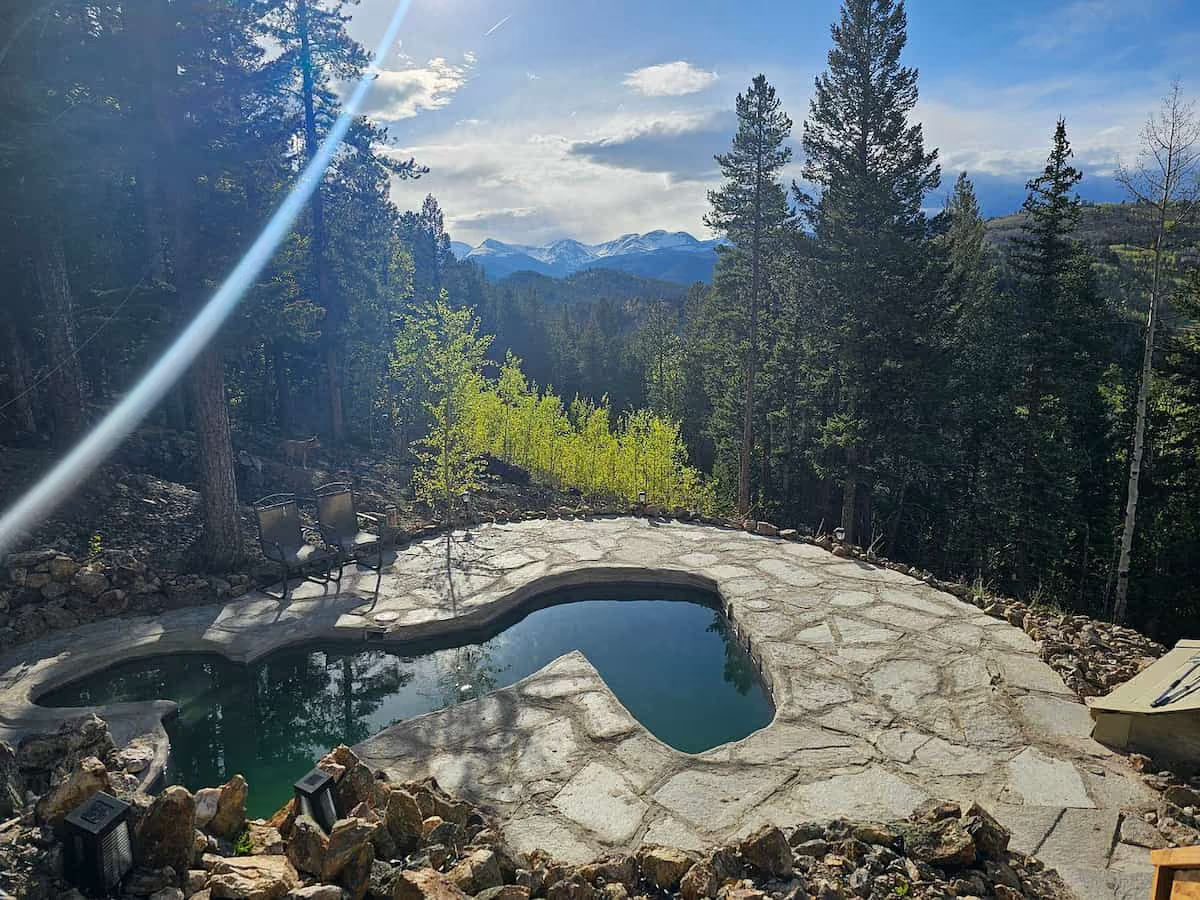
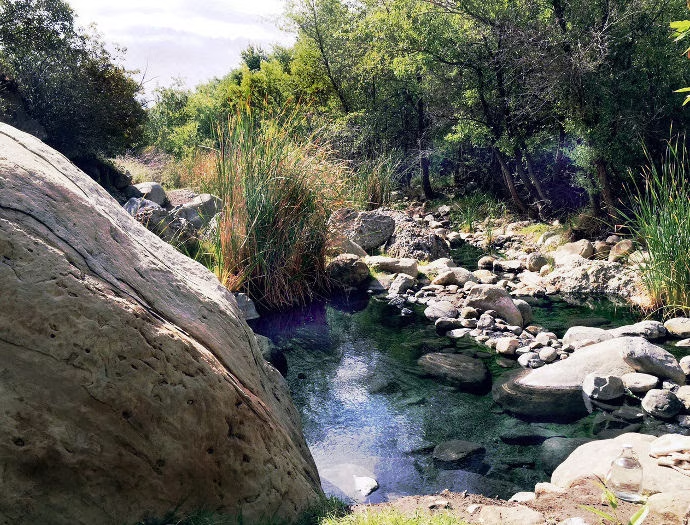
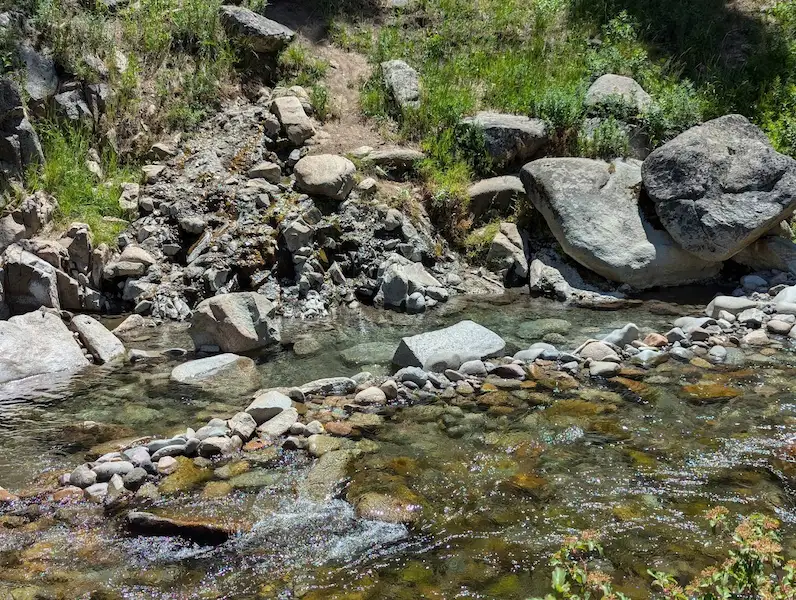
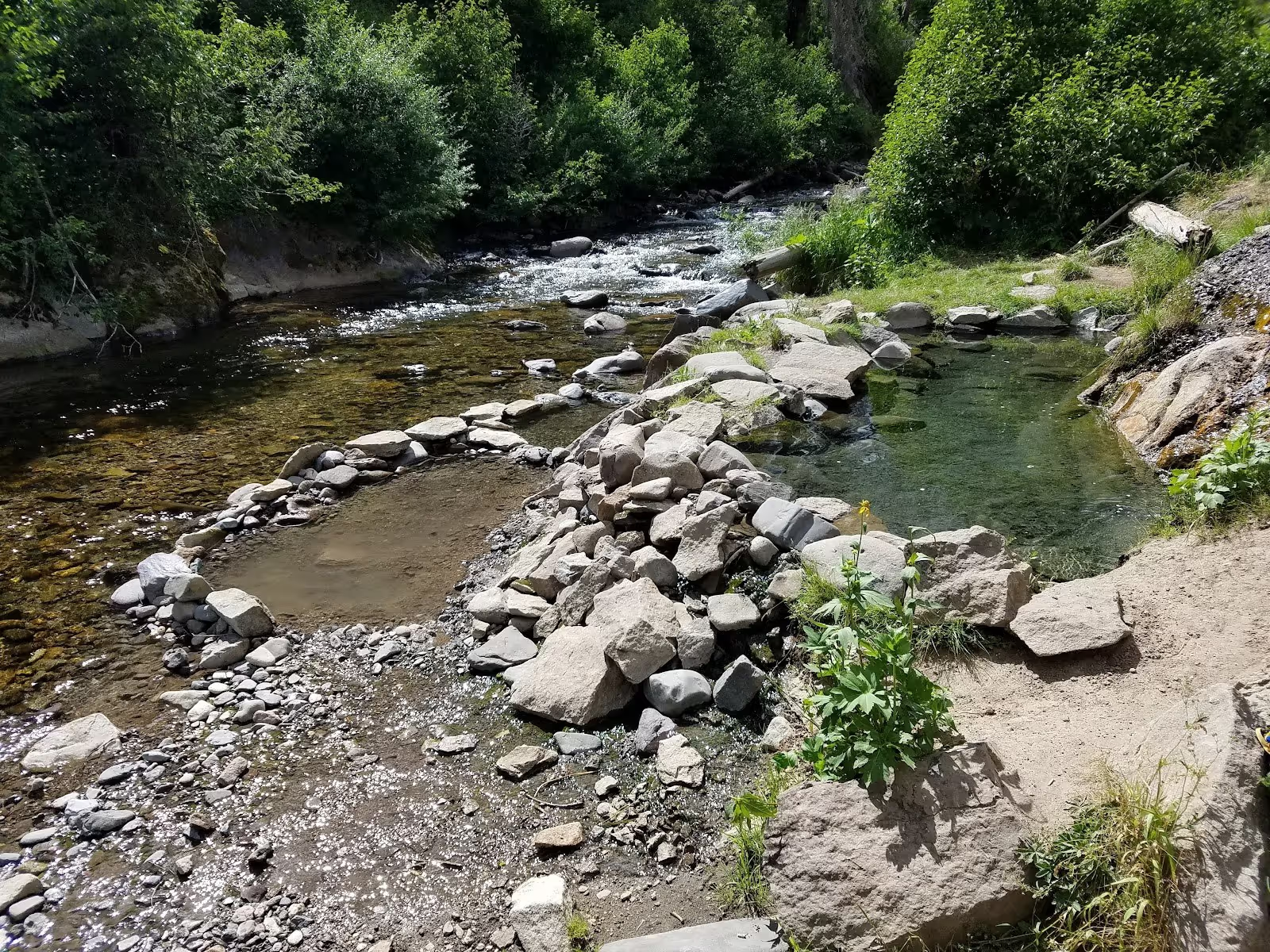
Rainbow Hot Springs, Colorado are free primitive mineral pools in the Weminuche Wilderness near Pagosa Springs, in the San Juan National Forest. Two rock-lined pools sit along the West Fork of the San Juan River, accessed via a 4.5 to 5 mile hike along West Fork Trail (Trail 561). Pool temperatures range from 95 to 105 degrees Fahrenheit. The lower pool is approximately 20 feet by 8 feet and holds 6 to 10 people. No facilities exist on site. Seasonal access from late spring through early fall. Clothing is optional.
The Weminuche Wilderness, Colorado's largest wilderness area at nearly 500,000 acres, prohibits motorized and mechanized vehicles. The springs sit at approximately 9,000 feet elevation. Nine designated backcountry campsites along the trail operate first-come, first-served. Maximum group size is 15 people. The trail crosses the West Fork on three bridges and gains about 1,000 feet of elevation.
Rainbow Hot Springs are among the more demanding free hot springs in Colorado, consistently cited for their wilderness setting and relative solitude. Best visited mid-summer through early October when the river is lower and trails are snow-free.
Location & Access
Getting to Rainbow Hot Springs
From Pagosa Springs, drive northeast on US-160 approximately 16 miles toward Wolf Creek Pass. Look for the signed turnoff for West Fork Campground on the left (west) side of the highway, just before Treasure Falls. Turn onto West Fork Campground Road (CR 648) and follow it approximately 7 miles to the West Fork Trailhead. Follow signs for West Fork Campground, not CR 648A or 648B. Seasonal road closures may add up to a mile to the hike from the road closure point.
Hike West Fork Trail 561 approximately 4.5 to 5 miles to the springs. The trail passes private residences for the first 0.2 miles, then enters the Weminuche Wilderness at 2.36 miles and crosses three bridges over the West Fork. At approximately 4 miles the trail enters an open area with campsites. Descend steeply toward the river on the left to reach the pools. The hot springs can be hard to locate on a first visit; look for fire rings near the river as landmarks.
No cell service is available on CR 648 or at the trailhead. Download an offline map before leaving Pagosa Springs. Trailhead parking fills on summer weekends; arrive early. Frequent afternoon thunderstorms in summer mean planning to be off exposed sections by midday is important.
Suitability & Accessibility
Who Rainbow Hot Springs Suits
Rainbow Hot Springs suits fit adults and experienced hikers comfortable with a 9 to 10 mile round-trip hike at high elevation with 1,000 feet of elevation gain and river crossings. The trail is rated moderate and involves varied terrain including forest, creek crossings on bridges, exposed sections, and a steep final descent to the pools. The hike alone takes 3 to 5 hours each way at a normal pace. This is not suitable for young children, beginners, or those not accustomed to hiking at 9,000 feet. Overnight backpackers use the designated campsites along the trail for a more relaxed experience.
The Weminuche Wilderness setting and the 4.5-mile hike requirement filter out casual visitors, making Rainbow typically quieter than shorter-access hot springs in the Pagosa Springs area. Clothing is optional throughout and is a common practice. Dogs are permitted but must be managed carefully around river crossings and wildlife, and kept under control near other visitors at the springs. Bears are present in the Weminuche Wilderness; food storage must follow wilderness regulations.
The best window for a visit is mid-July through early October, after spring snowmelt subsides and trail conditions stabilize. Before mid-July, the river and some trail sections can be heavily affected by snowmelt. Afternoon thunderstorms are frequent in summer and the trail includes exposed sections; early starts are important. This is one of the most rewarding wilderness hot spring experiences in Colorado for those prepared for the commitment.
Safety & Etiquette
Rainbow Hot Springs Safety Tips
Rainbow Hot Springs is a remote wilderness destination with no facilities, no cell service, and no rescue infrastructure. Self-sufficiency is essential. The 4.5-mile hike at around 9,000 feet is moderate but sustained; visitors from lower elevations should acclimatize and carry significantly more water than expected. The return hike is uphill and more demanding than the approach.
River crossings along West Fork Trail are spanned by three maintained bridges, but the West Fork runs fast and cold in spring and early summer. During high water the trail may be impassable. Visit from mid-July onward for reliable access. The steep descent to the pool requires care when wet. Pool temperatures of 95 to 105 degrees combined with altitude and exertion elevate dehydration risk; drink water consistently throughout the day.
Bears are active in the Weminuche Wilderness. Store all food in bear canisters or hang it at least 200 feet from camp and the springs. Do not leave food unattended. A bear canister is strongly recommended for overnight trips. Group size is limited to 15 people. No campfires within 200 feet of water or the springs.
Afternoon thunderstorms are frequent in summer; plan to complete exposed trail sections before noon. Download an offline map before departing Pagosa Springs and inform someone of your plans and expected return time. Nearest emergency services are in Pagosa Springs, approximately 23 miles by road from the trailhead. People with cardiovascular conditions, high or low blood pressure, or pregnancy should consult a physician before soaking at elevation in pools above 100 degrees Fahrenheit.