
Quick FactsOverview
About Rajgir Hot Springs (Brahmakund)
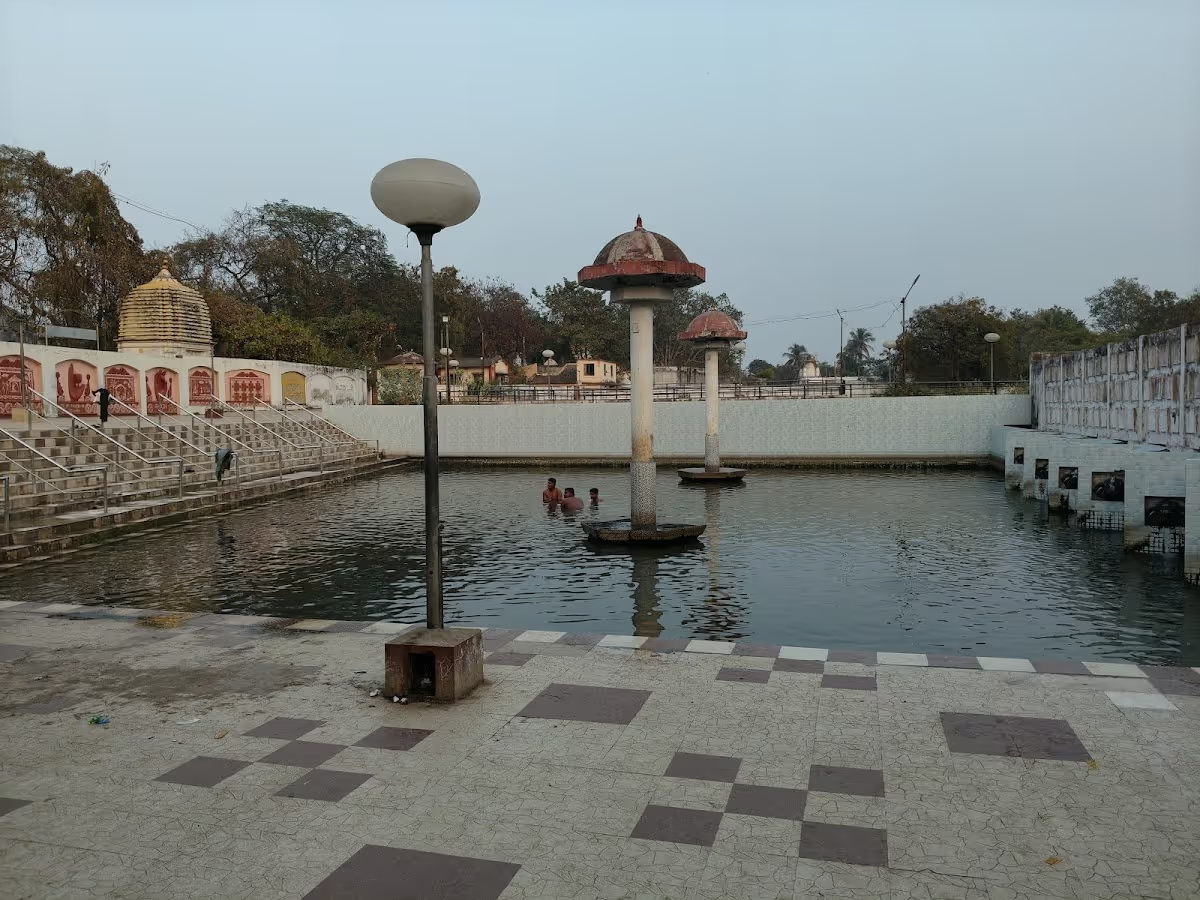
Rajgir Hot Springs (Brahmakund), India is a cluster of geothermal springs at the foot of Vaibhargiri Hill in the ancient city of Rajgir, Nalanda district, Bihar, approximately 100 kilometres from Patna. Seven hot streams known as the Saptadhara flow down from the Saptaparni Caves in the hills to feed a series of kunds, or bathing pools, at the base. The main pool, Brahmakund, is the hottest at around 45 degrees Celsius and is regarded as the most sacred. Entry to the springs is free.
The site holds significance for three faiths. Hindu pilgrims come to bathe for spiritual purification. Buddhists associate the springs with Gautam Buddha, who is said to have bathed here during his time in Rajgir. Jains connect the site with Mahavira, who also spent time in the area. The kunds sit within a complex of temples dedicated to various Hindu deities, and the atmosphere throughout the day is devotional.
The bathing facilities channel hot spring water into stepped kunds, with separate areas for men and women. The springs are open year-round. Rajgir itself is a major pilgrimage and archaeological town in Bihar, and the hot springs are one of several attractions including the Vishwa Shanti Stupa and the Rajgir Ropeway.
Location & Access
Getting to Rajgir Hot Springs (Brahmakund)
Rajgir Hot Springs (Brahmakund) is located at the base of Vaibhargiri Hill in Rajgir, approximately 3 kilometres from Rajgir Railway Station and accessible by road without any hiking. The springs are situated near Pandu Pokhar and are well-signposted within the town. Auto-rickshaws and cycle-rickshaws from the railway station or the main bus stand are the most common way to reach the site within Rajgir.
Rajgir is connected to Patna, approximately 100 kilometres away, by road and rail. Trains run regularly between Patna and Rajgir, with the journey taking roughly two to three hours. Bus services also connect Rajgir to Patna, Gaya, Nalanda, and other nearby towns. The nearest major airport is Lok Nayak Jayaprakash Airport in Patna, approximately 101 kilometres from Rajgir. From there, visitors can take a taxi, bus, or train to Rajgir.
For visitors looking for hot springs near Patna, Rajgir is the most historically significant option in Bihar, and the combined attractions of the town make it a natural destination for a full-day or overnight trip. The road from Nalanda to Rajgir passes the Nalanda ruins site, which many visitors combine with a stop at the springs. Parking is available near the springs for those arriving by private vehicle or hired taxi.
Suitability & Accessibility
Who Should Visit Rajgir Hot Springs (Brahmakund)
Rajgir Hot Springs (Brahmakund) suits pilgrims, history enthusiasts, and general tourists comfortable with a busy, devotional atmosphere and basic facilities. The site is road-accessible, free to enter, and requires no physical exertion beyond the short walk from the parking area to the kund steps. It is one of the most accessible hot springs in India from a major city, and is appropriate for families with children and older adults.
Visitors should be prepared for a public bathing environment managed as a religious site rather than a leisure facility. Changing rooms and washrooms are available but may be limited in cleanliness and privacy during busy periods. Children should be supervised at the water edge, as the steps down to the main Brahmakund can be slippery from continuous water flow.
Those seeking natural hot springs in India with historical depth will find Rajgir uniquely compelling, as the springs can be visited alongside the Rajgir Hills, the Vishwa Shanti Stupa, and the nearby Nalanda ruins within a single trip. The best time to visit is October through March, when Bihar temperatures are cooler and soaking in warm mineral water is most comfortable. The site is busiest during major Hindu festivals and winter pilgrim season, when very large crowds gather.
Safety & Etiquette
Rajgir Hot Springs (Brahmakund) Safety Tips
Rajgir Hot Springs (Brahmakund) is generally safe to visit, though the Brahmakund pool reaches around 45 degrees Celsius and can be uncomfortably hot for some visitors. Testing the water temperature before entering fully is advisable, particularly in sections close to the spring inflows. No lifeguard is present, and the stepped concrete edges leading to the kunds can be wet and slippery. Careful footing on the steps is recommended at all times.
The site operates as a religious bathing complex. Visitors are expected to behave respectfully, dress modestly, and be mindful of pilgrims for whom this is a sacred act. Soap and shampoo are not permitted in the main Brahmakund, though separate washing kunds are available nearby. Photography inside the bathing areas may be restricted and should not be assumed to be permitted.
The springs can be very crowded during major Hindu festivals and winter weekends. Pickpocketing risk is higher in dense crowds, so valuables should be secured before entering the bathing area. The water has sulfur and mineral content that may irritate open wounds or sensitive skin; those with skin conditions should limit time in the water.
The Bihar plains have a hot climate from April through September. Summer heat at the open-air kunds can be intense and visiting in peak summer requires adequate water and sun protection. The site is most pleasant from October through February when temperatures are mild and the combination of cooler air and warm spring water is most agreeable.