
Quick FactsOverview
About Ramsay Hot Spring
Ramsay Hot Spring, Canada, also known as Ramsay Hot Springs and Hot Springs Cove, is a natural hot spring in Maquinna Marine Provincial Park on the west coast of Vancouver Island, British Columbia, approximately 35 kilometres northwest of Tofino. The spring is also known by the Nuu-chah-nulth name Mux̣šiƛa, meaning steaming from rock. It is within Clayoquot Sound in the traditional territory of the Ahousaht First Nation. The park is accessible only by boat or float plane from Tofino and other coastal communities.
The thermal water emerges at approximately 50 degrees Celsius and has a faint sulphur smell. It flows down a waterfall and into six rocky natural intertidal pools, each progressively cooler as the water moves toward the ocean and mixes with seawater. The pools are at sea level and are influenced by tidal action. The park facilities at the hot springs include a boat dock, a 2-kilometre boardwalk trail with stairs and a viewing platform, a change house, a picnic shelter, and composting pit toilets. Entry to the provincial park is free. Licensed tour operators based in Tofino run boat and float plane services to the park; any guide operating in the park must hold a current BC Parks Park Use Permit.
Location & Access
Getting to Ramsay Hot Spring
Ramsay Hot Spring is accessible only by boat or float plane. There is no road access to Maquinna Marine Provincial Park. The primary departure point is Tofino, approximately 35 kilometres south-east by water, with a journey of around 45 minutes to one hour by water taxi or tour vessel. Float plane access from Tofino takes approximately 15 minutes. Licensed tour operators in Tofino run regular services to the park; booking in advance is strongly recommended, particularly in summer. Departures also run from Ucluelet, Hot Springs Cove, Tahsis, and Gold River.
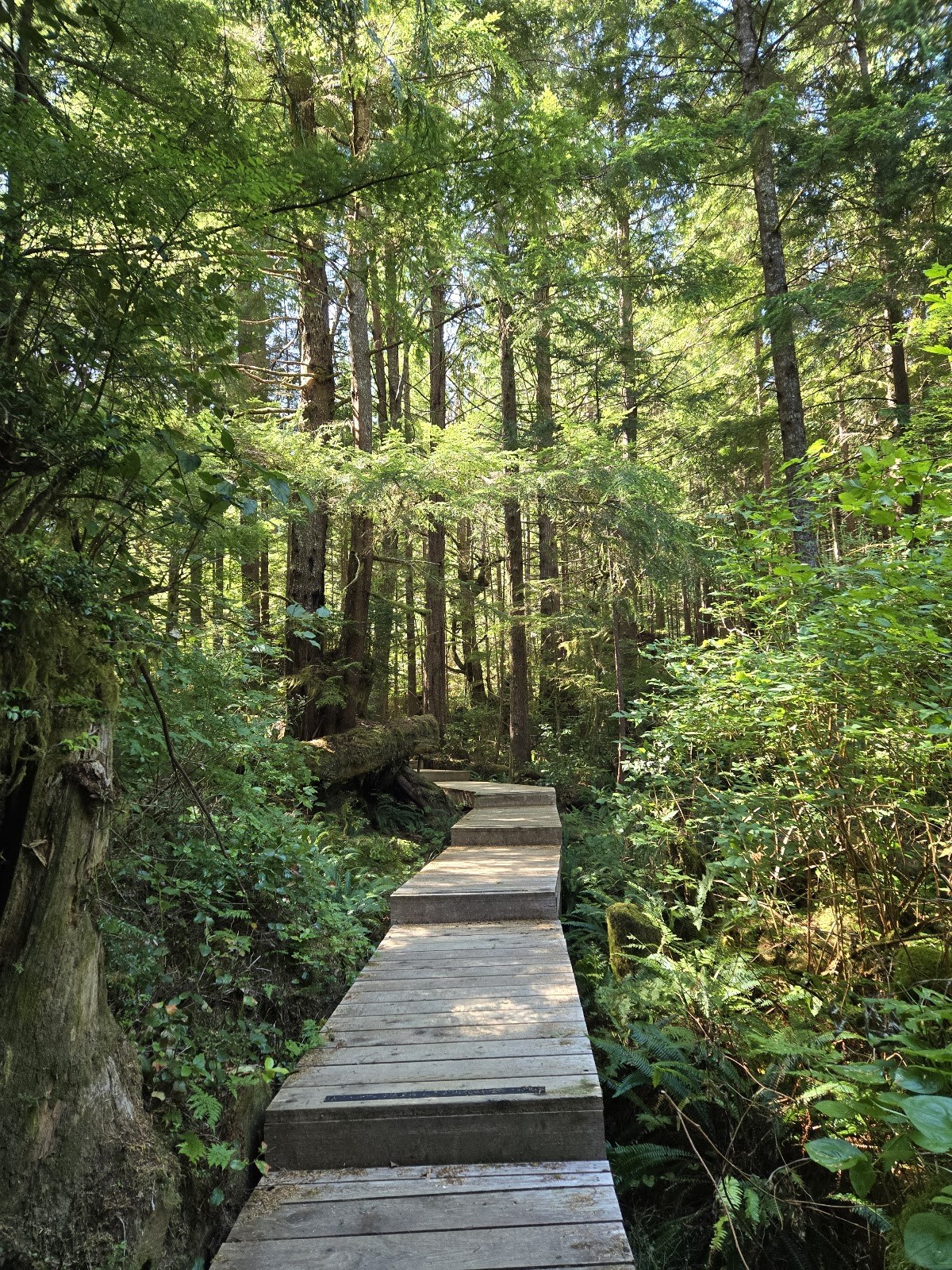
From the boat dock at Maquinna Park, a 2-kilometre boardwalk trail leads through old-growth coastal forest to the hot spring pools, with stairs, a viewing platform, and easy-to-follow signage. Walking time from dock to pools is approximately 20 to 30 minutes. Tofino itself is approximately 300 kilometres west of Nanaimo by road and approximately 340 kilometres north-west of Victoria, making it an approximately four-hour drive from Nanaimo via Highway 4. The park is open year-round; however, winter high tides and storms can make the pools unsafe and access difficult. Check current conditions and marine forecasts before booking any winter visit.
Suitability & Accessibility
Who Ramsay Hot Spring Suits
Ramsay Hot Spring suits visitors who want a genuinely wild and remote hot spring experience on the BC coast, set in old-growth rainforest and intertidal ocean scenery. The combination of boat travel through Clayoquot Sound, a boardwalk walk through coastal forest, and soaking in rocky pools at the edge of the Pacific Ocean makes it one of the most scenically distinctive hot spring experiences in Canada. It is particularly suited to visitors already travelling to or staying in Tofino.
The pools are best enjoyed at lower tides, when the cooling effect of ocean water is reduced and access to the lower pools is safer. Summer and shoulder season visits give the most reliable conditions. Day trips from Tofino are the most common format, typically a half-day or full-day excursion. Visitors who want to linger can camp in other parts of Maquinna Marine Provincial Park, though camping is not permitted on the Openit Peninsula where the hot springs are located.
The boardwalk trail includes stairs, which makes it inaccessible for wheelchair users. The boat-only access also limits accessibility. Families with older children and teenagers visit regularly; parents with very young children should be aware that the pool temperatures can reach 50 degrees Celsius and are not suitable for extended soaking by small children. The Nuu-chah-nulth cultural significance of the site as Mux̣šiƛa should be respected during visits.
Safety & Etiquette
Ramsay Hot Spring Safety Tips
Ramsay Hot Spring is a remote area with natural hazards and no lifeguard on duty at any time. BC Parks specifically notes that pregnant women, people with heart conditions, and small children should limit their exposure to the hot water. Understanding the tidal and thermal conditions before entering any pool is essential.
The water at the source reaches approximately 50 degrees Celsius; the uppermost pools are closest to the source and can be dangerously hot. Always test the temperature before entering, beginning with the cooler lower pools and progressing to warmer ones gradually. During winter high tides, wave action and the presence of large woody debris make the pools unsafe; do not enter the pools during high tide conditions, especially in autumn and winter. Check current tidal predictions before your visit and plan to arrive at or near low tide for safe access to the full pool sequence.
No alcohol is permitted in the park. Glass containers are prohibited in and around the pools. Do not use soap, shampoo, conditioner, or any cleaning product in or near the pools. Swimwear is required at all times in this public provincial park. Do not light campfires on the Openit Peninsula portion of the park. Keep food secured and bags hanging on the provided hooks in the change room and picnic shelter, as wildlife including bears and ravens are present. The ocean access point involves wet, rocky, and potentially slippery terrain; wear footwear with grip when walking between pools and to the water's edge. Factor the return walk and boat journey into your timing; missing your boat pickup can leave you stranded overnight.