Quick FactsOverview
About Sheep Bridge Hot Springs
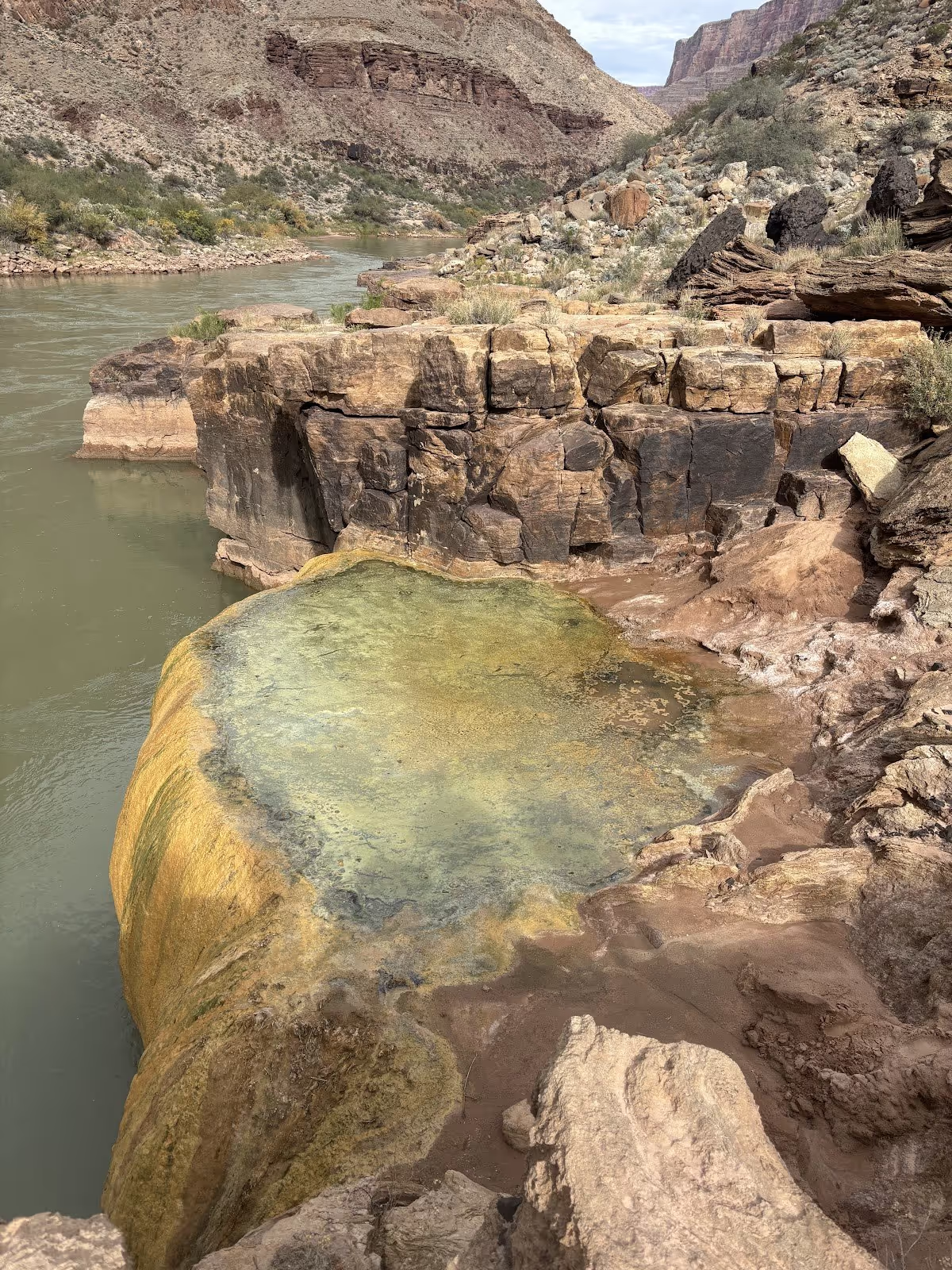
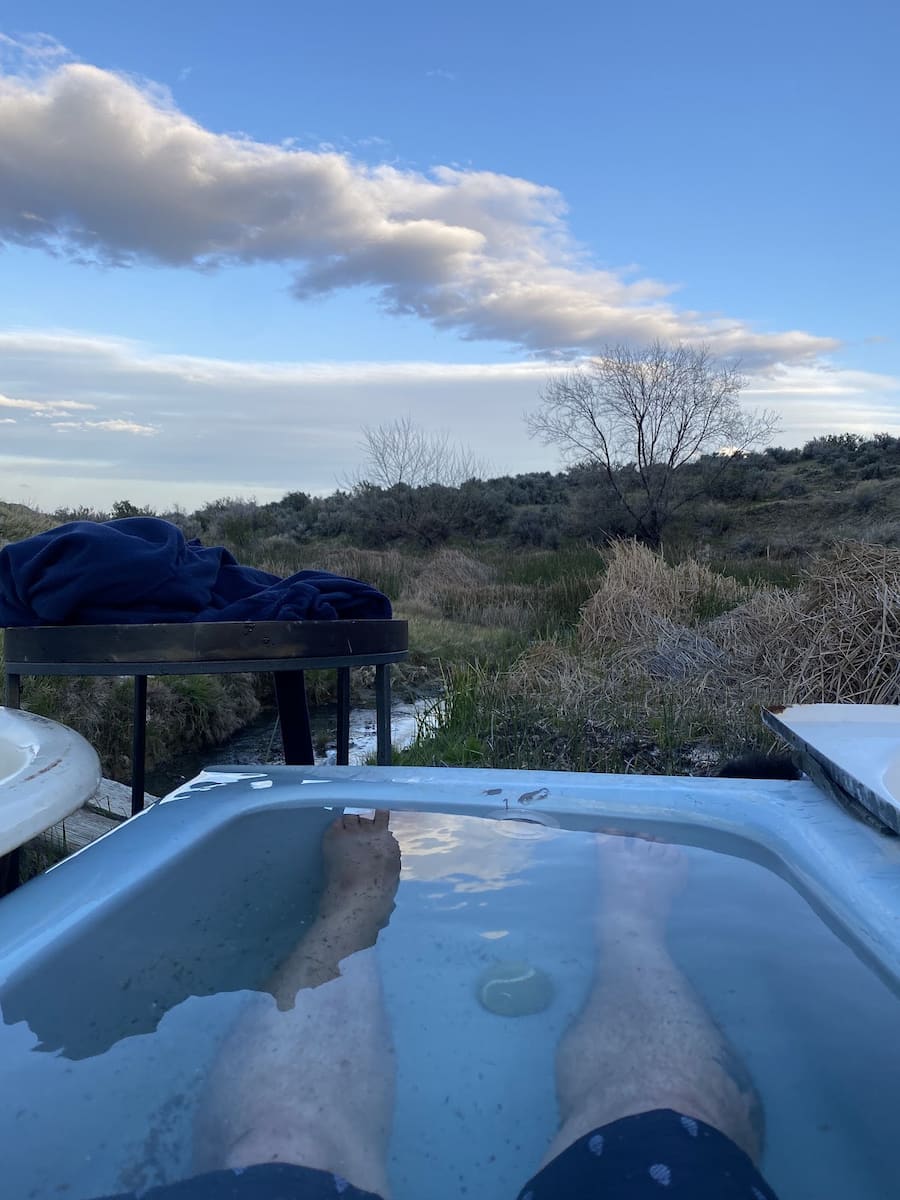
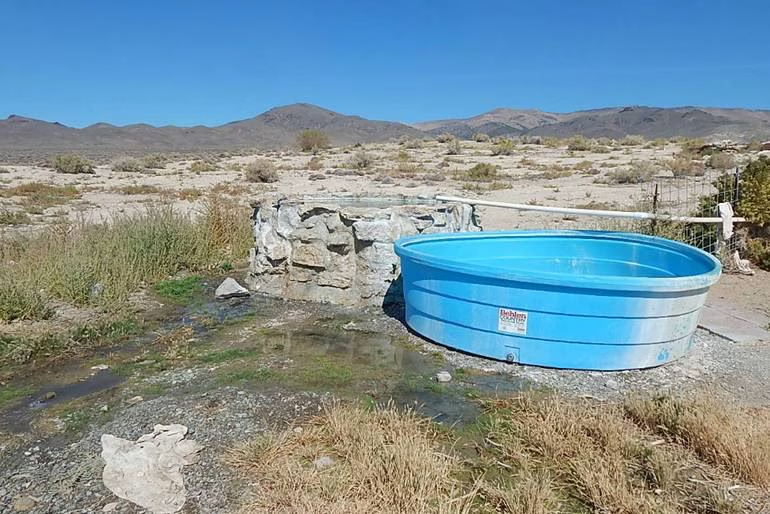
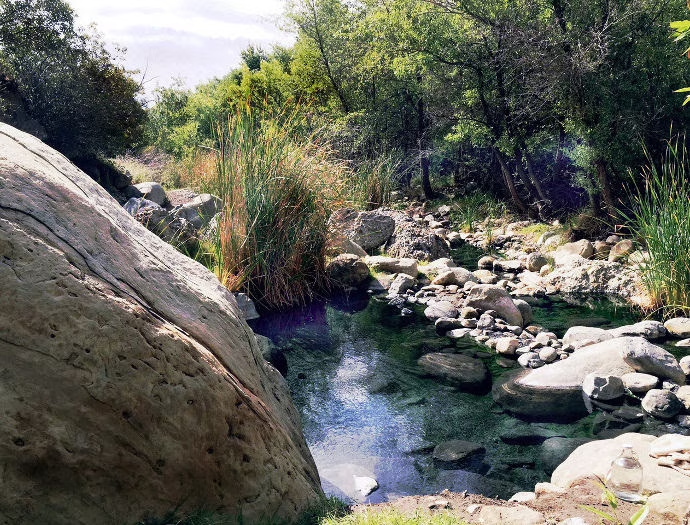
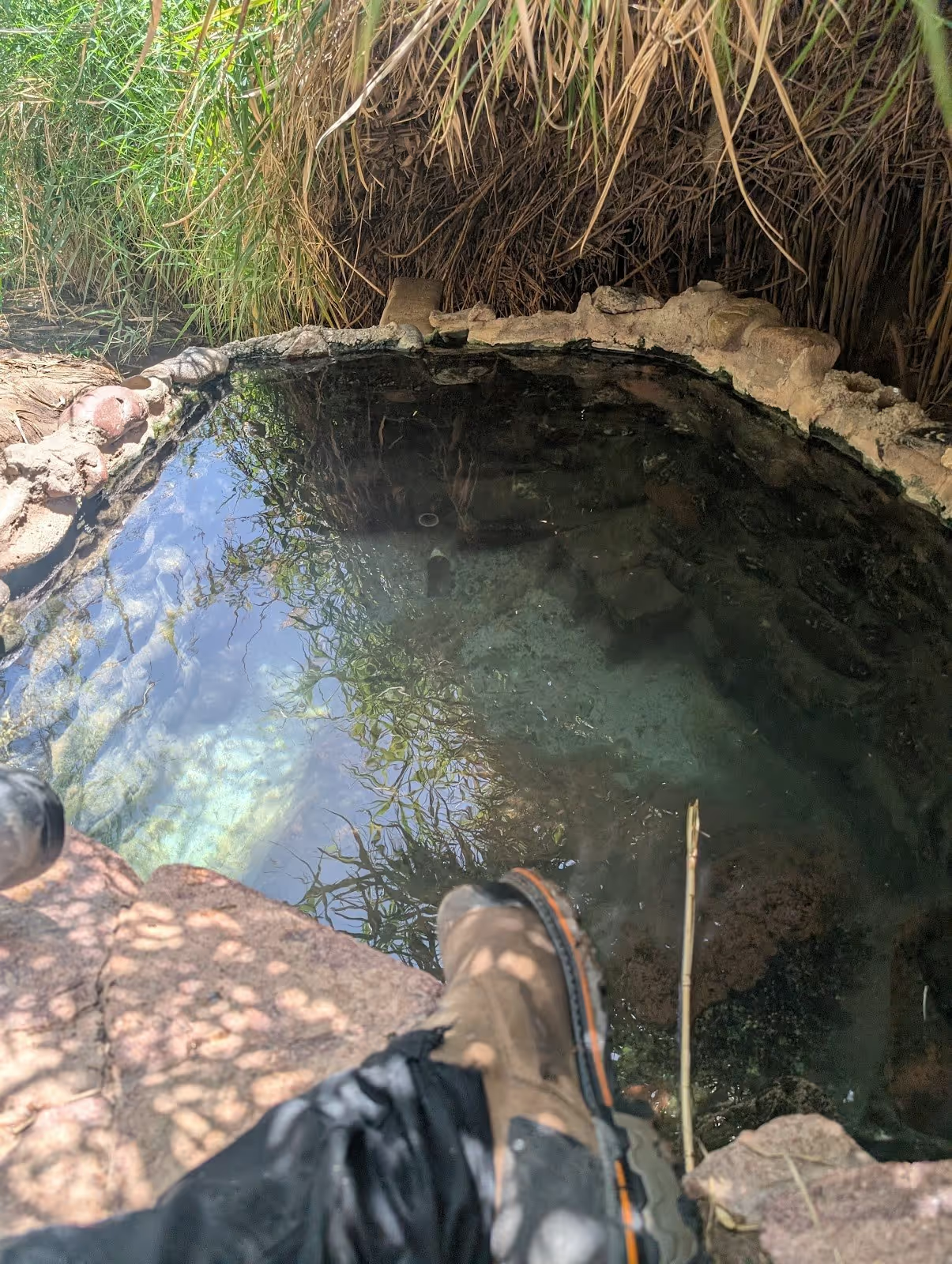
Sheep Bridge Hot Springs, Arizona is a primitive geothermal spring on the west bank of the Verde River inside Tonto National Forest, northeast of Phoenix, reached via a long rough drive on unpaved forest roads or an extended hike through the backcountry. The spring produces water at around 99 degrees Fahrenheit, piped to three cattle watering tubs positioned on a ledge above the river, with a small rock-lined soaking pool tucked in the riverbank vegetation a short distance upstream of the historic Sheep Bridge. It sits roughly 45 miles from Carefree, and the drive alone along Forest Road 24 and then Forest Road 269 takes two hours or more on unmaintained roads, making it one of the more remote hot springs in Arizona that visitors reach without a multi-day wilderness permit.
The Sheep Bridge itself is a historic suspension structure that spans more than 400 feet across the Verde River. It was originally constructed in the 1940s to allow sheep to cross the river during seasonal drives between rangeland, and was used by ranchers for decades before the original bridge was demolished in the 1980s. A replica bridge was built afterward for hikers and other visitors, and the original suspension tower anchors still stand on the riverbanks today, anchored into the rock with steel cables. The spring and its cattle tubs are a remnant of the working ranch infrastructure from that era, when natural hot water was directed into metal livestock tanks to provide warm water for animals. The surrounding terrain is rugged high desert with mesquite, dense riparian vegetation along the riverbanks, and open views of the Mazatzal Wilderness to the east. The Verde River flows year-round through this stretch, making the area a stopover for wildlife and a pleasant contrast to the surrounding desert.
Location & Access
Getting to Sheep Bridge Hot Springs
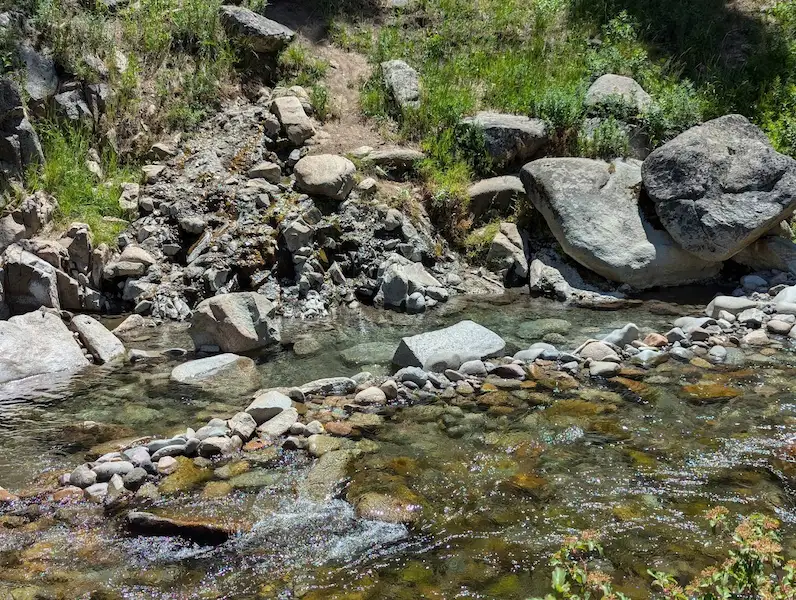
Sheep Bridge Hot Springs is reached from Carefree, Arizona, by driving Cave Creek Road north for approximately 33 miles as it transitions into Forest Road 24, then turning right onto Forest Road 269 and continuing for 12 more miles to the road's end at the bridge. The last 8 miles or so of Forest Road 269 are unmaintained, with rough rocky sections, loose terrain, and the possibility of shallow water crossings after rain, making a high-clearance four-wheel-drive vehicle strongly recommended. An alternative approach from Interstate 17 uses the Bloody Basin Road (Forest Road 259) heading south from exit 259; this route is approximately 36 miles to the bridge from the highway and similarly requires a capable vehicle. For visitors looking for hot springs near Carefree without committing to the full drive, the road conditions alone make this an outing requiring advance preparation and a suitable vehicle. Once at the bridge parking area, the cattle tubs are visible on a rock ledge above the river on the near side. The primitive soaking pool is a short walk from the bridge abutment: cross the bridge and take the trail downstream along the west bank through the bamboo and riverside vegetation to find it. The hot spring seep is not formally marked, and some first-time visitors walk past it; look for the section where warm water emerges from the bank and collects in a small rock-lined pool before the trail continues upstream.
No permit or reservation is required to visit. The site is on Tonto National Forest land managed by the Cave Creek Ranger District. Dispersed camping is permitted in the surrounding area for up to 14 consecutive days and is free of charge. There are no facilities on site, no restrooms, no drinking water, and no trash service. All waste must be packed out. The area is generally accessible year-round, but summer temperatures in this part of Arizona regularly exceed 110 degrees Fahrenheit, and road conditions can deteriorate rapidly after monsoon rains between July and September.
Suitability & Accessibility
Visiting Sheep Bridge Hot Springs
Sheep Bridge Hot Springs suits experienced backcountry visitors who have a capable off-road vehicle and are comfortable with remote, unmanaged natural areas, as the long rough approach road and complete absence of facilities make it unsuitable for those expecting any developed infrastructure. The soaking area itself is primitive: the cattle tubs and small rock pool are open to the elements, the water temperature is warm without being adjustable, and the capacity is limited to a handful of people at a time. On weekdays, particularly in the cooler months from October through April, the site tends to be quiet and genuinely secluded, with the river, the bridge ruins, and the surrounding desert to oneself. Weekends and holiday periods draw larger crowds, with off-road vehicles and families making the trip from the Phoenix area. Visitors who are drawn to natural hot springs in Arizona as part of a broader outdoor experience will find plenty to do at the site: the bridge walk itself is worth the trip, rope swings and jump-off points along the river provide a way to cool down after soaking, and the Mazatzal Wilderness offers backcountry hiking access to the east. Dogs are welcome but must remain on a leash at all times. The site is not wheelchair accessible due to the uneven rocky terrain surrounding the tubs and pool. Children can visit without restriction, but the remoteness and lack of facilities require adults to be fully self-sufficient with water, food, sun protection, and first aid.
Soaking etiquette at a site like this is informal but matters. The pools are small and fill quickly; waiting your turn and keeping group sizes reasonable makes the experience better for everyone. The cattle tubs and rock pool are the only soaking options, so treating the site with care, not moving or damaging rocks, and not introducing soaps or chemicals into the water keeps it usable for the next visitor. Leave no trace principles apply throughout the area.
Safety & Etiquette
Safety at Sheep Bridge Hot Springs
Sheep Bridge Hot Springs is generally safe for soaking in the pools themselves, though the remote location and complete lack of facilities mean that any injury, vehicle breakdown, or medical issue must be handled with whatever resources visitors have brought with them, as emergency services are a long way from this stretch of the Verde River. Cell phone coverage in the canyon is limited to nonexistent, so informing someone of travel plans before leaving is a sensible precaution. The pools are warm but not scalding; the cattle tubs run at approximately 99 degrees Fahrenheit, which is comfortable for extended soaking in cooler weather. In summer, the combination of water that warm and ambient air temperatures above 100 degrees can lead to overheating; hydration is essential and taking breaks from the water is advisable.
The Verde River itself presents a separate set of hazards. The river flows year-round and the current can be stronger than it appears, particularly after rain upstream or during snowmelt in spring. Rope swings and jump-off points along the bank are used by visitors, but always check water depth and river current before jumping, and do not use rope swings that show signs of fraying or damage to anchor points. The access roads carry their own risk: road conditions can change quickly after rain, and getting stuck on an unmaintained forest road at night in summer heat is a genuine emergency scenario. Check road conditions through the Cave Creek Ranger District before departing, particularly in monsoon season, and carry adequate water for driving as well as hiking. A basic toolkit, tow strap, and a physical paper map of the Tonto National Forest road network are sensible additions to any kit for this trip. Rattlesnakes are present in this type of terrain; watch where hands and feet are placed around the rock ledges and vegetation near the pools. Fire restrictions may apply seasonally; check current conditions through the Forest Service before making a campfire.