Quick FactsOverview
A real hot spring site, not a reliable soak
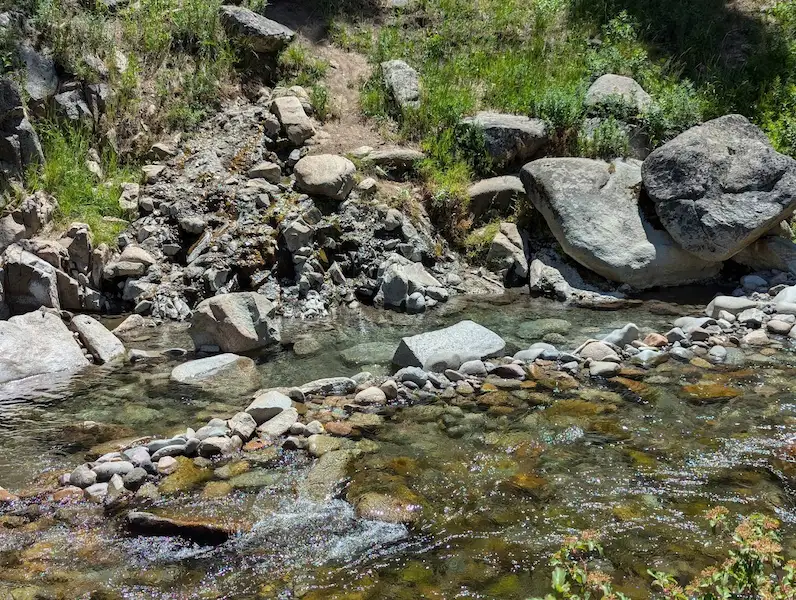
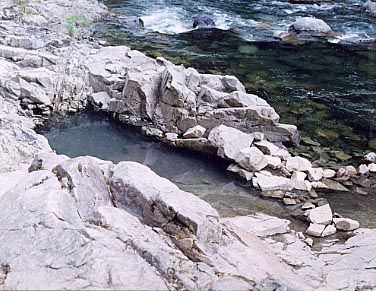
Shipherd’s Hot Springs also known as Wind River Hot Springsis a documented thermal spring site in Skamania County near Carson, associated with the Wind River geothermal area. Washington geology publications describe Shipherd’s as a fault-related hot spring with measured temperatures in the mid 40s to around 50°C range in older surveys, which confirms it is genuinely thermal.
What complicates trip planning is access. Shipherd’s is best understood as a historic hot springs location rather than an open, managed soaking destination. The old resort era around Carson left plenty of names on maps and in local history, but that does not translate into public facilities today.
What makes it distinct
It sits in the same broader geothermal neighborhood as Carson’s developed mineral-water soaking, but Shipherd’s itself is not presented as a public bathing facility. If you like hot springs history and regional geology, it’s a meaningful name to recognize. If you want an easy soak you can count on, this is not the one to build a weekend around.
Plan your day in the Gorge, and treat Shipherd’s as background context, not a guaranteed stop.
Location & Access
Where it is
Shipherd’s Hot Springs is near Carson in Skamania County. A commonly cited mapped point for the site is 45.726944, -121.800556 (derived from published latitude and longitude in historical documentation). Use that coordinate only as a reference for the general area, not as permission to enter land.
Access reality
There is no verified public trailhead or signed visitor route that functions like a standard recreation site. Do not assume you can walk in from the road and soak. Land ownership and access conditions in the Wind River corridor can be complex, and informal internet directions change, get blocked, or lead people onto private property.
How to plan responsibly
If you are researching the area, start with confirmed public destinations nearby (developed resorts or clearly public trail systems). If you still want to pursue Shipherd’s as a history or geology point of interest, do the unglamorous work: confirm current land status, respect posted signs, and avoid creating new user paths. In wet months, expect slick banks, unstable ground, and fast river conditions. Bring navigation that works offline, a rain layer, and footwear with grip. If you cannot confirm legal access, do not go.
Suitability & Accessibility
Best for
This entry is best for readers who want an accurate record of Washington hot springs sites, even when they are not practical to visit. It’s also relevant if you’re studying the Wind River geothermal zone and want to understand why the Carson area has multiple hot spring names tied to faults and mineral water.
Not a good fit for most trips
If your goal is a relaxing soak, this is not an appropriate choice. There are no verified public pools, no services, and no dependable, legal visitor route published as a standard recreation option. Even experienced hikers should treat “maybe accessible” hot springs as a poor use of time compared to places with clear permission and maintained access.
Families
I would not plan this for families. Uncertain access plus riverbank terrain is not a good mix for kids, and the lack of facilities means you are improvising everything.
Mobility
This is not wheelchair accessible. There is no documented step-free route, and any natural spring setting here would involve uneven, wet ground and obstacles. If you need reliable accessibility, focus on developed pools and facilities that clearly publish accessible routes and entry methods.
Expectation check: Shipherd’s is better treated as “known hot spring site” than “place to soak.”
Safety & Etiquette
Remote-water and terrain risks
The primary hazards in this corridor are the same ones that cause trouble at many unmaintained springs: slippery banks, cold fast-moving water, and unstable footing. River levels can change quickly after rain. A short slip can turn into a serious situation if you are near swift water. If you are exploring nearby public trails, keep distance from undercut banks and avoid crossing channels unless the route is clearly established and safe.
Heat and hygiene basics
If you ever encounter a soakable pool in an unmanaged setting, treat it as untreated water. Do not swallow water. Keep your head above water. Avoid soaking with open cuts. Never use soap or shampoo in any natural water feature. Start with a short soak, then reassess, heat stress can sneak up when you are excited to finally find the spot.
Respecting access and privacy
Because public access is not verified, the most important etiquette here is not “be quiet in the pool,” it’s “do not trespass.” If a route crosses private land or posted boundaries, turn back. Do not move fences, ignore signs, or follow social-media shortcuts. That behavior is exactly how sensitive sites get shut down harder.
Leave-no-trace, in practice
Pack out everything, including food scraps and tissues. Do not dig, dam, or modify waterways. If the ground is muddy, stay on durable surfaces rather than widening the impact. The Wind River area is beautiful, but it is also fragile when people treat it like an unregulated theme park.