Quick FactsOverview
About South Harney Lake Hot Springs
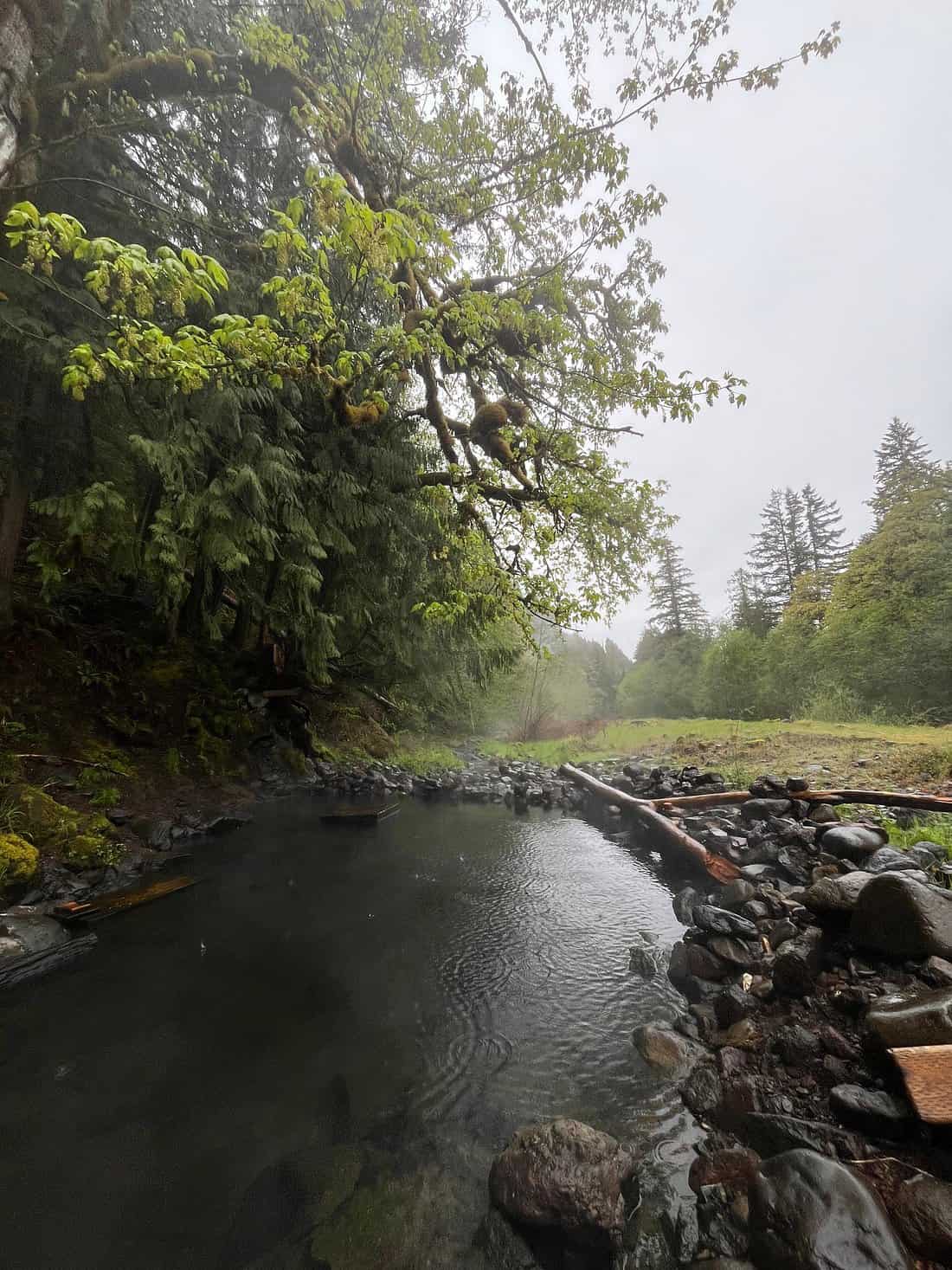
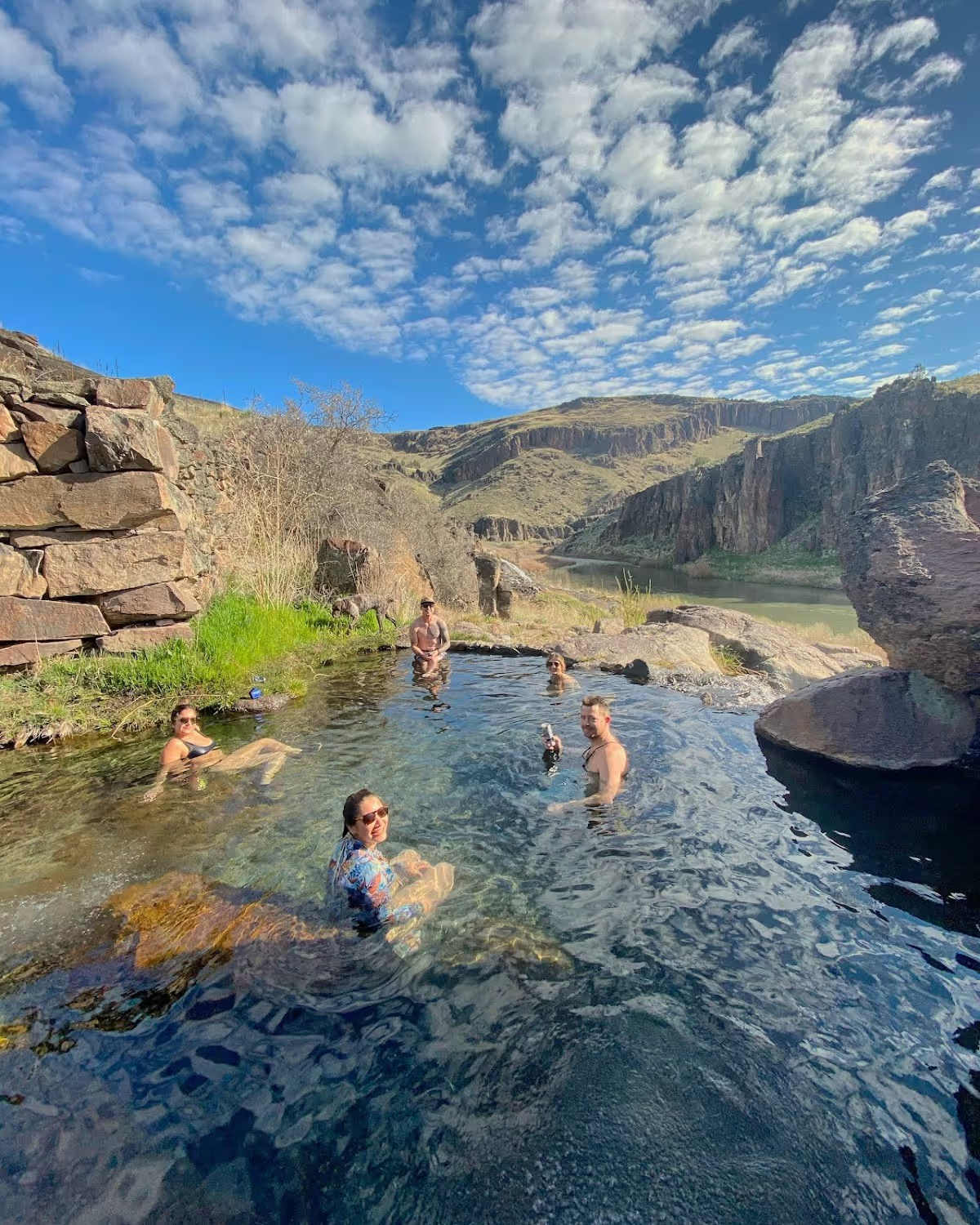
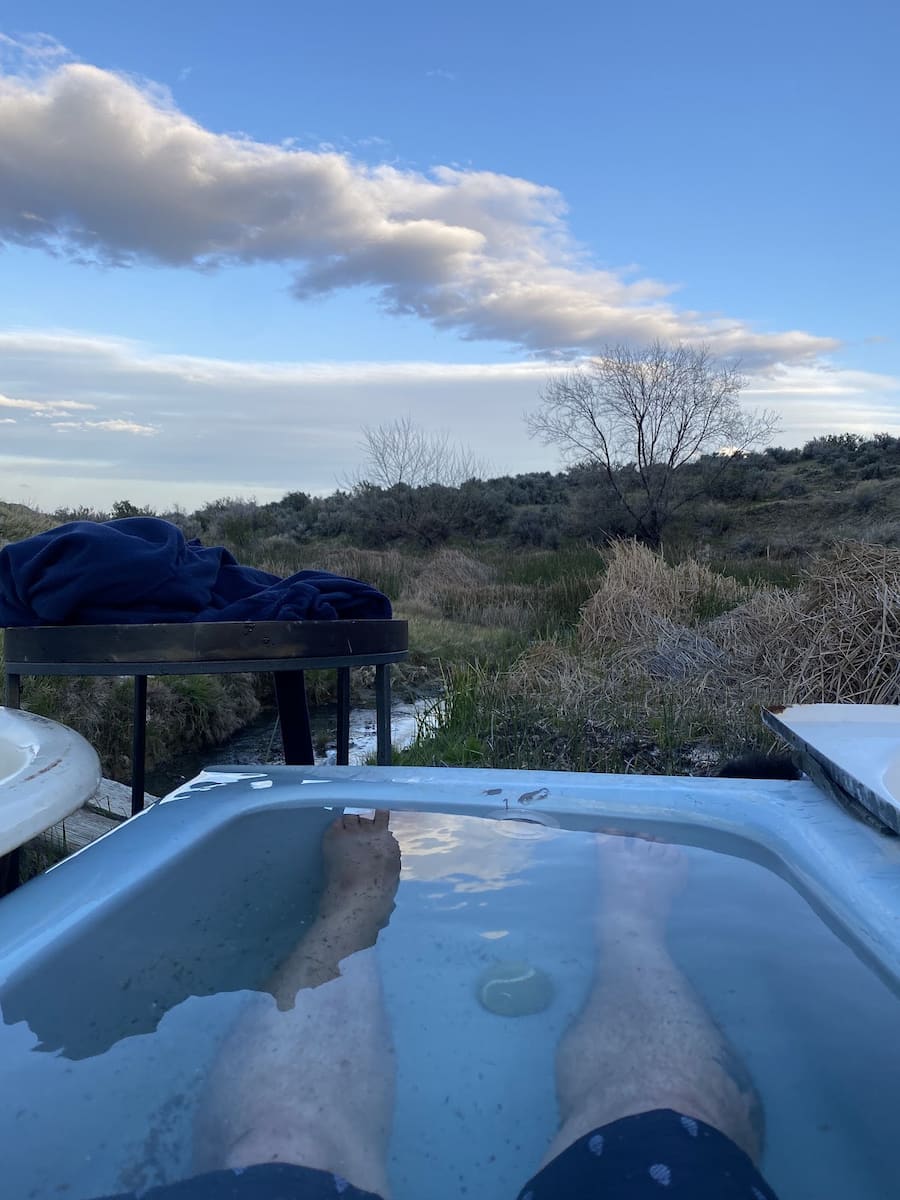
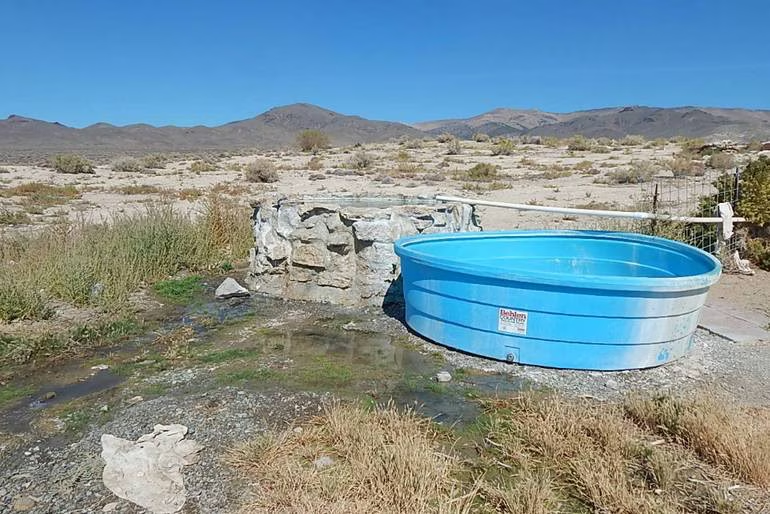
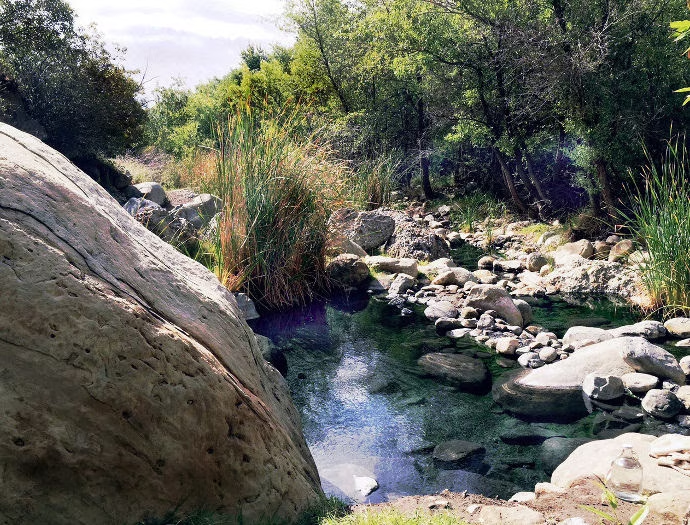
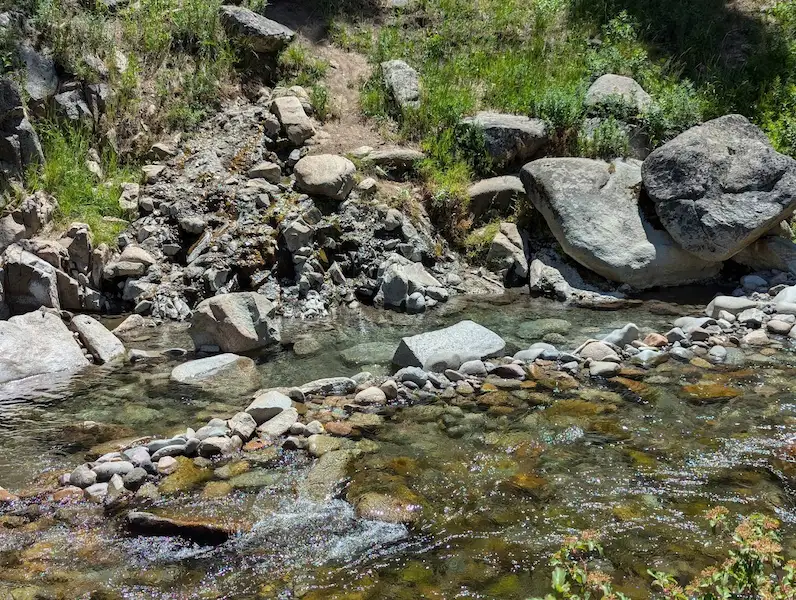
South Harney Lake Hot Springs, Oregon is a free, undeveloped geothermal seep on the southeastern edge of Harney Lake, on private land approximately 34 miles south of Burns. Hot mineral water emerges at temperatures between 140 and 150 degrees Fahrenheit, flows into a colorful pond, and moves downstream through a narrow channel into two dug-out soaking pools. The site sits inside a broad caldera depression formed by volcanic activity roughly 32,000 years ago, and is one of the hottest natural springs in the Harney Basin.
The Harney Basin is geothermally active, and South Harney Lake Hot Springs ranks as the second hottest geothermal source in the basin. The water type is sodium bicarbonate chloride, with a flow rate exceeding 450 liters per minute. Natural hot springs in this part of the high desert are scattered across the basin, but South Harney is one of the few where soaking is possible, as most other local springs run far too hot. A strong sulfur smell is present at the site.
Though the springs sit on private land, the landowner has historically tolerated public access and no fee is charged. Visitors are asked to leave no trace and respect the privilege of access. The surrounding landscape is flat and open, dominated by sagebrush, tall grass, and the dry alkaline flats of Harney Lake visible to the north.
Location & Access
Getting to South Harney Lake Hot Springs
South Harney Lake Hot Springs is reached via approximately 8.5 miles of unimproved dirt road south of the pavement in Harney County, making it one of the more remote hot springs accessible by vehicle in Oregon. The road runs along the southern end of Mud Lake and South Harney Lake and is only passable in dry conditions, as the surface deteriorates into deep mud with ruts during wet weather. High-clearance vehicles are strongly recommended, and the road is not advisable from late autumn through late spring, when snow or mud can make the route impassable.
From Burns, drive south on Oregon Route 205 toward Frenchglen, then turn west toward Harney Lake and follow the road south along the lakeshore. The final 8.5 miles are unpaved and unmarked in most navigation apps, so offline maps or a printed BLM Burns District map are essential before departure. There is no cell service along the route or at the springs. For visitors looking for hot springs near Burns, South Harney Lake is one of the most remote and least-visited options in the region. Burns is the last reliable stop for fuel and supplies, so carrying sufficient water, food, and fuel for the return journey is essential.
Suitability & Accessibility
Who South Harney Lake Hot Springs Suits
South Harney Lake Hot Springs suits experienced backcountry visitors who are comfortable navigating remote unmaintained roads, self-sufficient in the field, and prepared for a raw, undeveloped soaking environment. The pools are dug out of silty lakebed deposits and their condition varies depending on recent maintenance by visitors, flow, and season. The site is not suitable for families with young children, who would face both the long rough road and unpredictable water temperatures near the source.
For those seeking free hot springs in Oregon that are genuinely off the beaten path, South Harney Lake delivers an experience found at very few other sites in the state. The sense of isolation and the scale of the surrounding high desert basin create an atmosphere unlike the more popular springs in the Cascade foothills. Visitors who enjoy the geothermal landscape of southeastern Oregon will find the site rewarding. The best window is mid-summer to early autumn, when the access road is most likely to be dry and passable.
Wheelchair access is not possible. The long dirt road, silty ground around the pools, and the complete absence of facilities make the site unsuitable for visitors with mobility limitations. No toilets, shade, water, or waste disposal are available. The pools contain silt at the bottom, and conditions vary from visit to visit. Soaking requires patience, as the water must cool downstream to a safe temperature before entry.
Safety & Etiquette
Safety and Etiquette at South Harney Lake Hot Springs
South Harney Lake Hot Springs is a remote site with serious natural hazards, and source water temperatures of 140 to 150 degrees Fahrenheit make the pools near the vent dangerously hot. Visitors must allow the water to cool downstream before attempting to soak, and should never enter pools close to the source without testing the temperature first. The downstream soaking pools typically reach around 100 to 110 degrees Fahrenheit under good conditions, but temperatures vary with air temperature, wind, and season. No staff or rangers are present, and emergency assistance is far away.
The road to the springs is the most significant safety factor for most visitors. The 8.5-mile unimproved road can become impassable quickly in wet weather, and a vehicle stuck in remote Harney County could present a serious situation. Always check weather conditions before departure, carry extra water and food, and inform someone of your plans and expected return time. A high-clearance vehicle and a spare tire are both advisable.
The springs sit on private land, and the landowner's continued tolerance depends entirely on visitors behaving responsibly. Leave No Trace principles are not optional here. Pack out all waste, do not dig additional channels beyond those already established, and avoid disturbing the surrounding vegetation. Red spider mites have been observed at pool edges, so inspect yourself and gear before leaving.
No overnight camping is permitted at the springs. If the gate is locked or no-trespassing signs are posted, respect them without exception. The remote location means conditions change and access cannot be guaranteed. Approaching after wet weather without checking road conditions is not advisable.