
Quick FactsOverview
About Terme di Castrocaro
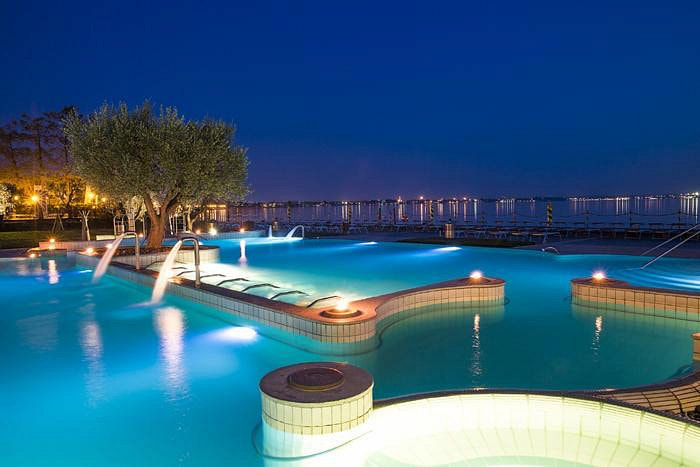
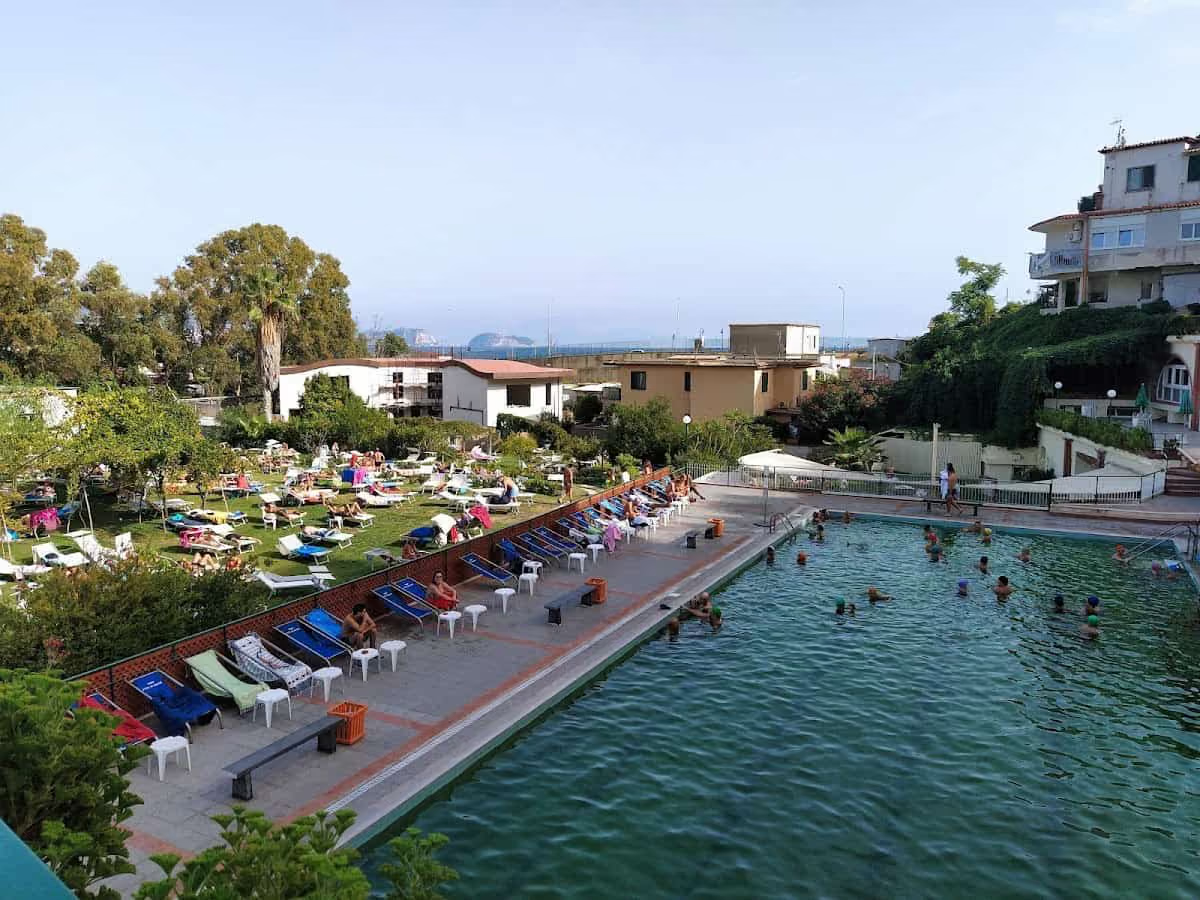
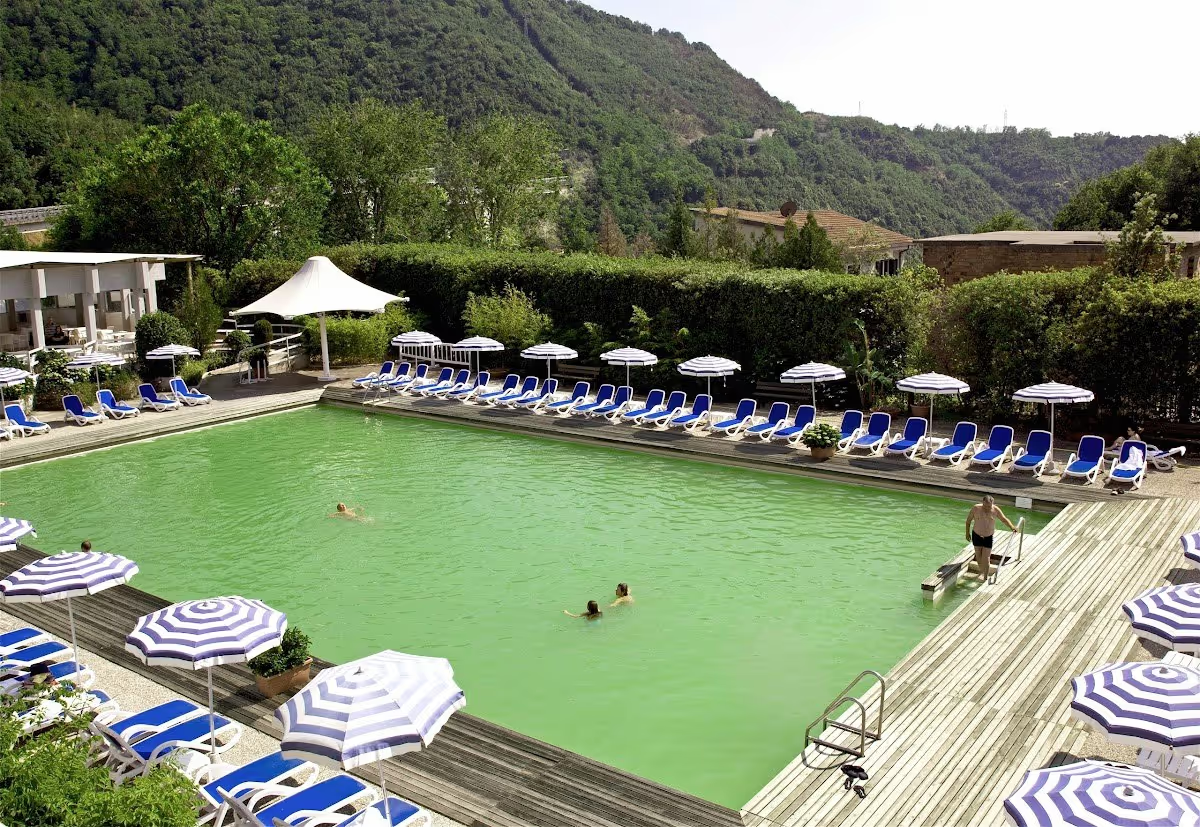
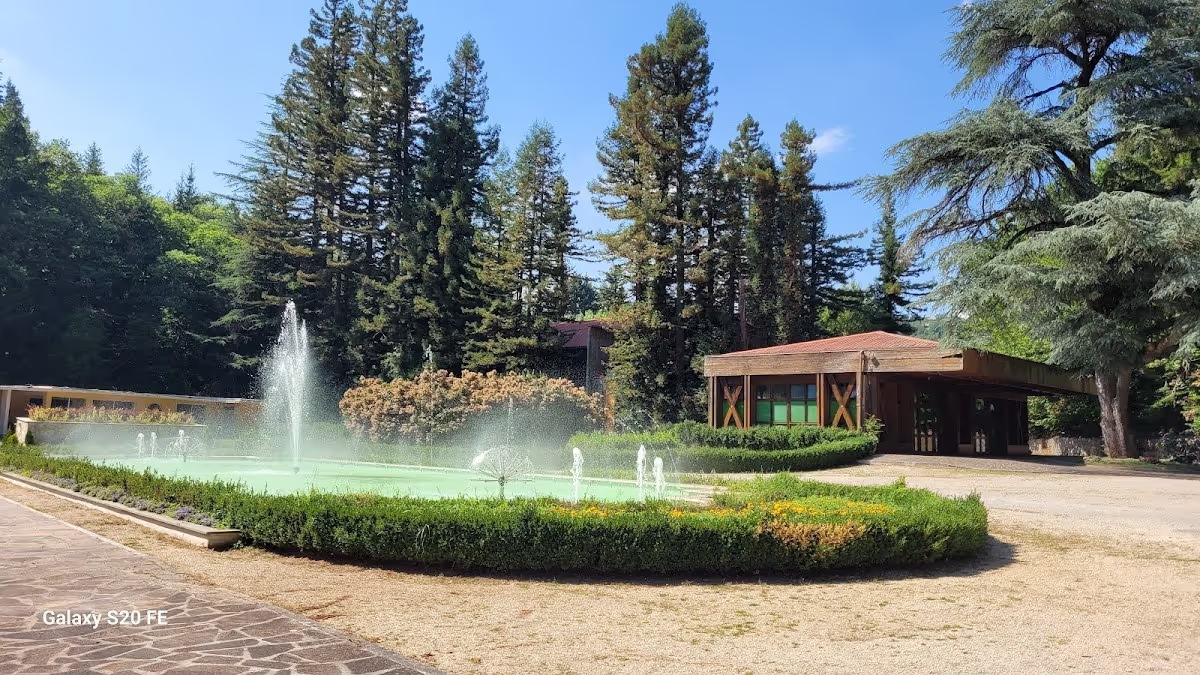
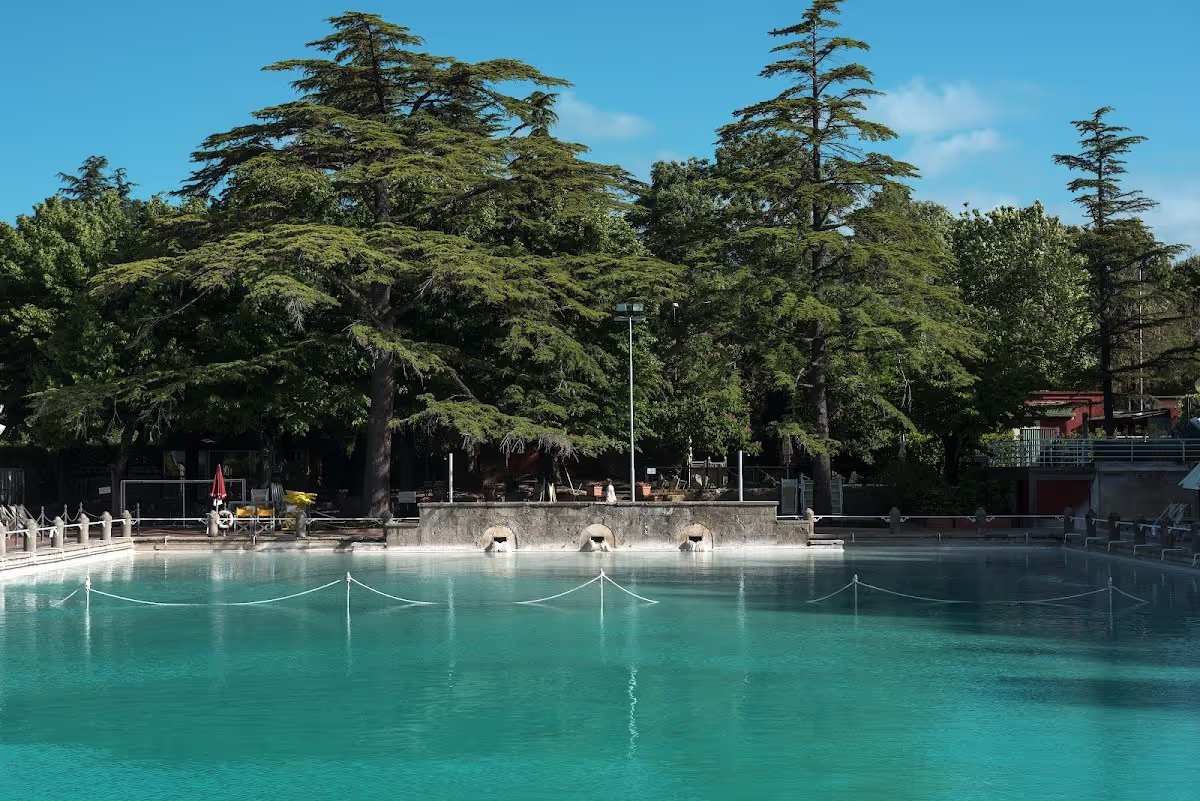
Terme di Castrocaro, Italy is a historic thermal spa in the town of Castrocaro Terme in Romagna, in the eastern part of Emilia-Romagna, overlooking the Montone river roughly 10 kilometres south of Forli and 30 kilometres south-west of Ravenna. The spa draws on three mineral springs that emerge in the town and runs a combined medical thermal cure programme, a blue-clay mud therapy centre, and a wellness pool and spa complex within a landscaped park at the town centre.
Castrocaro is one of the long established of the Italian terme in the Romagna plain, with Roman-era documentation under the name Salsubium and the modern spa founded in 1871 by Aristide Conti. The three spring sources, Salsubia, Salubria, and Beatrice, are sulphurous saline-bromoiodic waters classed as acque fossili and differ in salinity and magnesium content. The waters are used in medical programmes for arthro-rheumatic, respiratory, vascular, gastro-enteric, and dermatological conditions.
Castrocaro is best known in Italy for its blue-clay mud therapy, in which clay from the surrounding hills is matured for six to nine months in the saline-bromoiodic waters before being applied in treatment. A wellness centre also runs pool, sauna, and Kneipp circuits using the thermal waters.
Location & Access
Getting to Terme di Castrocaro
Terme di Castrocaro is reached by road from the Via Emilia and the SS67 Tosco-Romagnola, with the spa on Via Guglielmo Marconi in the town centre a few hundred metres from the main road and a dedicated car park at the entrance, so no hike is required to reach the complex from the parking area or the town centre.
The spa sits in the Romagna plain of eastern Emilia-Romagna, roughly 10 kilometres south of Forli and 30 kilometres south-west of Ravenna, with easy driving access from the A14 Bologna to Rimini motorway via the Forli exit followed by the SS67 south-west to Castrocaro Terme. Bologna, Ravenna, Rimini, and Florence are all within comfortable driving range for a day or short-stay visit, and Castrocaro also sits on the main route from the Adriatic coast up into the Tuscan Apennines.
Public transport is straightforward. The Bologna to Rimini mainline rail service calls at Forli, and from Forli station the ATR regional bus line 91 runs to Castrocaro Terme in under 30 minutes, with a stop near the spa gate. For visitors staying in Forli, Ravenna, Bologna, or on the Adriatic coast around Cesenatico and Cervia, Castrocaro is one of the easier hot springs near Castrocaro Terme to reach without a long transfer.
Suitability & Accessibility
Who Terme di Castrocaro Suits
Terme di Castrocaro suits visitors looking for a traditional medical thermal cure, a blue-clay mud therapy session, or a wellness day in a historic Romagna spa town, with the medical thermal centre, mud therapy building, and wellness pool complex giving a mix of options from a short day visit to a full cure programme. The spa is a strong fit for adults on a thermal cure and for travellers wanting a wellness day on a loop from the Adriatic coast or Bologna.
Families with children are welcomed at the wellness centre, and Castrocaro is one of the more family-friendly terme in Emilia-Romagna. The pool and spa circuits are open to day visitors across most of the year and give children space to swim, and paediatric thermal programmes have been part of the medical offer for respiratory and dermatological conditions. Age rules for the sauna, mud therapy, and some medical treatments apply, so families with infants or toddlers should check current policies before booking.
Accessibility is a strength here compared to many Italian terme. The main treatment and wellness buildings operate as medical facilities with lifts, step-free routes through the main pool, mud therapy, and treatment areas, and accessible changing and treatment rooms. The surrounding park has gentle paved paths. Wheelchair users and visitors with significant mobility restrictions will find the complex easier to navigate than most historic thermal towns. For visitors wanting accessible hot springs in Italy with a traditional cure and mud therapy offer, Castrocaro is one of the clearer options.
Safety & Etiquette
Terme di Castrocaro Safety Tips
Terme di Castrocaro is generally safe for soaking, drinking cures, and mud therapy thanks to its staffed, managed environment, though visitors should remember that the mineral waters are highly saline and sulphurous and are used medicinally, so drinking volumes, mud therapy sessions, and treatment lengths should be set by the on-site medical team.
The three spring sources are each used for distinct therapeutic indications, with doctors prescribing which source and what daily volume suits each visitor on a drinking cure programme. Follow those protocols rather than drinking freely, and stop if any discomfort appears. The blue-clay mud is applied warm in supervised sessions of fixed length. Drink water through the day, avoid treatments right after a heavy meal, and leave any session immediately if lightheaded. Pregnant visitors, those with heart conditions, low blood pressure, kidney disease, or on medications that affect skin, digestion, or circulation should consult a doctor before any extended cure or mud therapy programme.
A swimsuit is required in every pool. Shower before each pool to keep the water clean, do not apply oils or heavy creams before soaking or mud therapy, and keep voices low in the quieter treatment and relaxation rooms. Food and drink are limited to designated areas, glass is not permitted around the pools, and smoking is restricted to marked zones. Children must be supervised at all times, and visitors on inhalation or mud therapy programmes should follow the staff instructions on session timing.
Watch footing on wet stone paths between pool areas and in the mud therapy wing. Secure valuables in a locker and bring a change of clothes for the walk back into town after bathing.