
Quick FactsOverview
About Terme di Fordongianus
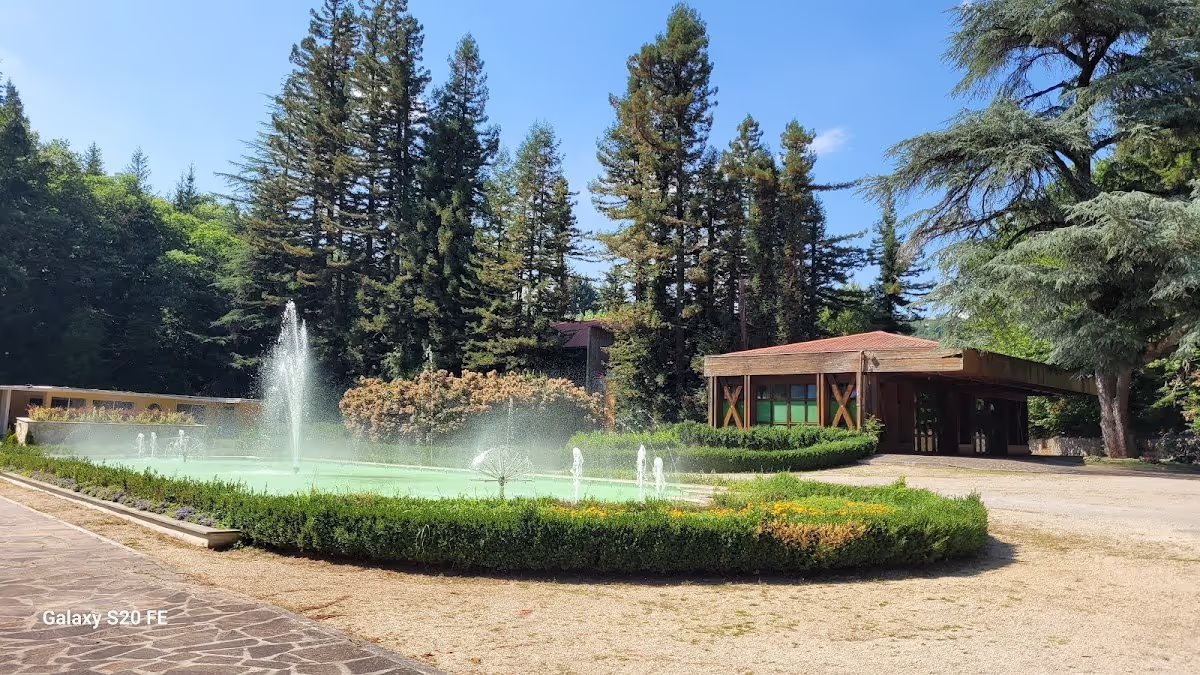
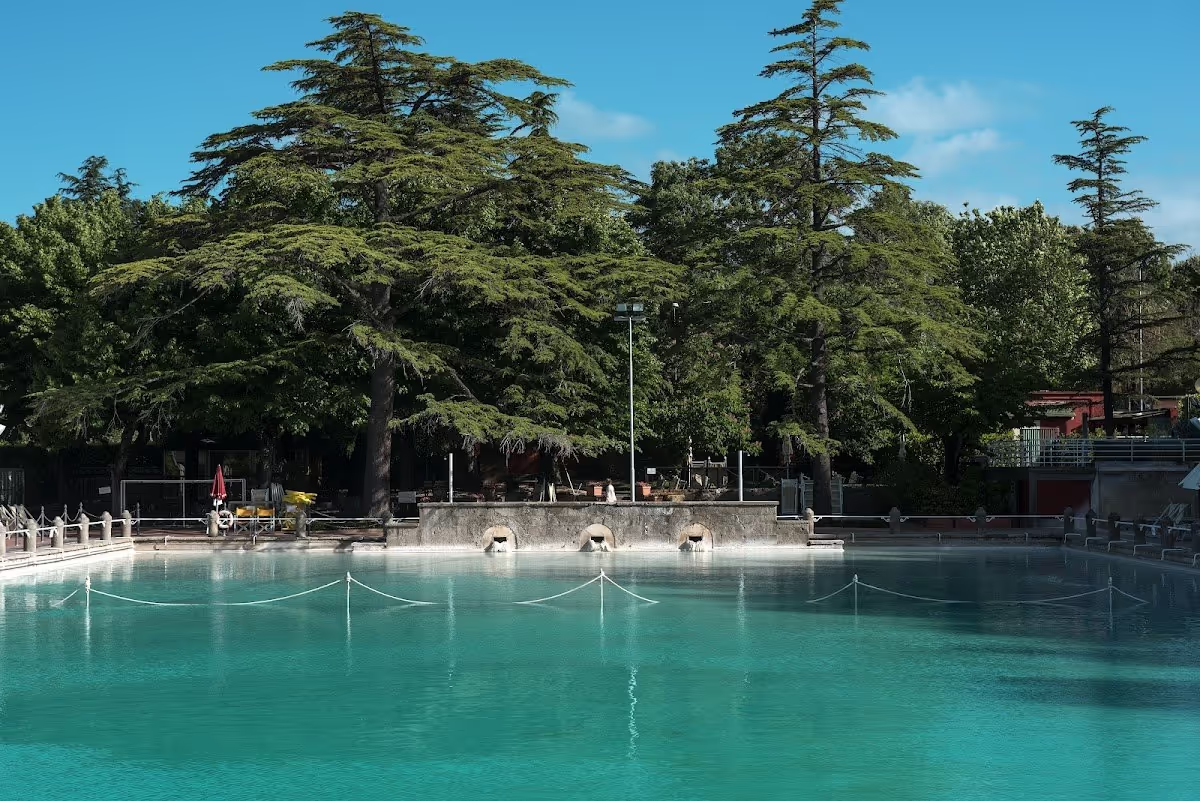
Terme di Fordongianus, Italy is a Roman archaeological thermal site on the left bank of the Tirso River in the village of Fordongianus, Oristano province of central Sardinia, approximately 25 kilometres northeast of Oristano city. The thermal spring still emerges from the ground at approximately 54 degrees Celsius into a preserved rectangular Roman natatio pool measuring 13 by 6.5 metres and 1.5 metres deep, dating to the 1st century AD. A later southern bath complex from the 3rd century AD includes a frigidarium, tepidarium, calidarium, and apodyterium with artificial heating. The town was known in Roman times as Forum Traiani (named for the Emperor Trajan) and as Aquae Ypsitanae in Greek-Latin usage. Oristano, the regional capital, is the nearest larger city.
These Roman terme and acque termali are among the best-preserved thermal archaeological sites in Sardinia. An altar to the nymphs, dedicated by the imperial freedman Servato in 211 to 212 AD, was found at the site. The complex is open year-round as a visitor attraction with guided tours, audio guides in multiple languages, and a combined ticket that includes the nearby Aragonese House.
Full-body thermal bathing takes place at the adjacent Sardegna Grand Hotel Terme, which uses the same 54-degree source for modern pools and spa services.
Location & Access
Getting to Terme di Fordongianus
Terme di Fordongianus is reached by a short drive to Localita Caddas on the left bank of the Tirso River in Fordongianus village, approximately 25 kilometres northeast of Oristano. From Oristano, the drive takes approximately 30 minutes east on the SS388 and local roads. The archaeological site has on-site parking and is reached from the car park on paved walkways and some stepped paths among the Roman ruins, so sturdy shoes are useful.
From Cagliari, Sardinia regional capital, the drive takes approximately 1 hour 30 minutes northwest, covering 90 kilometres via the SS131 and SS388. From the port of Olbia on the north coast, the drive is approximately 2 hours 30 minutes southwest. For visitors seeking hot springs near Oristano, this is the only major developed thermal site in the central Sardinia region, with easy direct road access from Oristano city.
Sardinia Archaeological Corridor
Fordongianus sits in the heart of the Oristano archaeological corridor, which also includes the Pozzo Sacro di Santa Cristina Nuragic sacred well, the Nuraghe Losa, and the Giants of Mont Prama statues at the Cabras museum. Combining the Roman baths with these pre-Roman Nuragic sites and the Oristano coast makes a strong multi-day central Sardinia itinerary.
Suitability & Accessibility
Who Should Visit Terme di Fordongianus
Terme di Fordongianus suits history and archaeology travellers, Roman heritage enthusiasts, and visitors curious to see a 2,000-year-old thermal complex where the 54 degree Celsius spring still flows into a preserved natatio pool, rather than visitors primarily seeking a full-body hot soak. The site is primarily an archaeological visit with the pool, bathing complexes, altar to the nymphs, and the surrounding Forum Traiani ruins open for inspection on paved and stepped paths. Multilingual audio guides in English, French, German, and Spanish support visits of approximately 60 to 90 minutes.
Guided tours and educational workshops for school groups are available by reservation, and a dedicated children itinerary makes the site accessible to younger visitors. For actual bathing in the same thermal water, these natural hot springs Italy preserves in the Oristano region are accessed through the adjacent Sardegna Grand Hotel Terme, which operates eight thermal pools and a TerMare park beside the archaeological zone. Combining the Roman visit with a hotel bathing session makes a complete thermal day.
Accessibility at Terme di Fordongianus
The archaeological site includes stepped paths and uneven stone surfaces across the ancient ruins and is not formally wheelchair accessible. Those seeking a fully accessible modern thermal spa in Sardinia should visit the Sardegna Grand Hotel Terme next door, which operates modern facilities drawing from the same geothermal source.
Safety & Etiquette
Terme di Fordongianus Safety Tips
Terme di Fordongianus is generally safe to visit as a managed archaeological site with defined paths and staff on duty, but the natural thermal source emerges at 54 degrees Celsius, which is scalding and must never be touched directly. Visitors must stay on marked paths and never attempt to enter the ancient natatio pool or the hot spring outflow, which are preserved as archaeological features rather than active bathing facilities. The water temperature can cause severe burns on contact. Supervise children at all times near the pool and the exposed hot water channels.
The stone paths and steps across the ruins can be uneven and slippery when wet. Sturdy closed shoes are recommended. Flash flooding of the Tirso River is possible after heavy rain, so avoid visiting during storms. The archaeological context means some surfaces are original Roman stone and should not be touched or climbed on.
Rules and Etiquette
Full admission is approximately 6 euros, with reduced rates for groups and children. All tickets include a combined visit to the nearby Casa Aragonese. Multilingual audio guides are available at reception. Respect barriers around sensitive archaeological features and do not touch, climb, or remove any ancient stones. Photography is generally permitted for personal use but confirm current rules with staff before using flash or tripods.
Climate and Travel Notes
Central Sardinia has a hot Mediterranean climate with summers often above 35 degrees Celsius and mild winters. Spring and autumn offer the most comfortable site visits. The site operates year-round with session hours that vary seasonally.