
Quick FactsOverview
About Umpqua Hot Springs
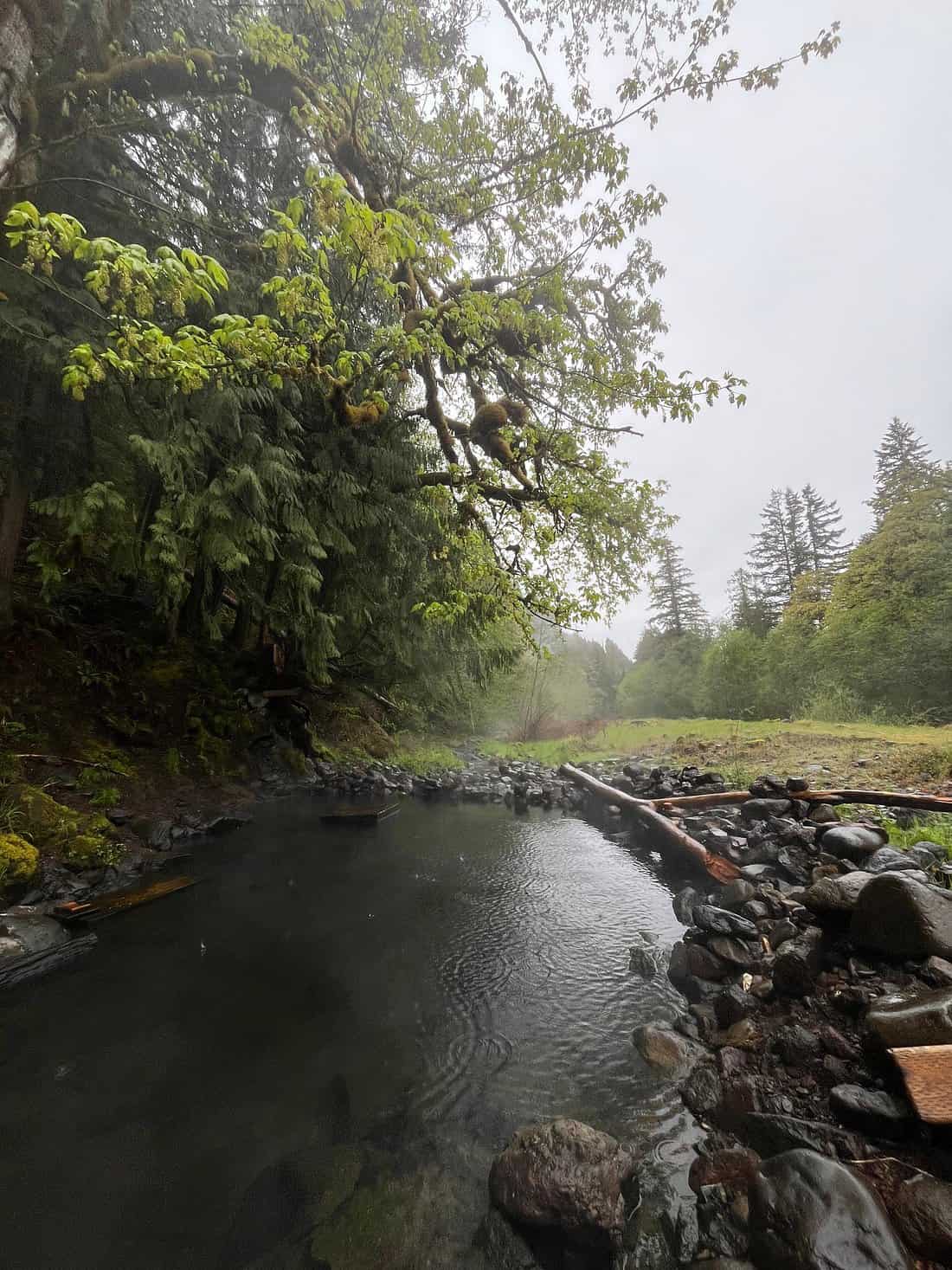
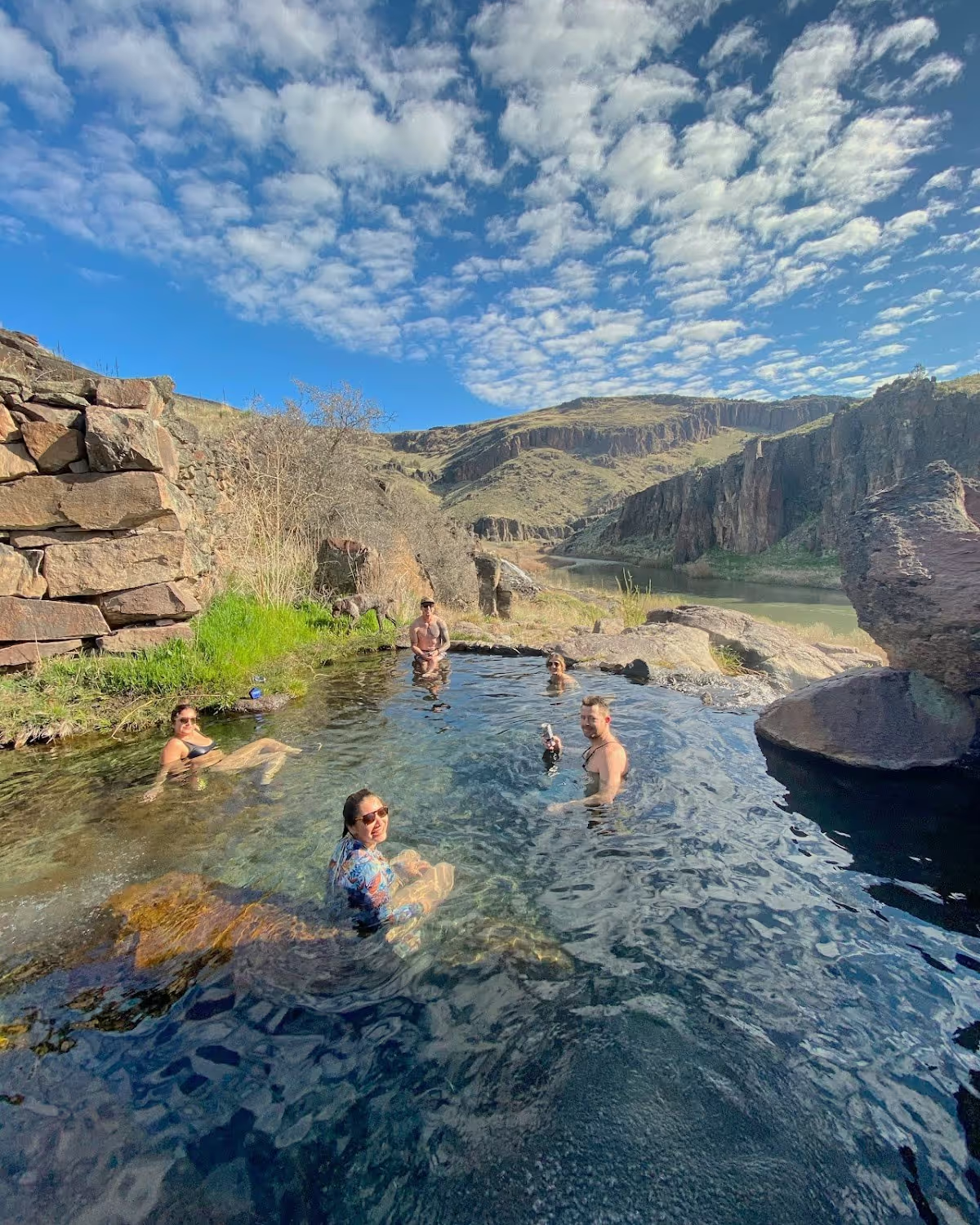
Umpqua Hot Springs, Oregon is a series of travertine soaking pools perched on a rocky cliff approximately 150 feet above the North Umpqua Wild and Scenic River, within the Umpqua National Forest. The pools are formed from calcium mineral deposits that have built up naturally on the hillside, creating tiered terraces that cascade downward. A $5 per vehicle day-use fee is required and the site is managed by the US Forest Service as day-use only from sunrise to sunset. Clothing is optional.
The geothermal water seeps through an active fault at approximately 115 degrees Fahrenheit, flowing through seven or more pools of varying sizes and temperatures. The uppermost pool is the hottest and is partially covered by an open-air wooden structure. Lower pools become progressively cooler, reaching around 92 degrees Fahrenheit near the river edge. Natural hot springs of this setting are rare in western Oregon, and Umpqua is considered one of the most visually distinctive soaking destinations in the state.
The springs were historically used by at least four indigenous tribal groups for spiritual and healing purposes. The site is reached by a short but steep 0.3-mile trail from the trailhead off Forest Road 3401, near Toketee Lake. The access road typically closes in winter, adding a 2.5-mile round trip walk when the gate is shut.
Location & Access
Getting to Umpqua Hot Springs
Umpqua Hot Springs is reached by driving east from Roseburg on Highway 138 for approximately 60 miles, then turning left onto Forest Road 34 at milepost 59, near the entrance to the Toketee Ranger Station. At the base of the hill, turn left across the concrete bridges, continue 2.2 miles on Forest Road 34, then turn right onto Forest Road 3401 and proceed approximately 0.7 miles to the parking area on the left. A high-clearance vehicle is recommended due to rough road conditions and potholes on Forest Road 3401. The total drive from Roseburg takes around 1.5 to 2 hours, and from Bend approximately 2 hours via Highway 97 south to Highway 138 west.
From the parking area, cross the painted footbridge over the North Umpqua River and follow the Umpqua Hot Springs Trail #1444, which climbs steeply for 0.3 miles up the rocky hillside to the pools. Sturdy footwear is recommended, as the trail is narrow, rooted, and can be very slippery after rain. The access road closes in winter, typically from November through April, extending the round-trip hike by approximately 2.5 miles from the gate. For visitors looking for hot springs near Roseburg, Umpqua is the most spectacular option in the region, though the remote location and rough access road require planning. There is no cell service at the site, so downloading maps in advance is essential.
Suitability & Accessibility
Who Umpqua Hot Springs Suits
Umpqua Hot Springs suits adults and older teenagers who are comfortable with a clothing-optional environment, a steep and sometimes slippery short trail, and a natural setting without managed facilities. The 0.3-mile hike gains elevation quickly, and the travertine pool surfaces are wet and slick, requiring careful footing. The site is not recommended for young children, who face both trail challenges and high pool temperatures. Families with older children who understand the environment may find the lower cooler pools manageable, but the clothing-optional setting is well established and should be considered when planning a visit.
For those seeking natural hot springs in Oregon with dramatic scenery and a genuine wilderness feel, Umpqua stands apart. The cliff-edge setting above the North Umpqua River and the mineral-blue water of the travertine pools create an experience unlike any other publicly accessible spring in the state. The site is heavily visited on summer weekends, and arriving at dawn on a weekday is the most reliable strategy for finding space. Pool sizes are small and capacity is naturally limited.
Wheelchair access is not possible. The steep rocky trail and pool terrain make the site inaccessible to visitors with mobility limitations. Parking is limited and frequently targeted for vehicle break-ins, so valuables should never be left in the car. No food, water, or shade are available on site. Pets are welcome on leash but must not enter the pools.
Safety & Etiquette
Safety and Etiquette at Umpqua Hot Springs
Umpqua Hot Springs requires careful attention, as the upper pools reach up to 115 degrees Fahrenheit and the travertine surfaces throughout the site are extremely slippery when wet. Always test the water before entering and move to a cooler pool if you feel lightheaded. Sturdy footwear with grip is essential both for the trail and for moving between pools on the rocky cliff face.
Vehicle break-ins are a documented problem at the parking area. Valuables should not be left in vehicles under any circumstances. The lot is small and fills early on weekends. Visitors should carry water, snacks, and all items in a day pack, as there are no services and no potable water on site. Cell service is not available at the trailhead or at the springs.
The site is day-use only from sunrise to sunset, with no overnight camping at the hot springs or parking area. The nearest campground is Toketee Lake, approximately 3 miles away. A $5 per vehicle day-use fee is required, or a valid Northwest Forest Pass or America the Beautiful Pass can be displayed instead. The access road closes in winter, typically from November through April.
Clothing is optional at the pools, which is well established at Umpqua and expected by most visitors. Photography of others requires explicit consent. Leave No Trace principles apply throughout. Pack out all waste, as garbage disposal on site is extremely limited. Do not introduce soap, shampoo, or personal care products into the pools, as these damage the travertine mineral formation and affect water quality for all visitors.