%2520Hot%2520Springs%252C%2520Oregon%25206.avif)
Quick FactsOverview
About Willow Creek Hot Springs
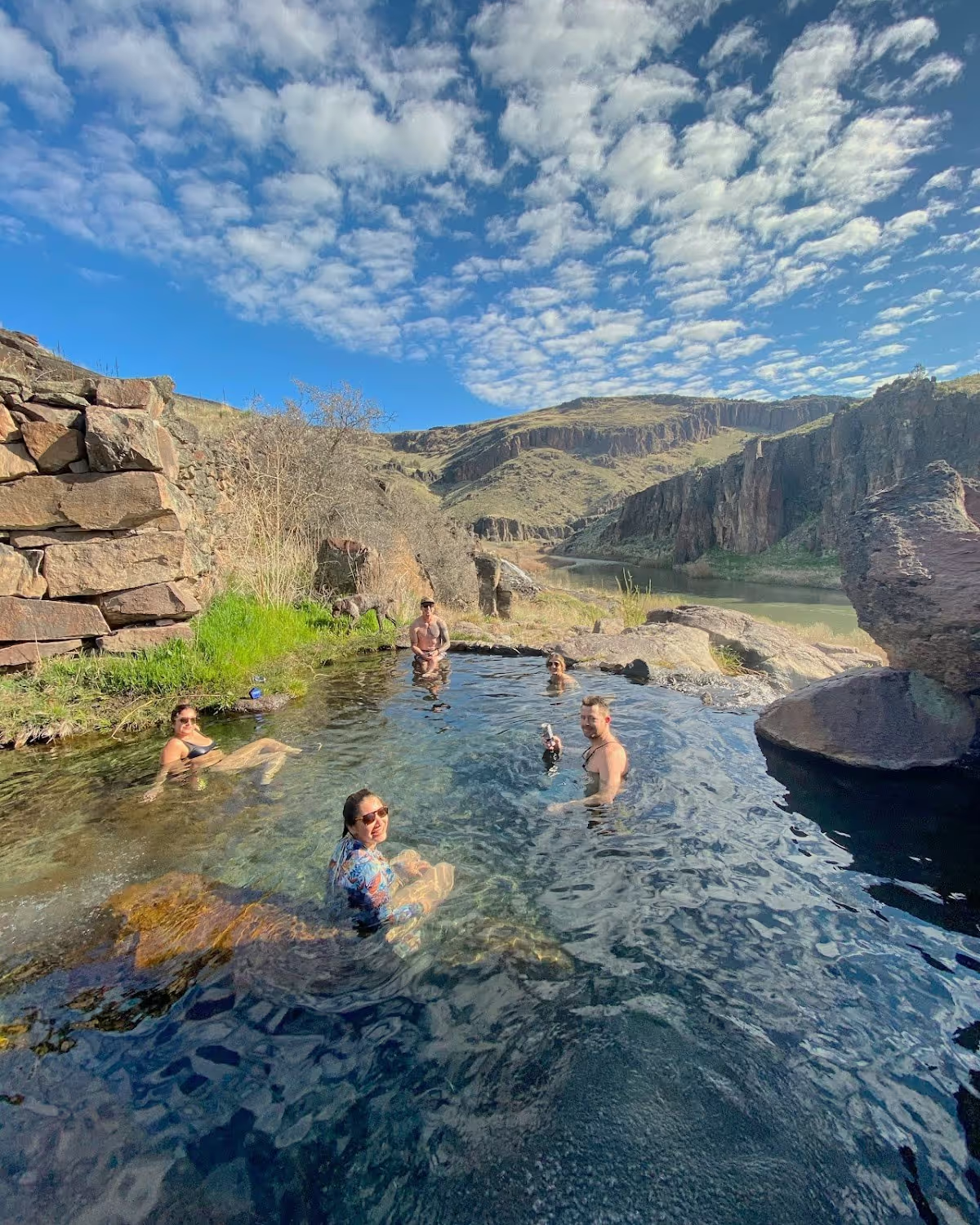
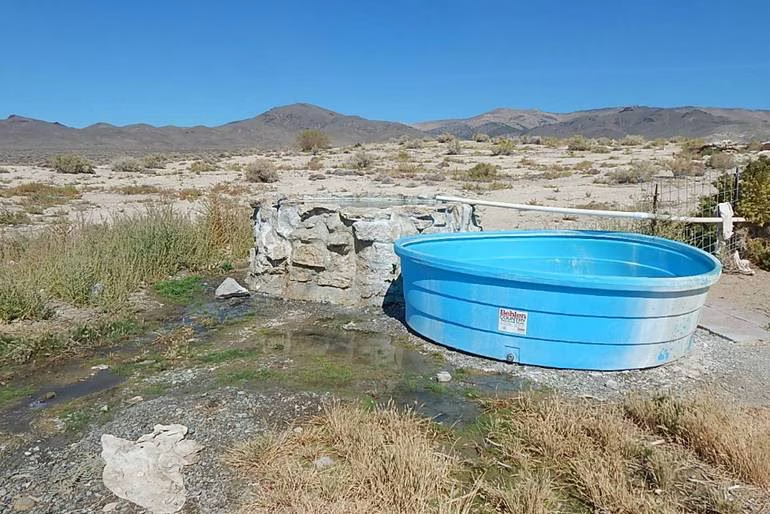
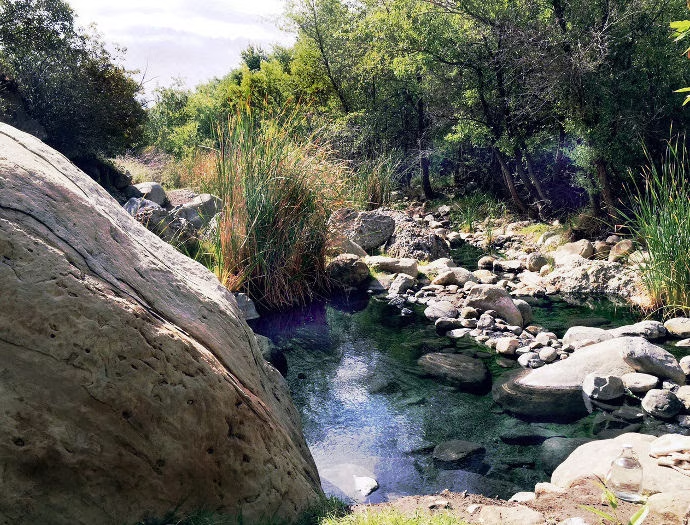
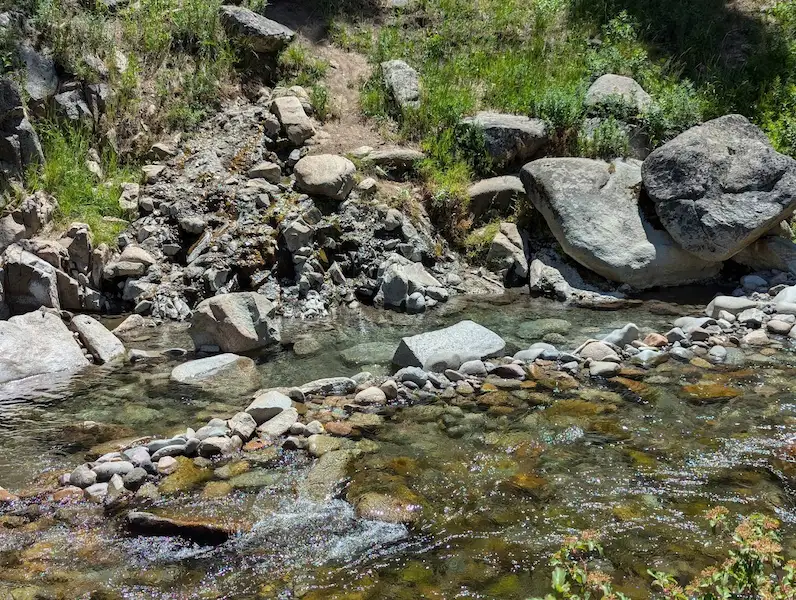
Willow Creek Hot Springs, Oregon, also known as Whitehorse Ranch Hot Springs, is a free BLM soaking pool in the remote southeastern Oregon high desert, on public land approximately 34 miles southeast of Fields. The springs consist of two adjoining pools separated by a concrete and mortar dam, one running hotter than the other. The pools sit roadside beside a small BLM campground with a vault toilet on the bank of Willow Creek, requiring no hiking to reach.
The geothermal water emerges through the sandy pool bottom at around 110 to 114 degrees Fahrenheit, with soaking temperatures in the hotter pool ranging from about 100 to 104 degrees Fahrenheit and the cooler side dropping to around 90 degrees. The pools are roughly 14 feet in diameter and 2.5 feet deep, with rocky sandy bottoms and submerged boulders that serve as natural seats. Free natural hot springs in this part of Oregon are rare, and Willow Creek is one of the most consistently comfortable and uncrowded soaking destinations in the region.
The land is managed by the BLM Vale District Office. Wildlife in the area includes pronghorn antelope, bighorn sheep, wild horses, and greater sage-grouse. Free camping is permitted at least 100 feet from the water on a first-come, first-served basis on the surrounding BLM land.
Location & Access
Getting to Willow Creek Hot Springs
Willow Creek Hot Springs is reached by driving south from Fields on Oregon Route 205 for approximately 8 miles, then turning left onto Whitehorse Ranch Lane, a well-maintained gravel road. Follow Whitehorse Ranch Lane for approximately 23 miles until you see a dirt road branching off to the south. Turn onto this dirt road and continue 2.5 miles to the springs and campground. There are no signs marking the turnoff or the springs, so saving the coordinates to an offline map before departure is essential as there is no cell service anywhere along the route. The dirt track is generally passable in dry conditions for standard vehicles but becomes impassable mud in wet weather.
From Burns Junction, an alternate route runs 20 miles south on US-95 and then approximately 21 miles southwest on Whitehorse Ranch Road to the same turnoff. From Burns, the drive takes roughly 2.5 hours. From Boise, it is approximately 3 hours. For visitors looking for hot springs near Fields, Willow Creek is the only accessible soaking option in the immediate area. Fields itself has a general store and gas, which is the last reliable fuel stop before the springs. Visitors should carry sufficient water, food, and fuel for the round trip, as no services exist along the route or at the springs.
Suitability & Accessibility
Who Willow Creek Hot Springs Suits
Willow Creek Hot Springs suits self-sufficient travelers, overlanders, and remote camping enthusiasts who are comfortable with long drives on unpaved desert roads, no cell service, and minimal facilities. The springs themselves require no hiking and are accessible directly from the parking area, making the physical soaking experience easy once you arrive. However, the extreme remoteness, 110-degree source water near the pool bottom, and absence of emergency services make the site unsuitable for visitors who are not experienced in self-sufficient desert travel.
For those seeking free hot springs in Oregon that offer genuine solitude and an authentic high-desert atmosphere, Willow Creek delivers an experience rarely matched at other accessible springs in the state. The site sees far fewer visitors than better-known Oregon springs and it is common to find the pools entirely to yourself. Camping on surrounding BLM land is free with no reservation needed, and clear desert skies make for excellent stargazing. The clothing-optional norm applies and nudity is common, though the remote setting means fewer unexpected encounters than at busier sites.
Wheelchair access is not possible due to the unpaved access road and uneven ground at the site. Families with young children should consider carefully, as the source water is dangerously hot, facilities are limited to a single vault toilet, and emergency help is a long drive away. Dogs are welcome but should be kept away from the hottest water near the source and must not be left unattended near the pool.
Safety & Etiquette
Safety and Etiquette at Willow Creek Hot Springs
Willow Creek Hot Springs is a remote site where the most significant safety concern is the access road rather than the pool. The final 2.5 miles of dirt track can become deep mud in any significant rain, trapping vehicles with no way to call for help. Never attempt the access road during or immediately after rain, and check weather forecasts before setting out. A high-clearance vehicle is strongly recommended. Informing someone of your plans is essential, as there is no cell service for many miles in any direction.
The source water emerges at around 110 to 114 degrees Fahrenheit, and the pool bottom has localized hot zones. Always lower yourself in slowly, test temperature before settling, and be careful near the mortar dam and the bottom of the hotter pool. Rocks can be slippery with algae, so water shoes with grip are advisable. Summer heat can be extreme in this high desert, and visiting early morning or evening is strongly advisable in hot months.
The BLM campground has one vault toilet but no potable water. Carry sufficient water for a full day. Winter road access is unreliable, and the springs are best visited from late spring through early autumn. Leave No Trace principles apply throughout. Pack out all waste, do not introduce soap or personal care products into the pools, and keep camping at least 100 feet from the water. Glass containers are not permitted at the springs.
The springs survived the 2012 wildfire that burned over 500,000 acres nearby. The area has largely recovered and wildlife has returned. Respect the land by staying on existing tracks, not disturbing vegetation, and avoiding off-road driving in this sensitive high-desert ecosystem. The continued access to this site depends on visitors treating the land with care.
%2520Hot%2520Springs%252C%2520Oregon%25201.avif)
%2520Hot%2520Springs%252C%2520Oregon%25206.avif)
%2520Hot%2520Springs%252C%2520Oregon%25209.avif)