Quick FactsOverview
About Browns Creek Hot Spring
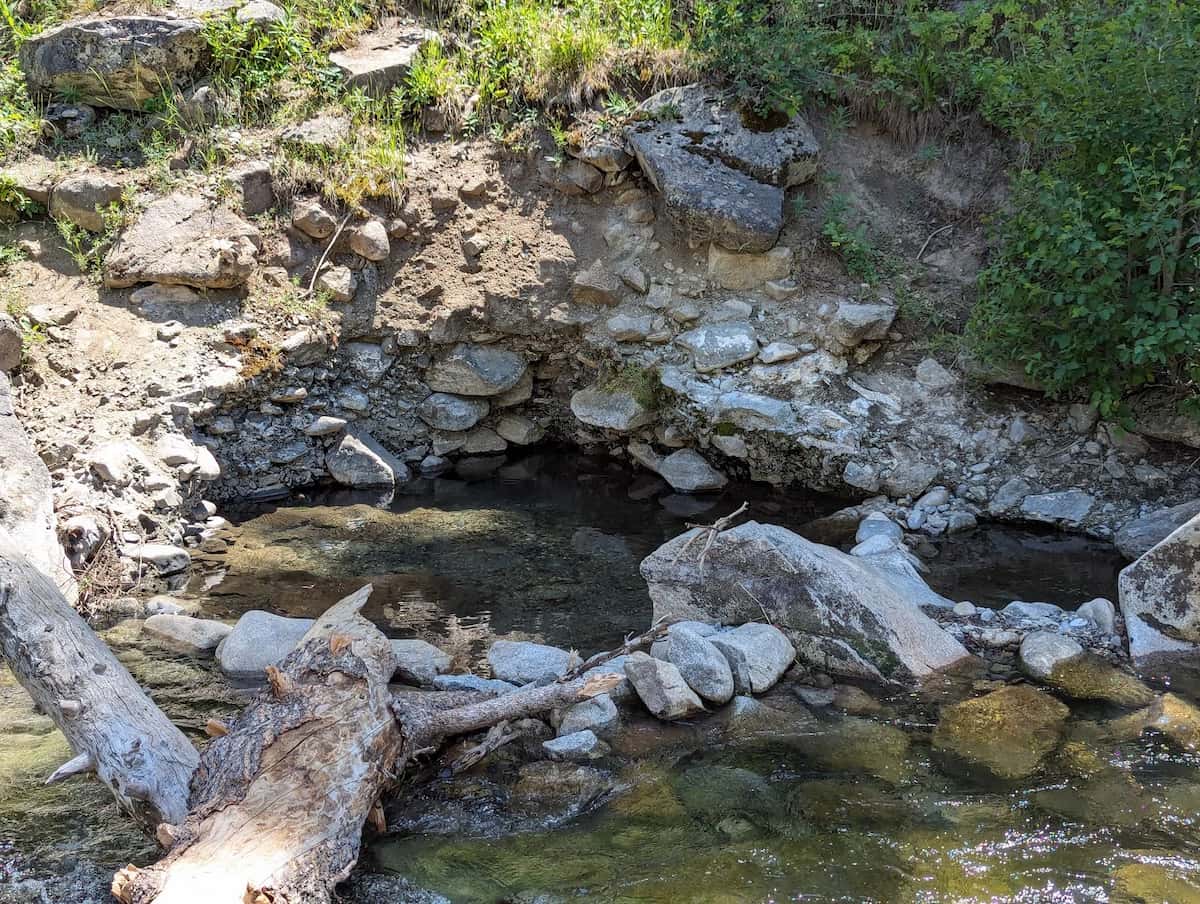
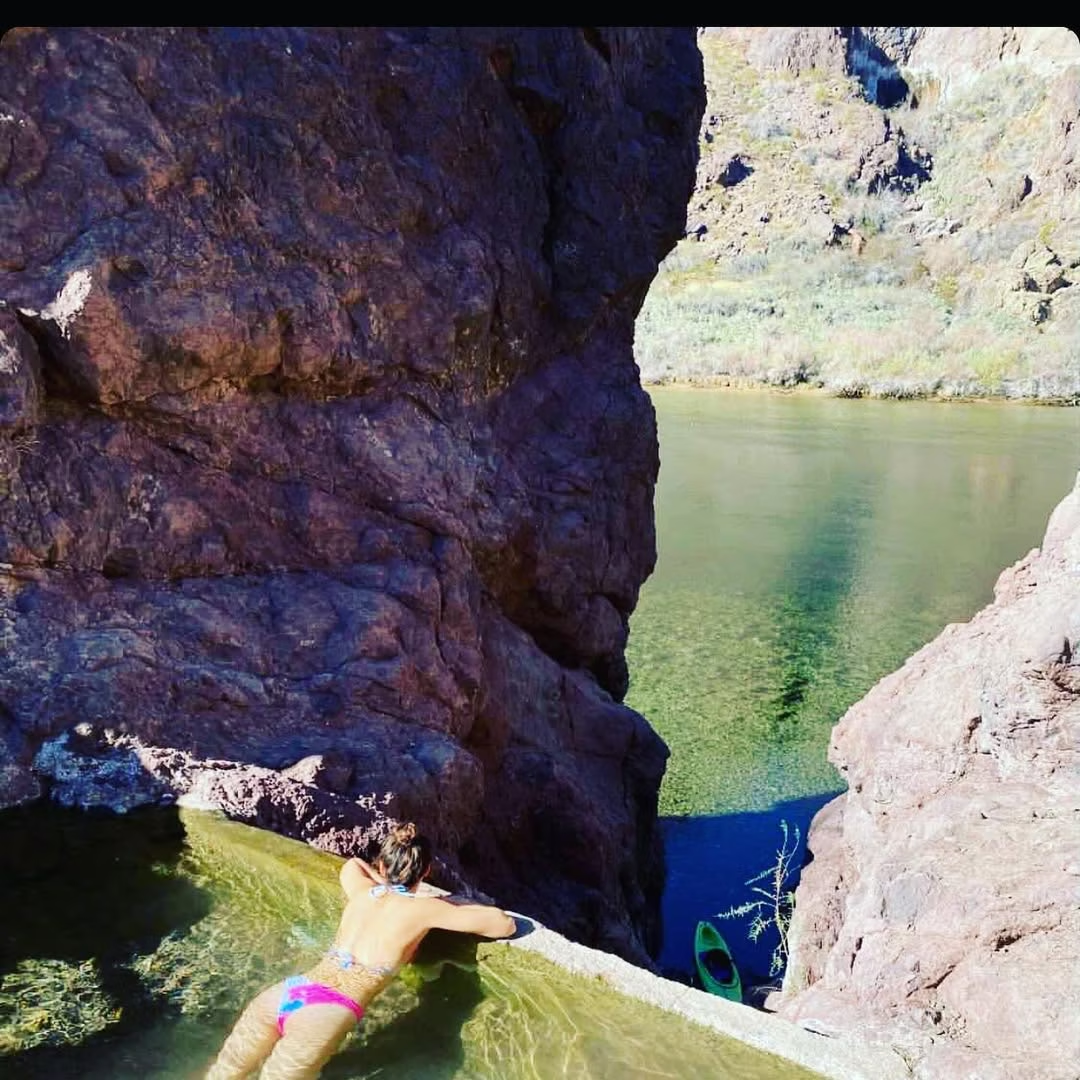
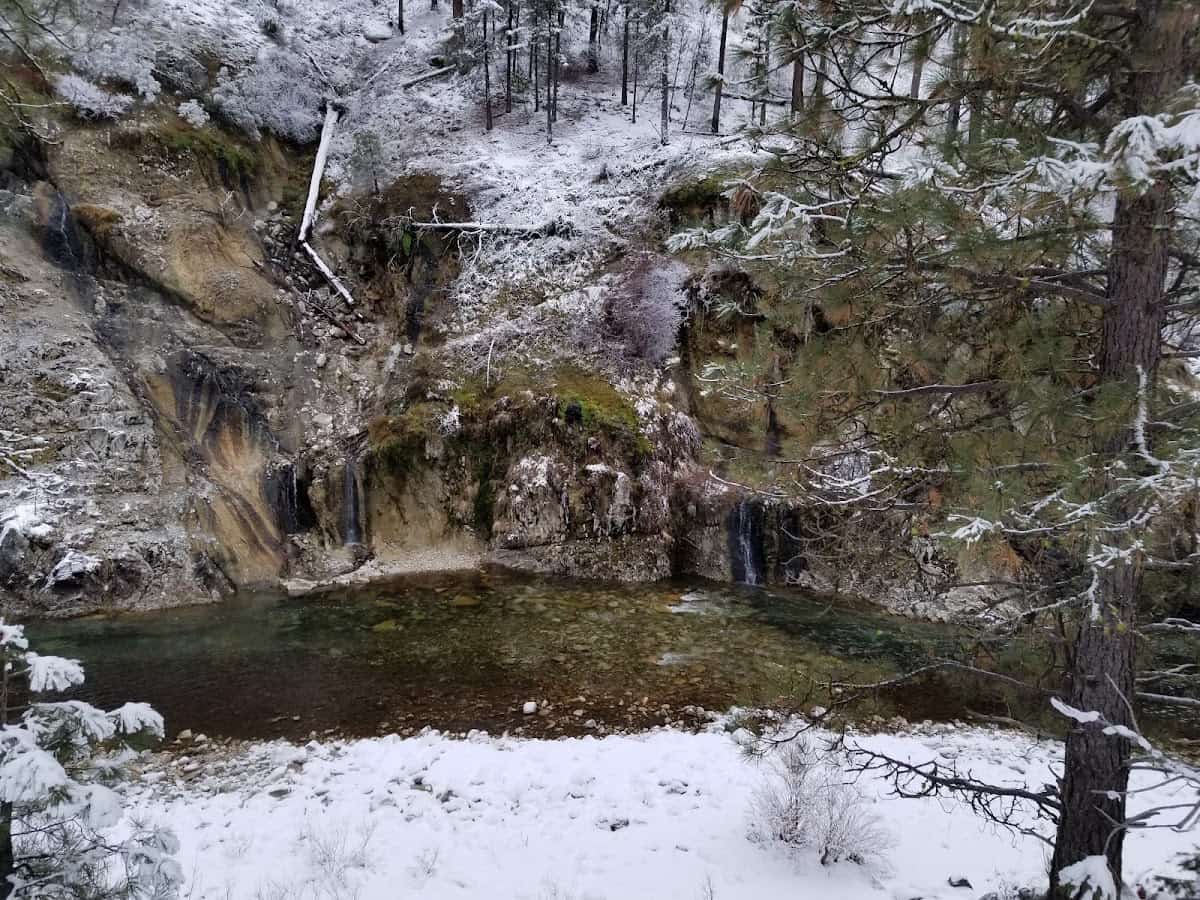
Browns Creek Hot Spring, Idaho is a free geothermal spring along the Middle Fork Boise River Road in the Boise National Forest in Elmore County, near the remote mountain community of Atlanta. Hot water emerges at approximately 122 degrees Fahrenheit from a cliff face and cascades down in two streams. One stream flows into an old rock and mortar tub, while the other pours down as a natural hot shower into the Middle Fork Boise River. Atlanta, an isolated mountain town accessible by rough forest roads, is the nearest community.
Browns Creek is typically experienced as a natural hot shower rather than a pool soak. The water cools as it falls from the cliff, but the source temperature is high enough that care is needed. A soaking pool only forms at the base during low water conditions in late summer and fall. The spring sits alongside the Middle Fork Boise River Road, one of several thermal features along this geothermally active corridor that also includes Dutch Frank Hot Springs, Granite Creek Hot Springs, Loftus Hot Springs, and Neinmeyer Hot Springs. These are among the most scenic free hot springs Idaho offers in the central mountains.
The spring requires fording the Middle Fork Boise River, which has no bridge at this point.
Location & Access
Getting to Browns Creek Hot Spring
Browns Creek Hot Spring is located along the Middle Fork Boise River Road in the Boise National Forest, on the opposite side of the river from the road. Reaching the spring requires fording the Middle Fork Boise River, which is only safely possible during late summer and fall when water levels are at their lowest.
From Boise, the Middle Fork Boise River Road is accessed via Highway 21 (the Ponderosa Pine Scenic Byway) through Idaho City, then south on forest roads toward Atlanta. The road is unpaved and rough in places. A high-clearance vehicle is required. The drive from Boise to the Atlanta area takes approximately three hours.
Regional Context
The Middle Fork Boise River corridor is one of the richest hot springs corridors in Idaho. For visitors seeking hot springs near Atlanta Idaho, Dutch Frank Hot Springs (roadside, no ford required), Granite Creek Hot Springs (roadside), and Chattanooga Hot Springs (roadside) are alternatives that do not require river fording. Loftus Hot Springs and Neinmeyer Hot Springs are additional roadside options along the same corridor. The Atlanta area offers a genuine backcountry Idaho experience with historic mining heritage and extensive forest recreation.
Suitability & Accessibility
Who Should Visit Browns Creek Hot Spring
Browns Creek Hot Spring suits adventurous hot springs enthusiasts exploring the Middle Fork Boise River corridor who are comfortable with river fording and primitive conditions. The spring is best experienced as a natural hot shower from the cliff face rather than a pool soak, as the soaking pool only forms during low water. At 122 degrees at the source, the water cools significantly as it cascades down, making the shower comfortable.
The river ford is the primary challenge. Attempt it only during late summer and fall when water is at its lowest. Bring water shoes and trekking poles for stability. The surrounding forest of Douglas fir and ponderosa pine, combined with wildflowers in season, makes the setting beautiful. Bring a fishing pole and a folding chair for maximum enjoyment.
Accessibility at Browns Creek Hot Spring
The spring is not wheelchair accessible. The river ford and unimproved terrain prevent easy access. No facilities exist. Those seeking free hot springs Idaho offers along the Middle Fork Boise River corridor who prefer not to ford the river should visit Dutch Frank Hot Springs, Granite Creek Hot Springs, or Chattanooga Hot Springs, all roadside options that do not require river fording and offer more reliable soaking pools throughout the season.
Safety & Etiquette
Browns Creek Hot Spring Safety Tips
Browns Creek Hot Spring has source water at approximately 122 degrees Fahrenheit, which is hot enough to cause burns at the source. The water cools as it cascades from the cliff face, but always test temperature before standing under the shower or entering any pool. The old rock and mortar tub may have inconsistent temperatures.
The Middle Fork Boise River ford is the primary safety concern. Do not attempt to cross during high water in spring and early summer. The river is swift and cold, with an uneven rocky bottom. Wear water shoes and use trekking poles. The ford is only safe during late summer and fall when water levels drop to ankle or knee depth.
Road and Environmental Awareness
The Middle Fork Boise River Road is long, rough, and remote. A high-clearance vehicle is required. The drive from Boise takes approximately three hours. Carry extra fuel, water, and emergency supplies. Cell service is not available along the corridor. The nearest medical facilities are in Idaho City or Mountain Home, each over an hour away.
Leave No Trace
Pack out all trash. Do not alter the cliff face, the old mortar tub, or the natural spring features. The Middle Fork Boise River corridor is a fragile ecosystem. Follow all Boise National Forest regulations and respect the wilderness character of the area. The Middle Fork Boise River corridor sees limited traffic and offers a genuine backcountry Idaho experience. Inform someone of your travel plans before heading into this remote area.