
Quick FactsOverview
About Ground Hog Hot Springs
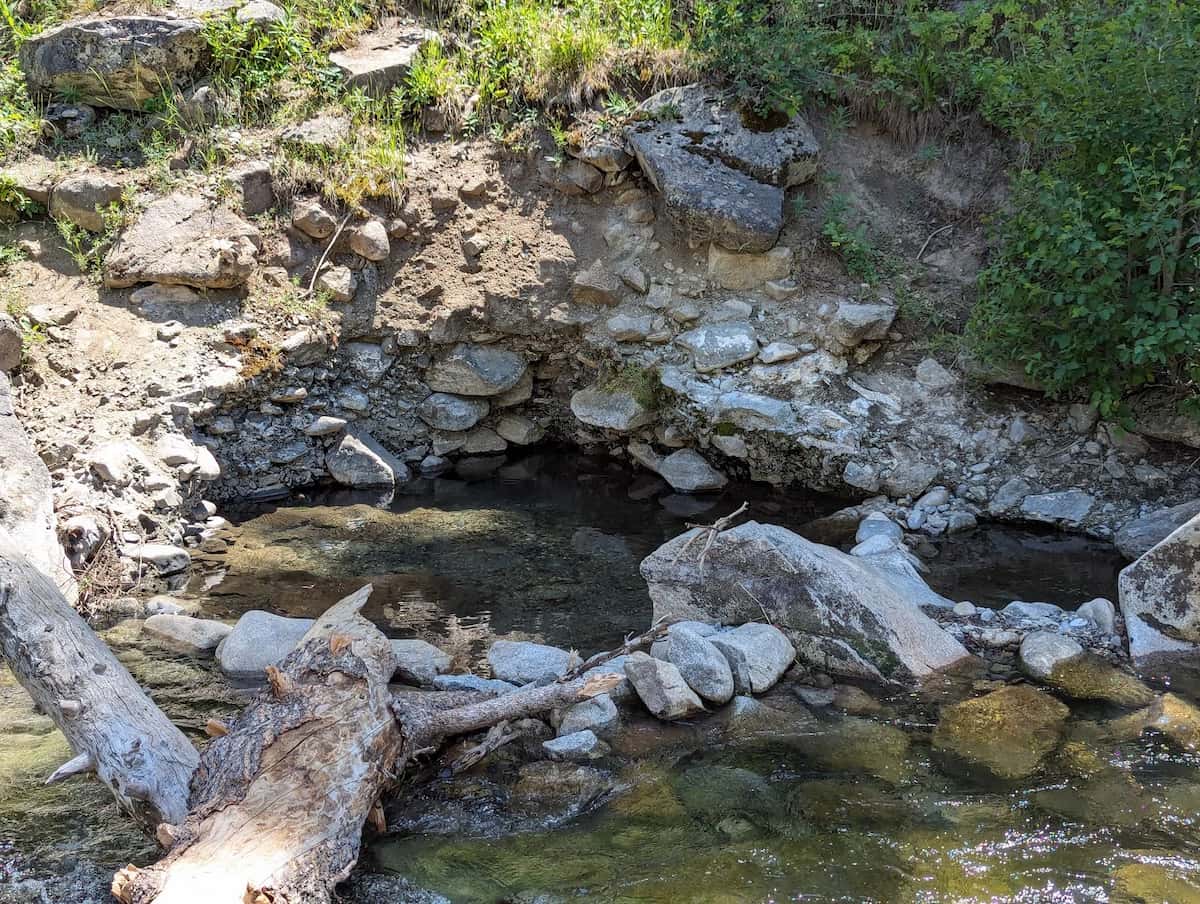
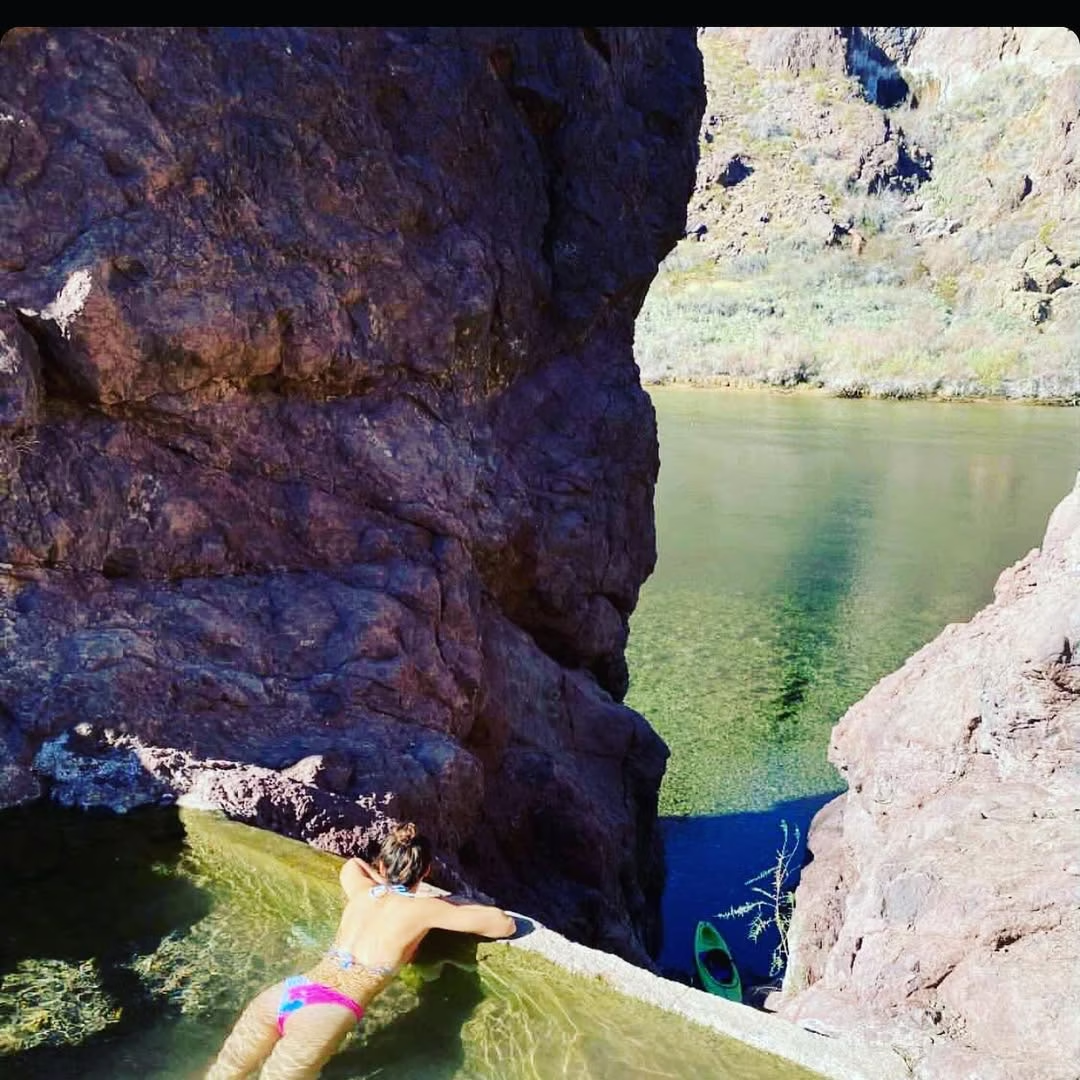
Ground Hog Hot Springs, Idaho is a free, undeveloped geothermal spring in the Boise National Forest in Valley County, approximately 23 miles southwest of Cascade along the South Fork Payette River. The spring surfaces at approximately 100 degrees Fahrenheit, feeding a rock-lined soaking pool at the river edge. A 3.5-mile hike from the Boiling Springs Campground trailhead is required to reach the spring. Cascade, a mountain town on Highway 55 along the North Fork Payette River, is the nearest community with services.
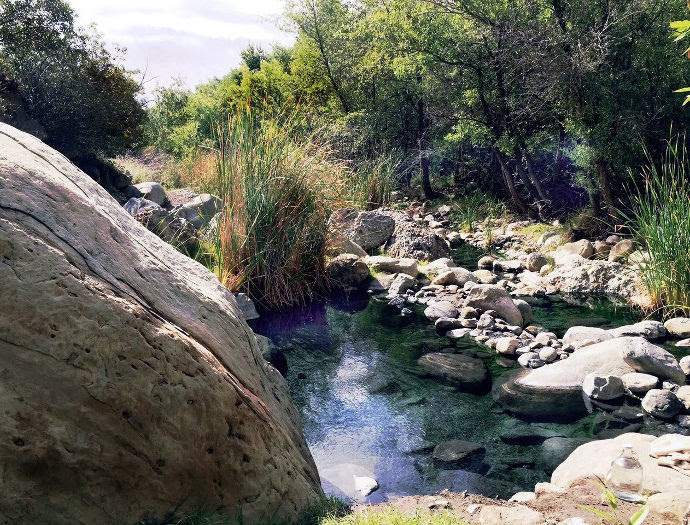
Ground Hog sits downstream from Butterfly Hot Springs (130 degrees source), and the two are often visited on the same trip. The trail follows the South Fork Payette River through conifer forest and granite canyon, crossing several bridges. The Boiling Springs area itself has a dramatically hot geothermal feature (200+ degrees) visible from the campground, though that source is far too hot for soaking. This stretch of the South Fork is one of the richest geothermal corridors in the Boise National Forest.
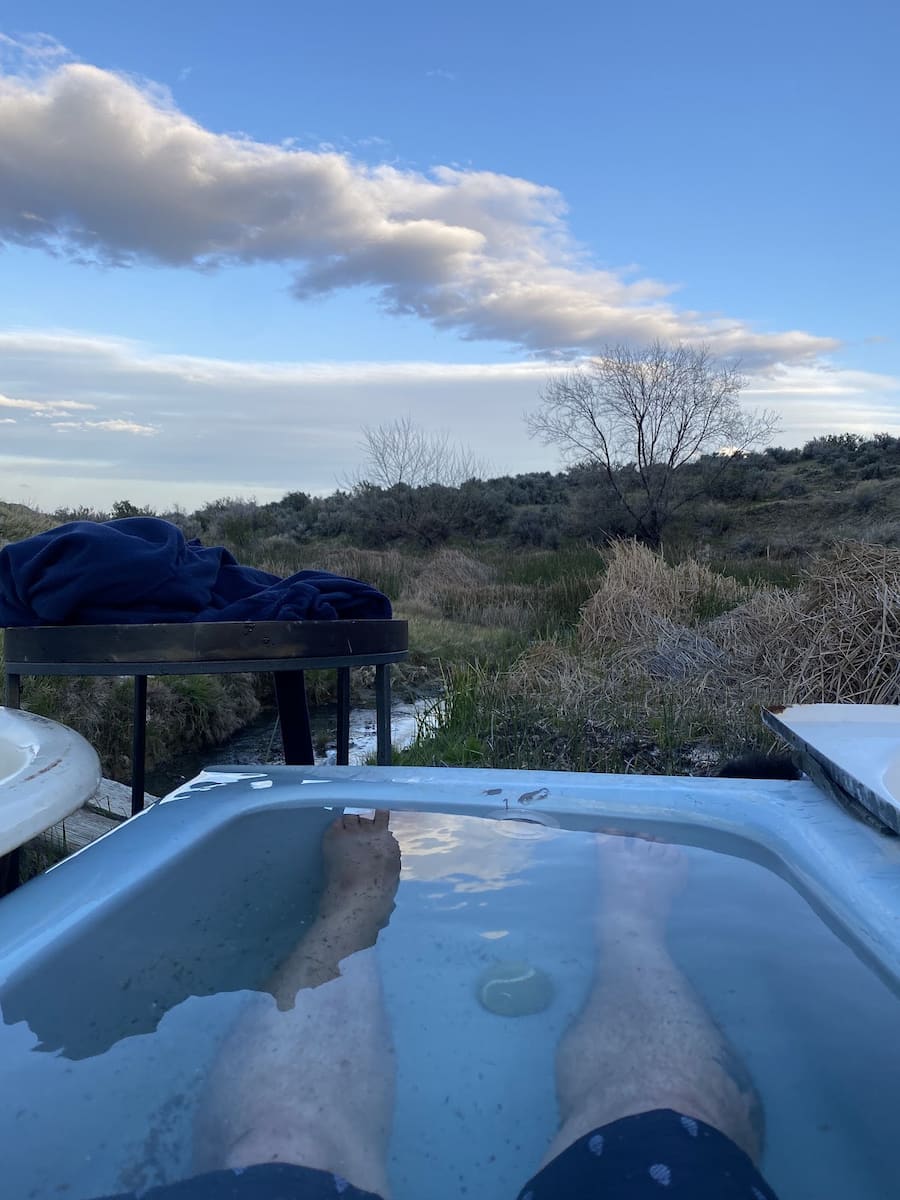
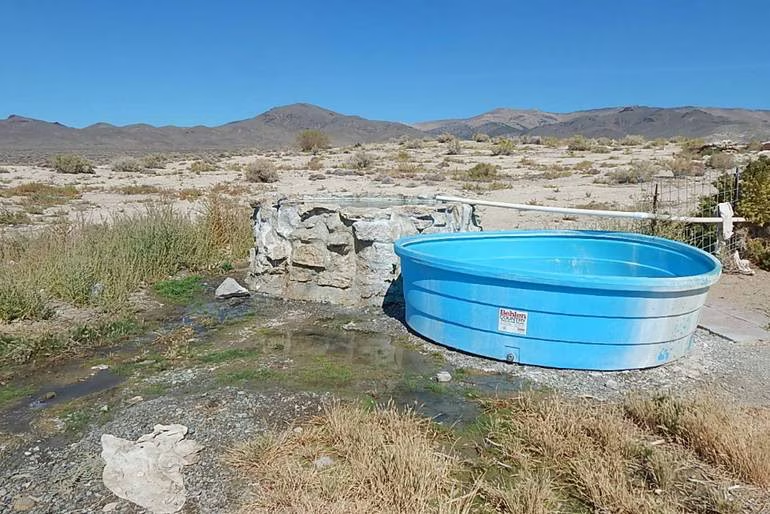
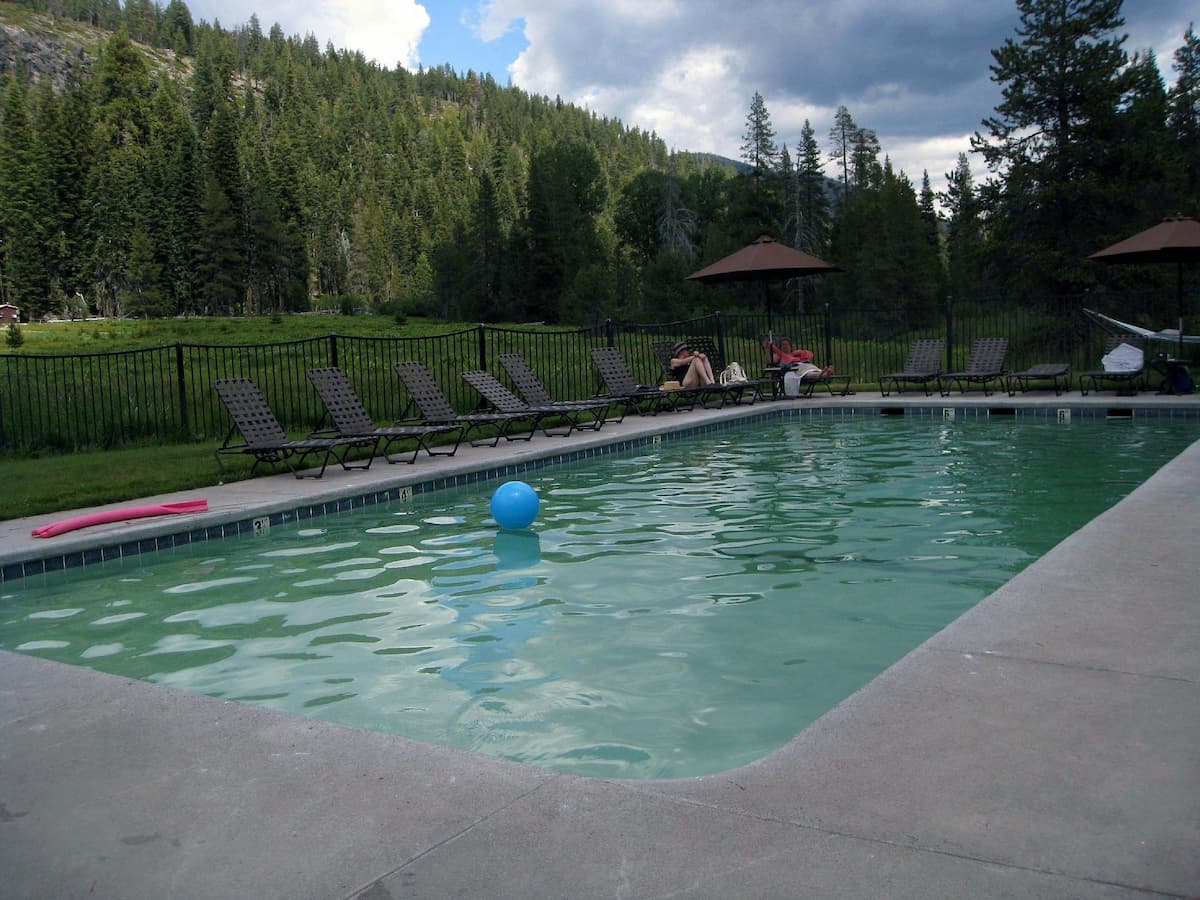
The pool is visitor-built with rock walls and a natural gravel bottom. Conditions change with season and river levels.
Location & Access
Getting to Ground Hog Hot Springs
Ground Hog Hot Springs is reached by a 3.5-mile hike from the Boiling Springs Campground trailhead in the Boise National Forest. The trail follows the South Fork Payette River upstream through forest and canyon terrain. The hike is moderate in difficulty with mild elevation changes and several bridge crossings.
From Cascade, drive south on the Warm Lake Road, then follow forest roads to the Boiling Springs area. The last miles are on unpaved forest road. A high-clearance vehicle is recommended. The trailhead at Boiling Springs Campground has a parking area and a vault toilet. A cabin at the campground is rentable through Recreation.gov.
Trail Notes
Butterfly Hot Springs is located upstream from Ground Hog and can be visited on the same hike. The trail is well-maintained but can be muddy after rain. River crossings may be necessary depending on water levels. The road to the trailhead is typically accessible from late spring through fall, closed by snow in winter. For visitors seeking hot springs near Cascade, Ground Hog and Butterfly offer a rewarding backcountry pair. Trail Creek Hot Springs (roadside near Warm Lake) and Vulcan Hot Springs (short hike from Stolle Meadows) are more accessible alternatives in the same region.
Suitability & Accessibility
Who Should Visit Ground Hog Hot Springs
Ground Hog Hot Springs suits hikers and hot springs enthusiasts seeking a scenic backcountry soak along the South Fork Payette River in the Boise National Forest. At 100 degrees Fahrenheit, the water is at a comfortable soaking temperature. The 3.5-mile hike is moderate and manageable for most reasonably fit visitors, including families with older children who are comfortable with a full-day outing.
The spring is clothing optional. The river setting provides a natural cold plunge option between soaks. Combining Ground Hog with Butterfly Hot Springs upstream makes for an excellent full-day hot springs hike. The trail is best from late spring through fall. Early summer offers high river flows and lush green canyon scenery.
Accessibility at Ground Hog Hot Springs
The spring is not wheelchair accessible. The 3.5-mile trail is on unimproved ground with bridge crossings. No facilities exist at the spring. Those exploring free hot springs Idaho offers near Cascade who want easier access should visit Trail Creek Hot Springs (short walk, roadside near Warm Lake) or Gold Fork Hot Springs (developed commercial facility near Donnelly with no hiking required). The Cascade and Warm Lake area is one of the richest hot springs corridors in Idaho, with multiple springs within a short drive of each other.
Safety & Etiquette
Ground Hog Hot Springs Safety Tips
Ground Hog Hot Springs is in the backcountry of the Boise National Forest, and visitors should be prepared for a full-day hike. The water at 100 degrees Fahrenheit is comfortable, but always test before entering as conditions change with season. The rock-lined pool may shift or deteriorate between visits.
The South Fork Payette River is swift and cold. Do not attempt to cross the river except at designated bridges. High water during spring runoff can make the trail and river crossings hazardous. The Boiling Springs geothermal area near the trailhead has water at 200+ degrees that is dangerously hot. Stay on trails and do not approach any steaming vents.
Wildlife and Environmental Awareness
Black bears, moose, elk, and mountain lions are present in the Boise National Forest. Make noise on the trail and store food properly. The canyon can be hot and exposed in summer. Bring water, sun protection, and insect repellent. Ticks are common in spring and early summer.
Leave No Trace
Pack out all trash. Do not use soap in the pools. If using a tarp to line the pool bottom, remove it when you leave. Follow all Boise National Forest regulations. Cell service is not available on the trail. Inform someone of your hiking plans before departing. The nearest medical facilities are in Cascade, approximately 23 miles away by forest road. Carry a first aid kit and a satellite communication device for emergencies in this remote area of the Boise National Forest.