Quick FactsOverview
About Skinny Dipper Hot Springs
Skinny Dipper Hot Springs, Idaho is a geothermal spring located on Bureau of Land Management land approximately four miles east of Banks in Boise County, on a steep hillside above the South Fork of the Payette River. The spring was closed by the BLM in June 2016 due to serious public safety hazards and environmental damage, and the closure was extended for an additional five years in 2021. The unauthorized pools and piping systems have been removed, and the site is not open to visitors. Anyone who enters the closed area may be cited for trespassing.
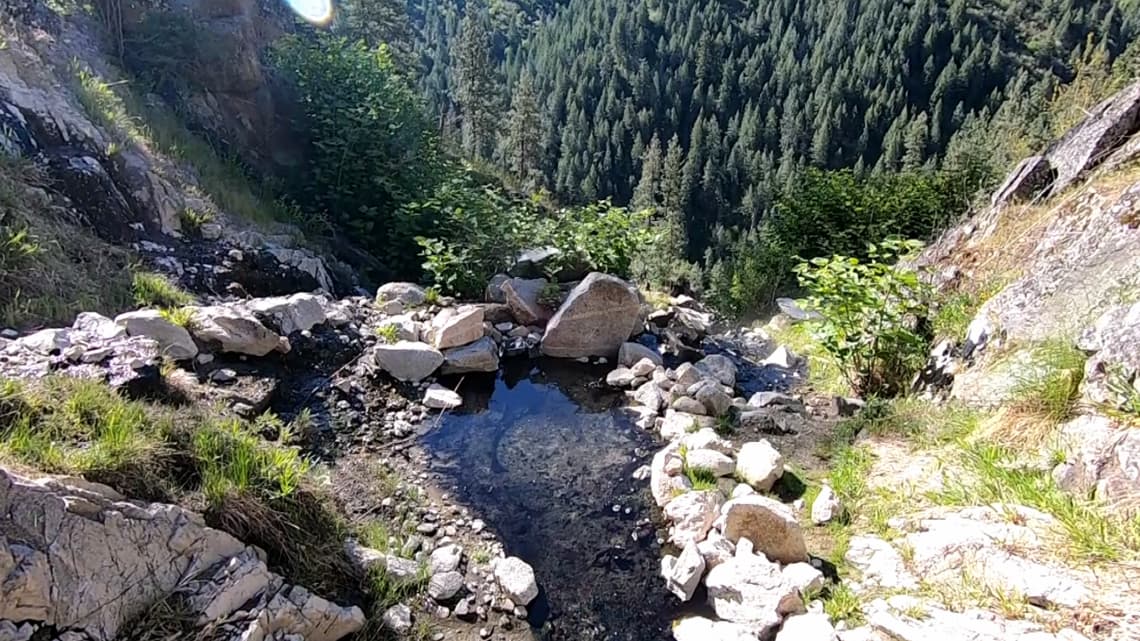
Before its closure, Skinny Dipper was one of the most visited natural hot springs in Idaho, known for three rock and mortar pools built by volunteers in the 1990s on a steep slope overlooking the river valley. The 160 degree Fahrenheit source water was mixed with cold water through a system of PVC pipes, allowing bathers to adjust temperatures at each pool. The largest pool, roughly 15 feet in diameter, was informally called the party pool. However, the unauthorized construction, combined with escalating misuse, led the BLM to conclude that continued public access posed unacceptable risks. A 2017 rock slide further damaged the pools. The site remains closed with no confirmed reopening date.
Location & Access
Location of Skinny Dipper Hot Springs
Skinny Dipper Hot Springs was located approximately four miles east of the town of Banks along the Banks-Lowman Highway (Idaho Highway 17/21), near mile marker 4 in Boise County, Idaho. The former trailhead parking area was a pullout on the south side of the highway, and the trail climbed steeply for roughly half a mile up a hillside covered in brush and forest to reach the pools. The site is now posted with closure signs and entry is prohibited by the BLM.
Current Access Status
Skinny Dipper Hot Springs is closed to all public access. The BLM initially closed the site in June 2016 for a five-year period to allow rehabilitation, then extended the closure in 2021 for at least five additional years. The unauthorized trail and pool structures have been removed, and the agency has stated that no viable proposal for reopening has been received. Visitors looking for hot springs near Banks should consider other legally accessible options in the area, including Deer Creek (Bronco Billy) Hot Springs across the road from the former Skinny Dipper parking area, or other authorized soaking sites along the Middle Fork of the Payette River. The BLM Four Rivers Field Office in Boise can provide current information on which hot springs in the area are open and legal to visit. Those seeking natural hot springs in Idaho should verify access status with the managing agency before visiting any backcountry spring.
Suitability & Accessibility
Who Should Visit Skinny Dipper Hot Springs
Skinny Dipper Hot Springs is not suitable for any visitors at this time because the site is closed to public access and entry is prohibited. Before its closure, the spring attracted a mix of locals and visitors seeking a backcountry soaking experience, but the combination of unauthorized construction, steep terrain, and persistent safety incidents led to its permanent-style closure by federal land managers. The trail was steep and became dangerously slippery in wet or icy conditions, and the pools were located on an exposed hillside with significant fall hazards.
Accessibility at Skinny Dipper Hot Springs
The former trail to Skinny Dipper was steep and narrow, with no maintained surface, and the pools were reached only by climbing roughly half a mile up a hillside. There were no accessibility features of any kind. The site was entirely undeveloped and had no restrooms, changing areas, or signage beyond the BLM closure notice. For those who previously considered Skinny Dipper a family hot springs near Banks destination, it is important to note that the site was historically not family friendly due to clothing-optional use, steep terrain, and a documented history of unsafe conditions. Visitors looking for accessible natural hot springs in Idaho should explore maintained, legally open options elsewhere in the Boise National Forest or the Sawtooth region, where several developed and undeveloped springs offer safe, legal soaking opportunities with proper access.
Safety & Etiquette
Skinny Dipper Hot Springs Safety Tips
Skinny Dipper Hot Springs is closed to all public access, and the most important safety guidance is to not visit the site. The BLM closed the area in 2016 after documenting serious safety hazards including falls from steep terrain, exposure-related medical emergencies, and over 125 law enforcement incidents in a five-year period. These incidents included vehicle break-ins, illegal drug activity, and violent crimes. A natural rock slide in 2017 further damaged the pool area, adding to the physical hazards. Entering the closed area is a trespassing violation and may result in a citation from BLM law enforcement.
Why Skinny Dipper Hot Springs Was Closed
The BLM conducted an environmental analysis in 2015 and concluded that the unauthorized pools, piping systems, and the level of public use they attracted were causing significant damage to natural resources and creating ongoing public health and safety problems. The pools were constructed in the 1990s without authorization on public land, and the BLM was unable to address the safety and sanitation issues through earlier measures such as restricting hours. After closing the site, the BLM removed the unauthorized piping, concrete, and other materials. The agency has stated it remains open to proposals for managed reopening, but no viable plan has been submitted. Visitors interested in natural hot springs in Idaho should check with the BLM or Forest Service before visiting any undeveloped spring, as access restrictions can change. Among the hot springs in Idaho, Skinny Dipper serves as a cautionary example of what happens when a popular natural site is damaged by overuse and unauthorized development.