Quick FactsOverview
Bullicame Hot Springs, Italy is a natural thermal spring site located in the countryside approximately 2.5 kilometers west of Viterbo city center in the province of Viterbo in the Lazio region of central Italy. Viterbo is known as "La Città Termale" (The Thermal City) due to the extensive network of hot springs throughout the surrounding territory fed by a large volcanic hydrothermal basin. The city is positioned approximately 80 kilometers north of Rome and has a population of around 67,000. Viterbo's historic center preserves medieval architecture including the Papal Palace (Palazzo dei Papi), cathedral, fortified walls, and narrow streets reflecting the city's role as a papal seat in the 13th century when it hosted the papacy for several decades. The thermal springs around Viterbo have been utilized since Etruscan times (before 500 BCE) and were extensively developed by the Romans who constructed elaborate bath complexes and aqueducts to channel the thermal waters.
The Bullicame spring takes its name from the Latin word "bullicare" meaning "to bubble" or "to boil," referencing the vigorous bubbling of gases and steam rising from the hot water as it emerges from the ground. The spring has been documented since the early Middle Ages as a stopping point along the Via Francigena, the medieval pilgrimage route from Canterbury to Rome. In the itinerary of Sigerico, Archbishop of Canterbury, who traveled to Rome in 990 CE, the Bullicame area represented the sixth stopping point (mansio) departing from Rome and was referred to as "Sce Valentine" in reference to Saints Valentine and Hilary who were martyred nearby according to local tradition. The most famous historical reference to Bullicame appears in Dante Alighieri's Divine Comedy, specifically in Canto XIV of the Inferno, written in the early 14th century. Dante compares the hot sulphurous streams of Bullicame to the rivers of Hell, writing lines that translate approximately to: "As from the Bullicame issues forth a brooklet / Which the sinful women then divide among them." Medieval commentators have debated whether "sinful women" refers to prostitutes who bathed there or to hemp workers (pettatrici) who soaked hemp fibers in the hot water for processing, as Viterbo was renowned in that era for high-quality linen and hemp production that was bleached white using the mineral-rich thermal waters.
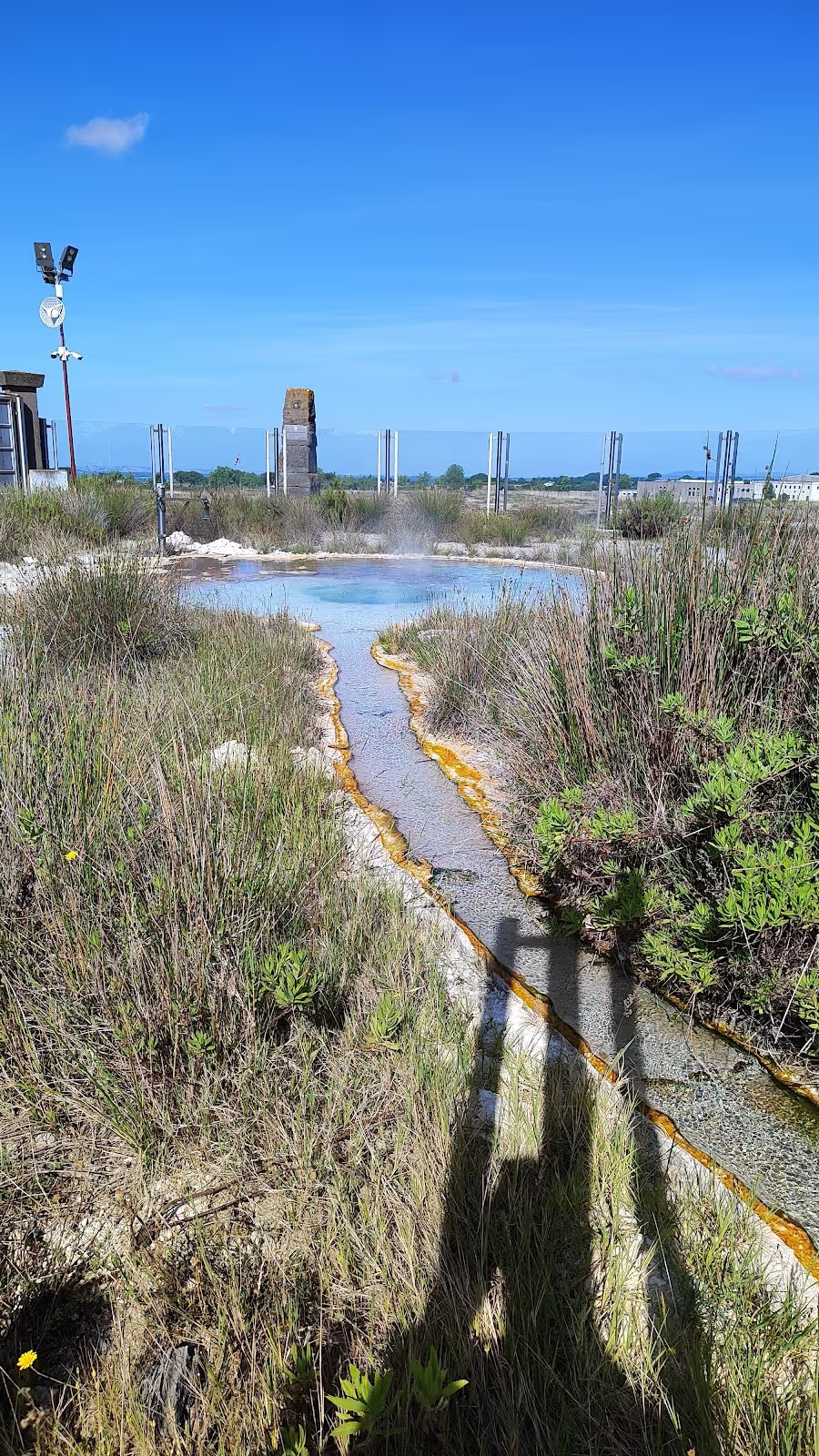
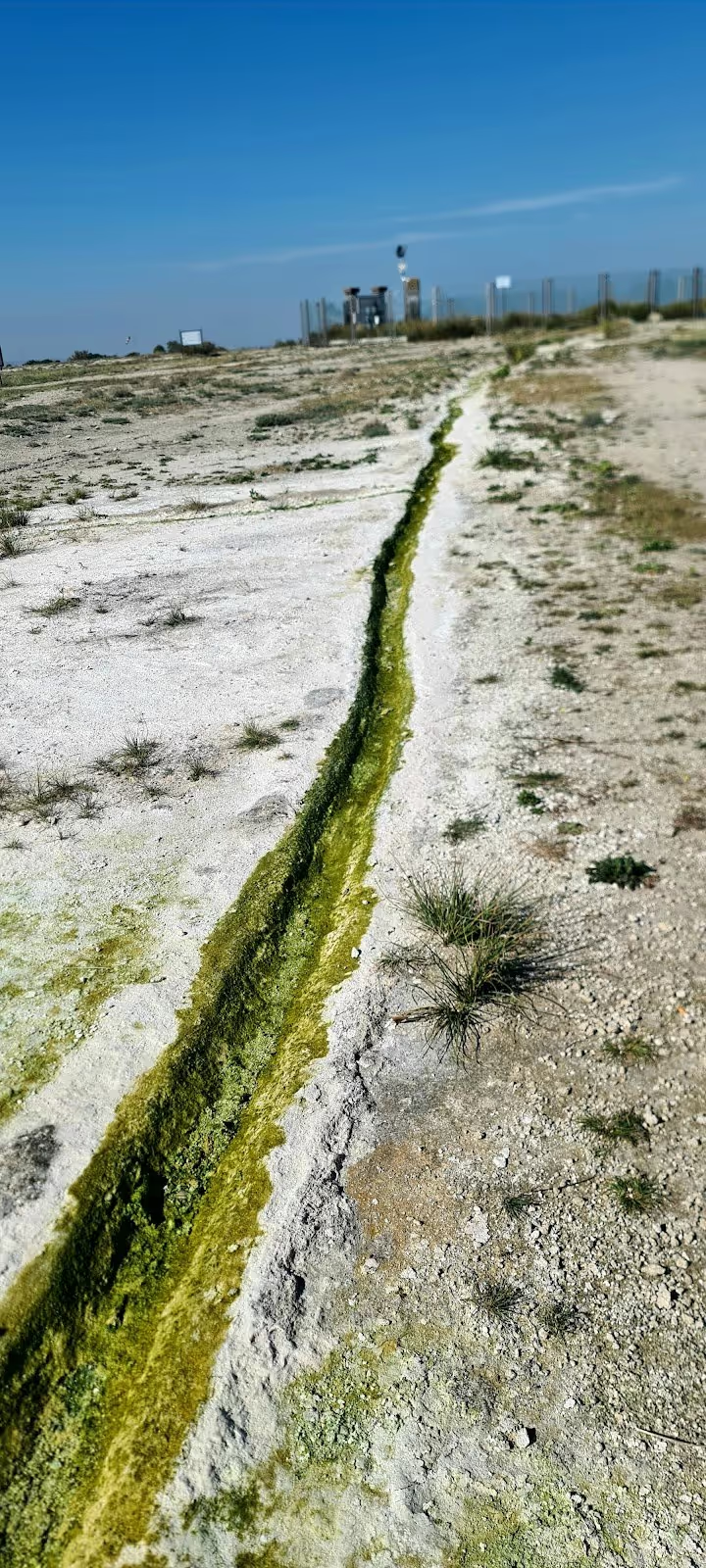
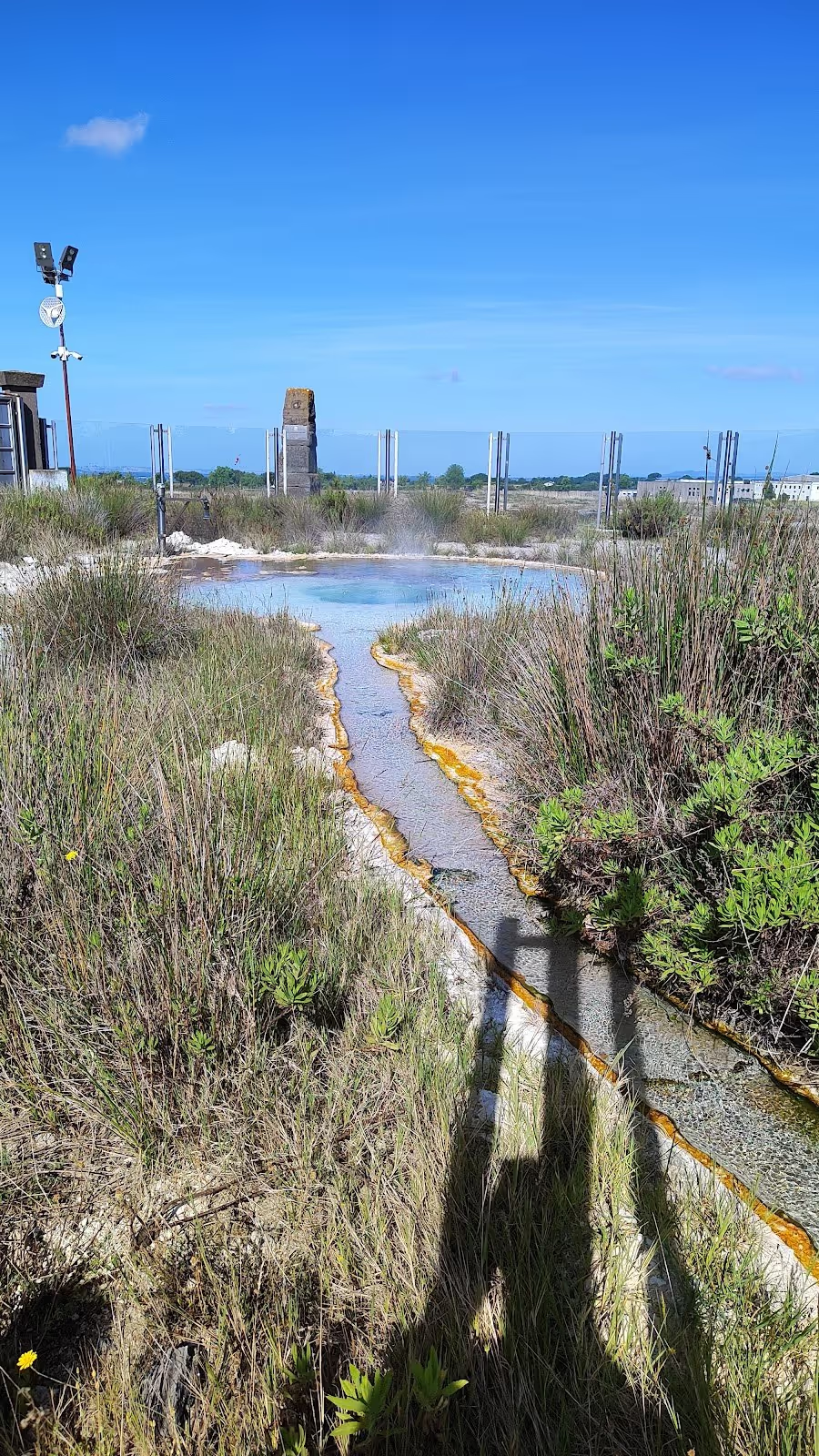
The thermal spring emerges from a natural deep crater at a temperature of 58 degrees Celsius (136 degrees Fahrenheit). The main source crater is enclosed by transparent protective panels that allow visitors to view the bubbling thermal water and rising steam while preventing access to the dangerously hot source. The water is classified as sulphureous-sulphate-bicarbonate-alkaline-earth composition with high mineral content including sulphur, magnesium, calcium, and numerous trace elements. The water has a characteristic sulphur odor and milky-opalescent appearance due to suspended minerals. The site is set within a small protected natural park surrounded by open fields and grassland. The park includes a miniature botanical garden, a small pond, and planted trees providing some shade. At the base of the thermal source crater stands a stone stele inscribed with verses from Dante's Inferno referencing the Bullicame, creating a connection between the literary heritage and the physical landscape.
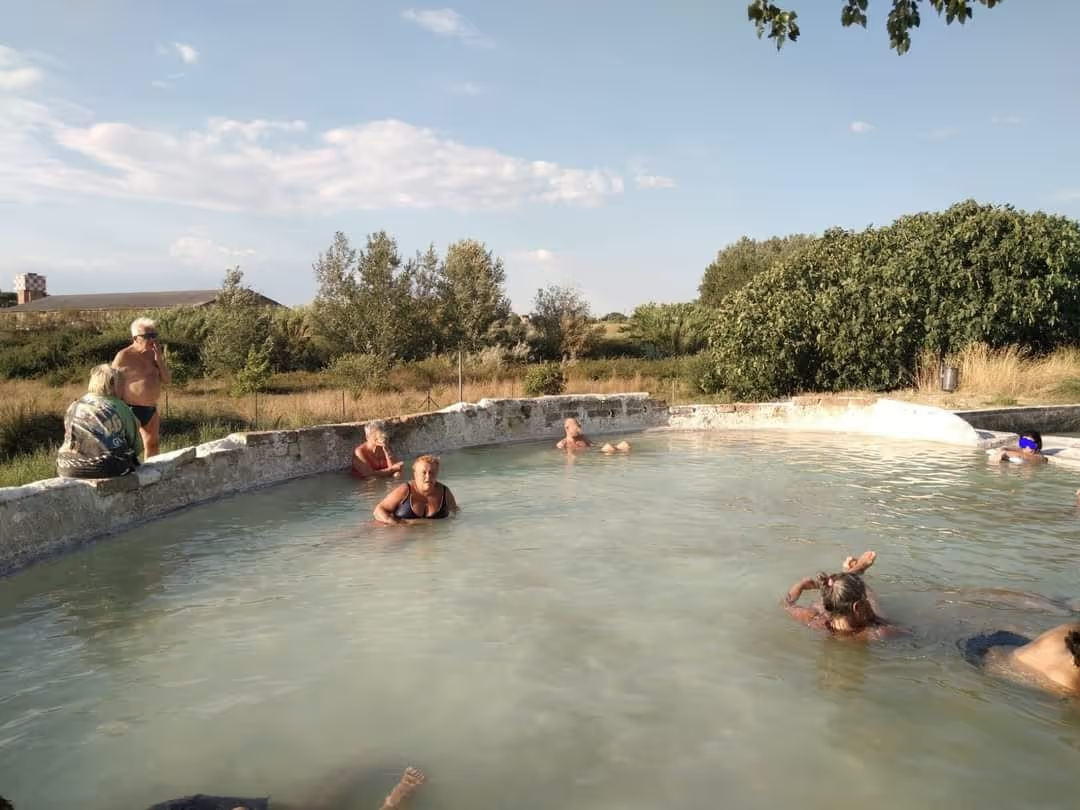
Two open-air bathing pools are fed by the thermal source. The first pool is smaller and circular in shape, positioned directly below the source outlet. This pool receives the hottest water flowing directly from the spring and maintains temperatures close to the source temperature, making it very hot for soaking. The second pool is larger and elongated in shape, resembling a narrow rectangular swimming pool. This pool receives water that has traveled further from the source and cooled somewhat, providing more moderate soaking temperatures comfortable for extended bathing. Both pools have natural stone and mineral deposits on the bottom and sides from centuries of thermal water flow. The pools are accessible for bathing year-round. The mineral-rich water and natural setting provide a rustic thermal bathing experience without modern spa facilities or services. The area closes to the public at 5pm during winter months (approximately November through March) and at 6pm during summer months (approximately April through October). These hours are enforced for visitor safety. Entry to the thermal park and bathing is completely free with no admission fee.
Location & Access
Bullicame Hot Springs is located approximately 2.5 kilometers west of Viterbo city center near the Viterbo military airport in the area known as "Bagni di Viterbo" (Baths of Viterbo), where numerous thermal springs emerge. The site is accessible by car, on foot, bicycle, or local bus. By car from Rome, take the A1 Autostrada north toward Florence and exit at Orte. From Orte, follow signs for Viterbo on the SS675 road which circles around the city. Exit at "Viterbo Centro" onto Strada dei Bagni (Baths Road), which leads toward Terme dei Papi spa resort. Continue past Terme dei Papi for approximately 300 meters. Turn left onto Strada del Bullicame, a narrow paved road that becomes a dirt track. Follow this road for approximately 200 meters to a small gravel parking area at the thermal park entrance. The drive from Rome takes approximately 1.5 hours. Parking at Bullicame is free and unguarded in a small lot adjacent to the springs. Do not leave valuables visible in vehicles.
By train, regional trains operate from Roma Termini station to Viterbo Porta Fiorentina station with journey time of approximately 2 hours. From Viterbo Porta Fiorentina station, the thermal springs are approximately 3.5 kilometers away. Options include walking (approximately 40 to 45 minutes), renting a bicycle, taking a taxi, or using local bus service. The SITA Nord bus line E655 operates between Viterbo city center and Terme dei Papi spa, which is approximately 1 kilometer from Bullicame. From the Terme dei Papi bus stop, walk along Strada dei Bagni and turn onto Strada del Bullicame. Bus service is limited with infrequent schedules, particularly outside peak summer season. Verify current bus times before relying on public transport. Taxis are available in Viterbo and can provide direct transport to the springs. Walking or cycling from Viterbo city center to Bullicame is straightforward via Strada dei Bagni, though the route passes through suburban areas without significant scenery. The walk takes approximately 40 minutes.
The thermal park entrance is marked but signage in the area is limited, making Bullicame somewhat difficult to locate despite proximity to other well-known thermal sites like Piscine Carletti (free thermal pools approximately 500 meters away) and Terme dei Papi (commercial spa resort approximately 300 meters away). When approaching from Viterbo, pass the Aeronautica Militare (Air Force base) on the left, continue past Piscine Carletti, and watch for the left turn onto Strada del Bullicame approximately 500 meters after Carletti. The turn is easy to miss. From the north approaching on Via Cassia, take the Viterbo exit and follow signs toward Tuscania. The Bullicame turn appears after passing the military airport facilities. The parking area is small and can fill during busy periods, particularly on weekends and warm summer afternoons when locals visit the pools. Arrival earlier in the day provides better parking availability and less crowded pools.
The thermal area is a short walk from the parking area across open grass. The site has minimal facilities. There are portable toilets near the parking area but no changing rooms, showers, lockers, food service, or staff on-site. Visitors must be self-sufficient, bringing towels, drinking water, swimwear, sun protection, and any other items needed for a thermal bathing visit. The nearest services including restaurants, cafes, shops, and accommodations are in Viterbo city center approximately 2.5 kilometers away. Terme dei Papi commercial spa resort approximately 300 meters away offers full spa facilities, restaurant, and hotel for visitors seeking more comfort and amenities. The surrounding countryside is open farmland and natural areas. The site attracts a mix of Italian locals from Viterbo who use the springs regularly for health and relaxation, and tourists visiting Viterbo who seek free thermal bathing experiences. The atmosphere is informal and community-oriented rather than commercial. Peak visiting times are weekend afternoons, summer evenings, and warm weather periods.
Suitability & Accessibility
Bullicame Hot Springs suits visitors seeking a free, natural thermal bathing experience in a rustic outdoor setting with historical and literary significance. The site is appropriate for families with older children, adults, couples, and groups who are comfortable in informal outdoor environments without modern facilities. The two pools accommodate different heat tolerances with the smaller circular pool being very hot and the larger elongated pool offering more moderate temperatures. Visitors can move between pools to regulate body temperature and create a natural hot-cold thermal circuit. The spring is popular with Viterbo locals who visit regularly for therapeutic benefits and relaxation, creating a community atmosphere. Tourists interested in Dante's Divine Comedy and medieval pilgrimage history find the literary connection adds cultural depth to the thermal experience.
The site is not wheelchair accessible. The thermal park is accessed across open grass and uneven ground from the parking area. The pools have natural stone edges and bottoms with no steps, handrails, or accessibility infrastructure. Entry to the pools requires stepping over stone edges and navigating potentially slippery mineral deposits. The terrain is not suitable for wheelchairs, walkers, or mobility aids. Visitors with mobility limitations should not attempt to access the pools. The small circular pool is quite hot with water temperatures close to the 58°C source temperature, making it unsuitable for young children, elderly visitors with heat sensitivity, or individuals with cardiovascular or respiratory conditions. The larger pool offers more moderate temperatures but still requires heat tolerance and the ability to safely enter and exit without assistance.
Families with children should supervise closely. There are no lifeguards, staff, or emergency services on-site. Children should be comfortable swimmers and able to tolerate warm water temperatures. The pool bottoms have soft, slimy mineral sediment deposits that require careful walking to avoid slipping. Pool depths vary from shallow areas (approximately 35 to 40 centimeters) to deeper sections (up to 60 centimeters in places). Test depths before allowing children to enter. The natural setting includes the exposed thermal source crater enclosed in transparent panels. This provides educational opportunities to observe geothermal phenomena but requires caution, as touching the panels or attempting to access the source area is dangerous due to extreme water temperatures and scalding risk.
There are no changing facilities, showers, or lockers. Visitors change in vehicles, use towels for privacy, or arrive already wearing swimwear under clothing. Valuables must be monitored or left secured in vehicles, as theft can occur in unguarded parking areas. Most regular visitors leave minimal belongings poolside and watch them from the water. The lack of facilities means the experience is stripped-down and focused entirely on the thermal water and natural environment. This appeals to those seeking authentic, uncommercialized thermal bathing but may disappoint visitors expecting resort-like amenities. The site has trash bins but visitors should pack out personal waste and avoid littering in the protected park area. The pools are cleaned periodically by municipal maintenance, and fresh thermal water flows continuously, providing natural filtration and circulation. The sulphur content and high temperature create an environment that inhibits bacterial growth, though the pools are not chlorinated or chemically treated like commercial pools.
Safety & Etiquette
Bullicame Hot Springs Safety Tips
Bullicame Hot Springs is generally safe when thermal waters are used responsibly and environmental conditions are respected. The main thermal source emerges at 58 degrees Celsius (136 degrees Fahrenheit), which is hot enough to cause severe burns on contact. The source crater is enclosed by transparent protective panels specifically to prevent access to the dangerously hot water. Do not attempt to touch, climb over, or bypass these panels. The smaller circular pool receives water directly from the source and maintains very high temperatures close to source levels. Test water temperature carefully before entering this pool. Prolonged exposure to very hot water can cause overheating, dizziness, nausea, fainting, dehydration, and cardiovascular stress. Limit soaking time in the hottest pool to 10 to 15 minutes at a time, exit to cool down, and return for additional sessions as tolerated. The larger elongated pool offers more moderate temperatures suitable for longer soaking periods, though even this pool can be uncomfortably hot during peak heat hours in summer.
Hydration is critical during thermal bathing. Bring adequate drinking water (at least 1 to 1.5 liters per person) and drink regularly before, during, and after bathing. Dehydration accelerates in hot water and hot weather. Signs of dehydration and overheating include dizziness, confusion, headache, excessive thirst, rapid heartbeat, and nausea. Exit the water immediately if experiencing these symptoms, move to shade, cool down, and drink water. There are no staff, lifeguards, or emergency medical services at the site. In case of emergency, call 118 for medical assistance or 112 for general emergency services. The nearest hospital is in Viterbo city center approximately 2.5 kilometers away. Mobile phone coverage is generally available at the site but may be intermittent. Inform someone of your plans and expected return time before visiting isolated thermal sites.
The pool bottoms and edges have slippery mineral deposits and soft sediment that make footing unstable. Walk carefully when entering, exiting, and moving within pools. Do not run or make sudden movements. Falls in pools can result in injuries, and the hot water amplifies risks if someone is unable to quickly exit after a fall. Supervise children at all times. No lifeguards are present. Children must be able to swim and follow safety instructions. Test pool depths before allowing children to enter, as depths vary and the cloudy mineral water makes it difficult to see the bottom clearly. The pools are not chlorinated or chemically treated. Water quality depends on natural flow, mineral content, and periodic cleaning by municipal workers. The high sulphur content and temperature provide some natural antibacterial effects, but users should still exercise standard hygiene and avoid submerging heads or drinking the water.
Pregnant women, elderly individuals, and people with cardiovascular conditions, high blood pressure, respiratory issues, or heat sensitivity should consult medical professionals before using thermal waters, particularly very hot pools. The extreme heat can stress the cardiovascular system and is not recommended for those with pre-existing conditions. People with open wounds, skin infections, or contagious conditions should not use public thermal pools. The sulphurous water can irritate broken skin and infections can spread in shared bathing environments. Individuals with sulphur allergies or sensitivities should avoid or limit exposure to the waters. The strong sulphur odor indicates high mineral content that can cause reactions in sensitive individuals.
The site closes at 5pm in winter and 6pm in summer for safety reasons. Do not attempt to access the pools after closing hours. Evening and nighttime use without lighting and supervision increases risks of accidents, falls, overheating without assistance, and other hazards. The parking area and surrounding countryside are unguarded and isolated. Do not leave valuables visible in vehicles. Petty theft can occur. Most visitors leave minimal belongings poolside and watch them from the water, or secure items in locked vehicles. Solo visitors should exercise additional caution in isolated areas. Visit during daylight hours when other people are present. The thermal park is a protected natural area. Respect environmental regulations, stay on designated paths, do not damage vegetation or remove natural materials, and dispose of trash properly in provided bins. The area can become crowded during peak times including warm weekend afternoons and summer evenings. Crowding increases noise levels and reduces personal space in pools but does not significantly impact safety. Visitors should maintain courteous behavior and respect quiet zones designated for relaxation. The site has a reputation as a welcoming community space used by regular local bathers. Inappropriate behavior including loud music, alcohol intoxication, or disrespectful conduct is not tolerated and may result in confrontation with other visitors or notification of authorities.