
Quick FactsOverview
About Shima Onsen, Gunma
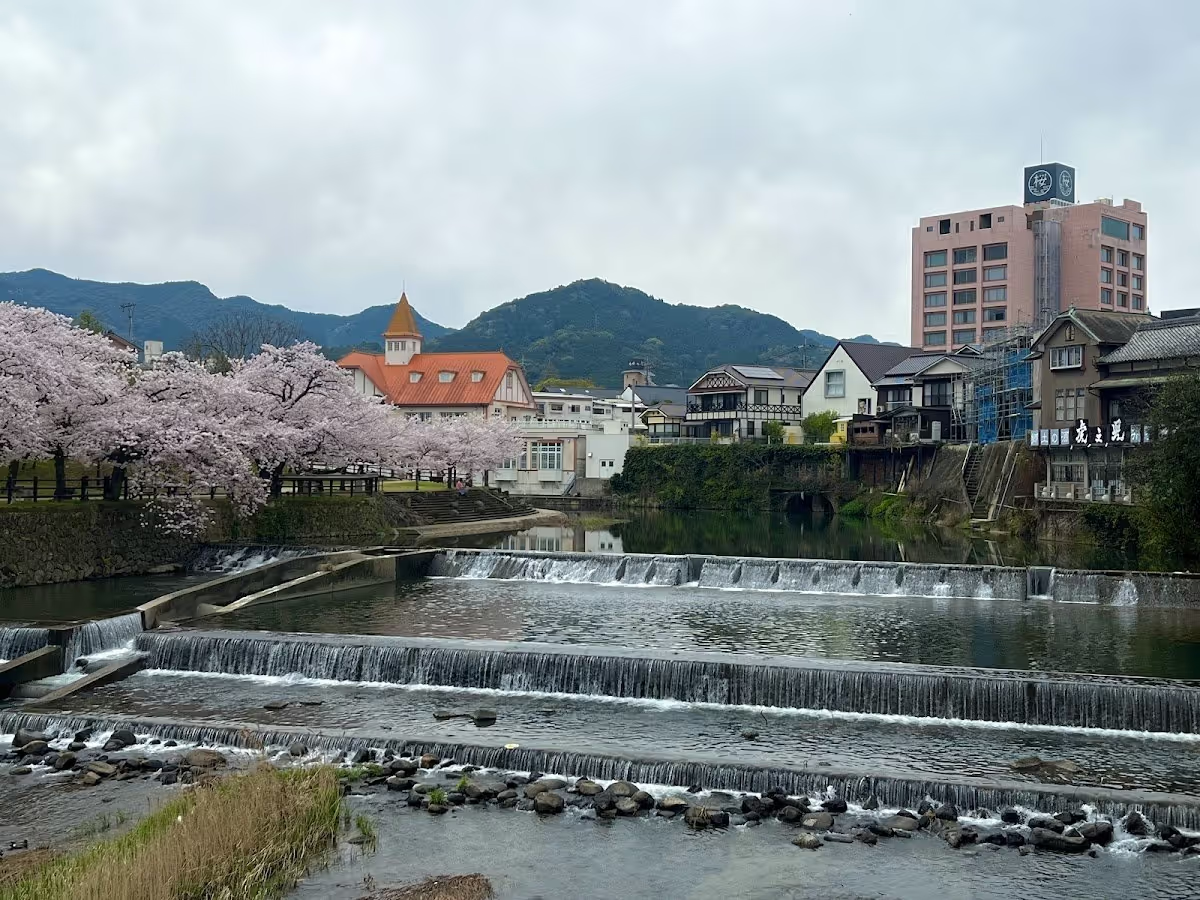
Shima Onsen, Japan is a small hot spring village located in the Nakanojo area of Agatsuma District, Gunma Prefecture, set inside a narrow river gorge about 30 kilometers northwest of Nakanojo town. It sits at a higher elevation than most onsen towns in Gunma and is surrounded by forested ridgelines that keep the valley cool in summer and heavily snow-covered in winter. The village consists of a modest number of ryokan and small guesthouses arranged along the Shima River, with no large resort facilities or commercial development of the kind found at better-known onsen destinations.
The spring water at Shima is clear and odorless, emerging from multiple sources across the valley. It is considered high quality within the onsen tradition of the region and has historically drawn visitors seeking a quieter, less commercialized alternative to the larger towns of Kusatsu and Ikaho. Shima is sometimes described as a place where the ryokan onsen experience remains close to its older form, with small inns, communal baths, and an unhurried pace. The village gained wider recognition after a historic wooden inn within its boundaries was cited as a possible inspiration for a well-known animated film, though this connection is informal and not officially confirmed.
For visitors seeking hot springs near Nakanojo, Shima Onsen is the most significant destination in the immediate area and offers a notably different atmosphere from the more accessible resort towns along the Agatsuma Valley.
Location & Access
Getting to Shima Onsen
Shima Onsen is reached via Nakanojo on the JR Agatsuma Line, which runs west from Takasaki through Shibukawa and into the Agatsuma Valley. From Nakanojo Station, local buses serve the Shima Onsen area, with a journey time of roughly 40 minutes. Bus frequency is limited, particularly outside peak seasons, and visitors should check schedules in advance. The last bus back to Nakanojo can be early in the evening, making an overnight stay the more practical option for most visitors.
Visitors traveling by car can reach Shima from the Kan-Etsu Expressway via the Shibukawa-Ikaho interchange, then follow Route 17 and prefectural roads into the Nakanojo area. The road into the gorge is narrow in places and requires care in winter conditions. Parking is available near the village center and at individual ryokan properties. The journey from central Tokyo by car takes approximately two and a half hours. For those planning to use hot springs near Nakanojo without a car, confirming bus times before departure is essential, as options are limited compared to larger onsen towns in the region.
The village is compact and walkable once you arrive. There are no major commercial facilities in the immediate area, so visitors should carry any supplies they need for their stay or purchase them in Nakanojo before making the journey up into the gorge.
Suitability & Accessibility
Who Shima Onsen Suits
Shima Onsen suits travelers who prefer a quiet, traditional onsen environment over a busy resort town. The village has a small number of ryokan and no large hotels, which means the number of visitors at any one time is limited. This makes it a practical choice for those seeking unhurried access to bathing, personal attention from inn staff, and an environment where the pace is slow and the surroundings are natural.
Families are welcome at several of the ryokan, though the remote location and limited transport options mean it works best for families with older children who are comfortable with a more self-contained stay. Visitors looking for accessible hot springs in Japan should note that the mountain valley setting and older building stock at many ryokan may present challenges for guests with significant mobility limitations. Individual properties vary, and confirming room and bath accessibility directly with the ryokan before booking is recommended.
Solo travelers and couples make up a large share of Shima's visitors. The atmosphere is well suited to those who value the ryokan onsen experience as the primary activity of their stay rather than as one option among many. The village has limited dining options outside of ryokan meal service, and most guests eat breakfast and dinner at their inn as part of a standard package. Among the quieter hot springs in Japan that remain accessible without a long hike, Shima Onsen occupies a distinctive position.
Safety & Etiquette
Safety and Etiquette at Shima Onsen
Shima Onsen is a safe and well-established destination with no particular hazards beyond those common to mountain valley locations in Gunma. Road conditions into the gorge can deteriorate in winter, and visitors driving to Shima between December and March should check road conditions and carry appropriate equipment. Snow accumulation in the valley can be significant. The river running through the village is not a bathing site and should not be treated as one.
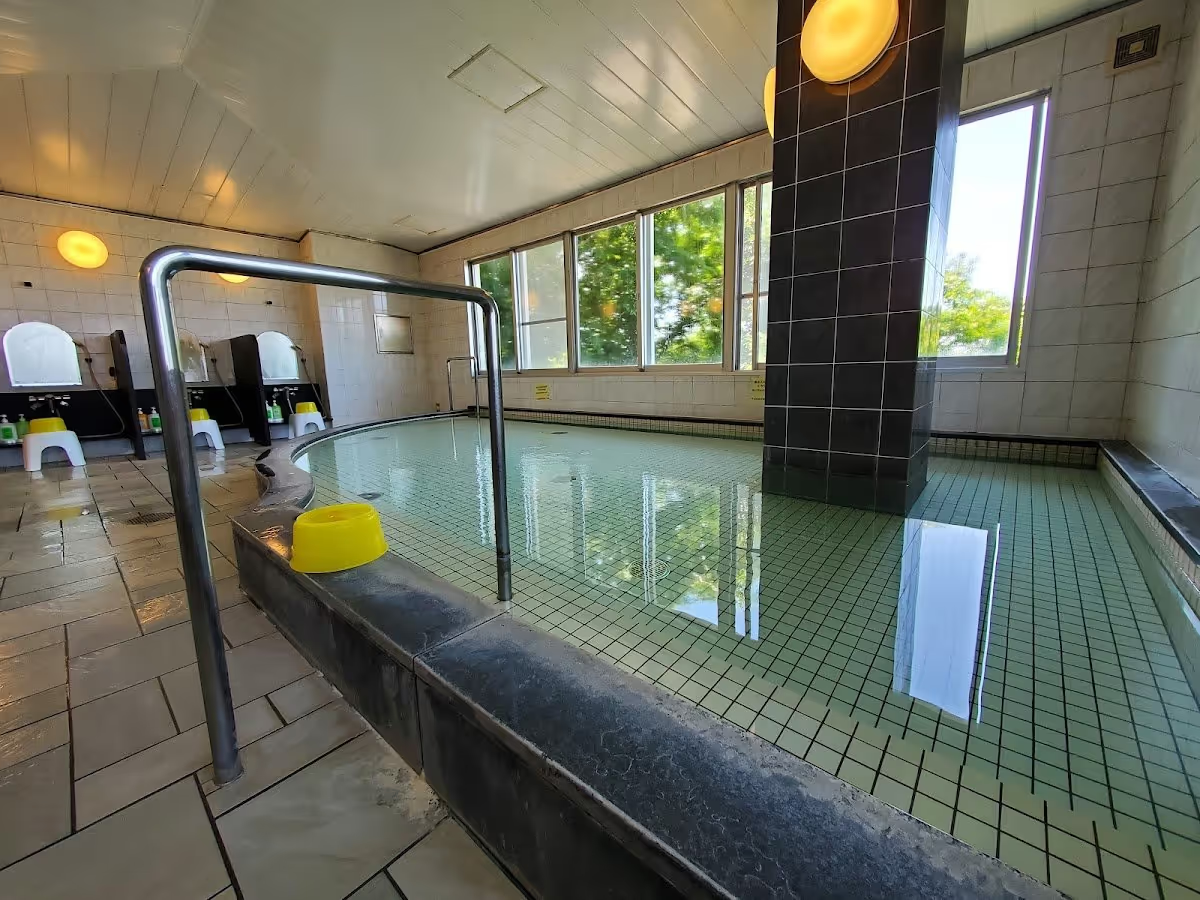
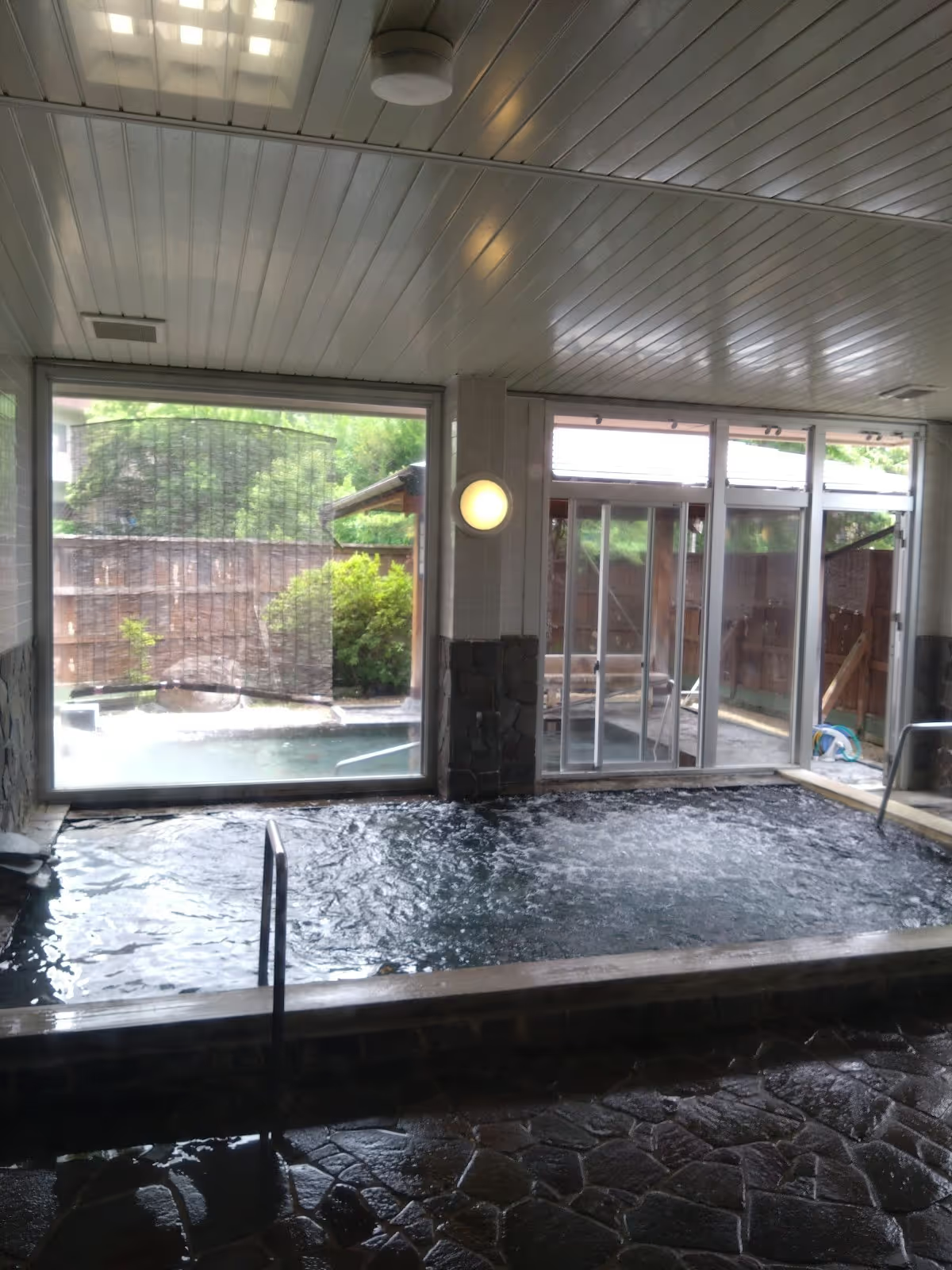
Bathing etiquette at Shima follows standard Japanese onsen practice. All bathers must shower and wash thoroughly before entering the communal baths. Towels must not be placed in the water. Most ryokan in Shima operate gender-separated communal baths, and some may offer private family bath reservations for an additional fee. Confirming bath arrangements at the time of booking is advisable, particularly for families or groups with mixed bathing preferences.
Tattoo policies at Shima ryokan are generally consistent with broader Japanese practice, meaning communal baths typically do not admit tattooed guests. Some smaller inns may offer private bath access as an alternative. Visitors should ask directly when booking if this is a concern. Photography in bathing areas is not permitted under any circumstances.
The clear spring water at Shima is generally mild in its chemical composition compared to the strongly sulfurous springs of nearby Kusatsu, making it well tolerated by most bathers including those with sensitive skin. Nonetheless, prolonged soaking in hot water carries the standard risks of overheating and dehydration. Bathers should limit session length, drink water before and after bathing, and rest between soaks. Children should be supervised at all times in bath facilities, and guests with cardiovascular conditions should seek medical advice before bathing in high-temperature water.
The small scale of Shima means that noise carries easily between properties and along the river path. Keeping voices low in the evening and overnight hours is expected and appreciated by other guests and residents.