Quick FactsOverview
About Thermae-Yu
Thermae-Yu, Japan is a paid natural hot spring complex in Kabukicho, Shinjuku, central Tokyo, drawing hot spring water daily from Nakaizu Onsen in the Izu Peninsula, sourced from 1,500 metres underground. The water, known as Jindai no Yu and described in traditional Japanese wellness literature as the waters of beauty, is a sodium-calcium-sulphate spring classified as alkaline. It is transported to Shinjuku daily and heated to approximately 42 degrees Celsius for use in the main indoor onsen baths and the outdoor rotenburo. This delivery system brings a genuine rural onsen experience into the centre of one of the world's busiest urban districts, making Thermae-Yu one of the most visited onsen facilities in central Tokyo.
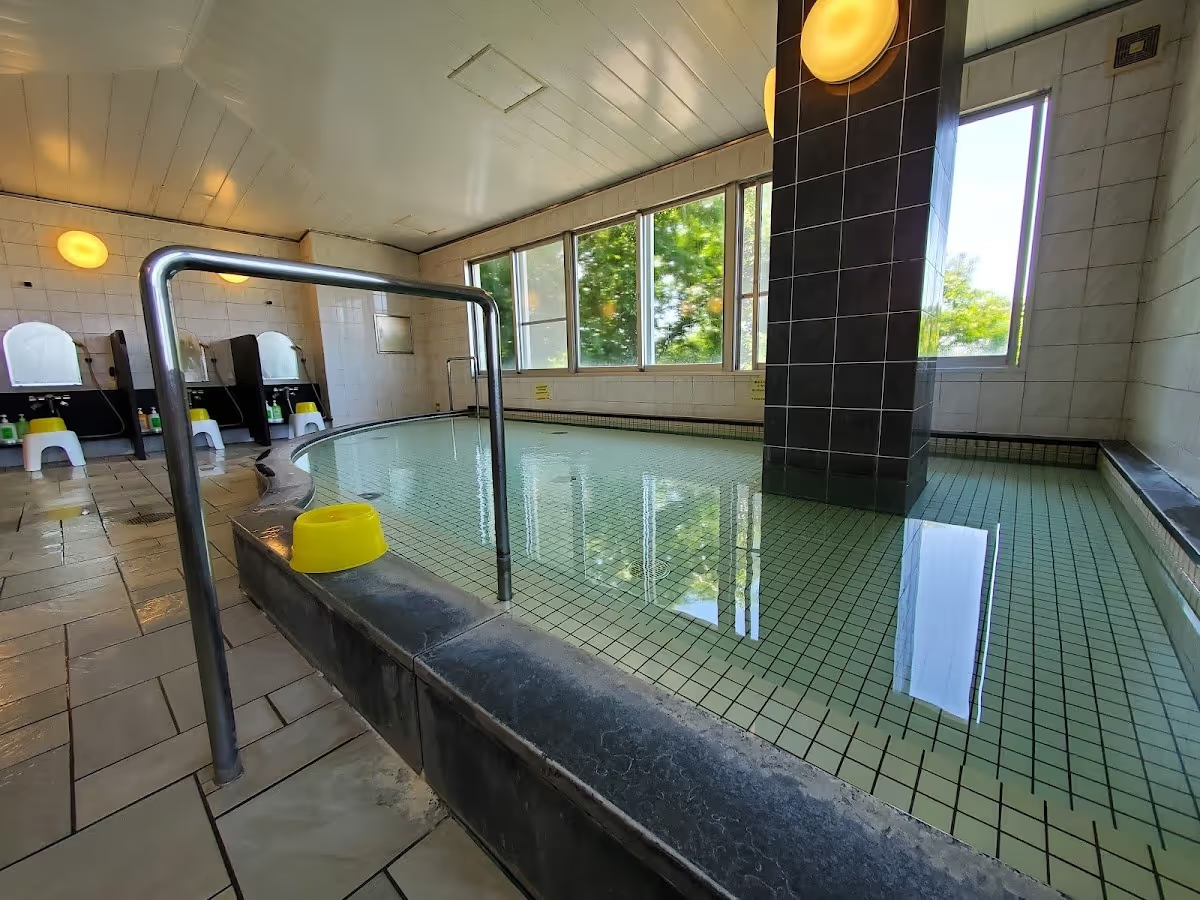
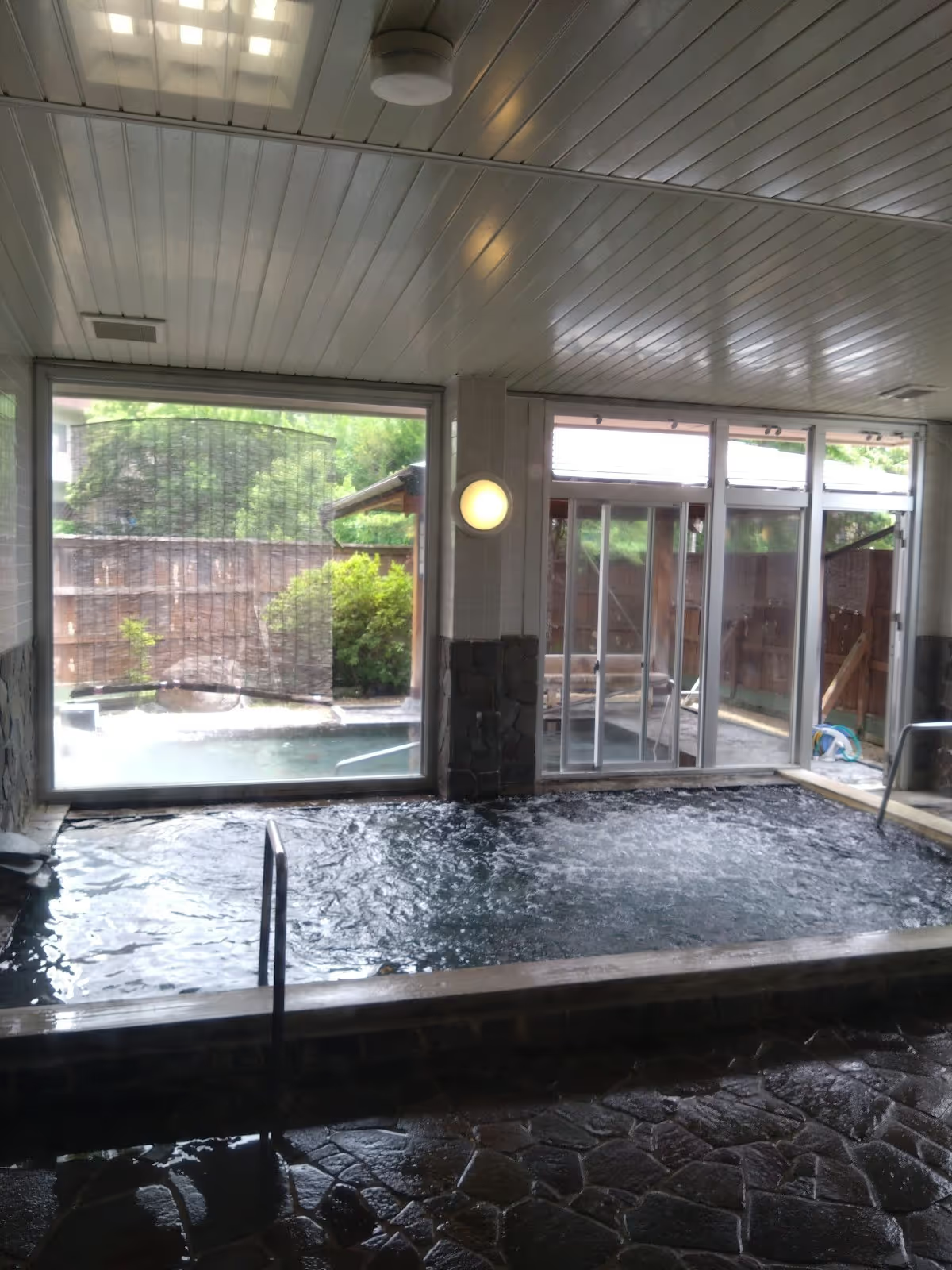
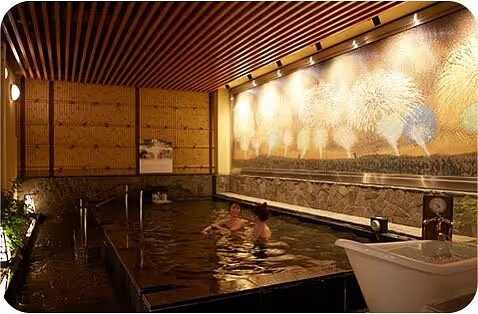
The bathing floor contains six distinct indoor baths with different mineral compositions and functions: a high-concentration carbonated bath at 1,100 ppm CO2 (described as the largest of its type in the Kanto region), a silk bath with fine micro-bubble suspension, a neutral electrolyzed water bath, a cold plunge, jet baths, and the main Nakaizu water bath. The outdoor open-air area provides a rotenburo stone bath fed by the same Nakaizu spring water, set within privacy walls. Women have access to an additional Scandinavian Coral Light Lotion Bath not available in the men's section. Sauna options include a high-temperature dry sauna and a mist sauna; women have access to a separate aroma sauna with salt and mud treatments. The facility occupies multiple floors of a building near Shinjuku Golden Gai and includes restaurants, a juice bar, a lounge with reclining seats, massage services, and a rooftop fitness area on the upper floors.
Thermae-Yu operates under the Japanese onsen tradition: bathing is done in the nude, gender sections are completely segregated, and the spaces are designed for quiet personal rest rather than social activity. As a purpose-built urban onsen complex, it functions as a modern interpretation of the sento and onsen tradition, offering the same bathing culture found in rural hot spring towns but within the centre of Tokyo. Visitors unfamiliar with Japanese onsen etiquette will find English-language guidance available from staff at the entrance.
Location & Access
Getting to Thermae-Yu
Thermae-Yu is located at 1-1-2 Kabukicho, Shinjuku City, Tokyo 160-0021, and is reached most directly from Shinjuku Sanchome Station on the Tokyo Metro Marunouchi and Fukutoshin lines, Exit B2, approximately a 2 to 3 minute walk. From Shinjuku Station, the main hub served by JR and multiple Metro lines, the walk takes approximately 8 to 10 minutes from the East Exit. From Seibu Shinjuku Station on the Seibu Shinjuku Line, the walk is approximately 5 minutes. The building sits just east of Kabukicho's main entertainment block, near the entrance to Shinjuku Golden Gai. The GPS coordinates are 35.6941 degrees North, 139.7016 degrees East.
The approach from Shinjuku Station East Exit passes through a cobbled tree-lined alley running roughly 200 metres before opening onto the street where the facility entrance is located. There is no dedicated parking. Tokyo's Shinjuku area is one of the busiest rail hubs in the world, and the facility is designed to be accessed entirely on foot from the train network. For visitors looking for hot springs near Shinjuku, Thermae-Yu is the closest and most central option, with no comparable natural onsen facility within walking distance of the station.
The facility is open from 11:00 in the morning through to 9:00 the following morning, effectively making it available around the clock apart from a brief cleaning window. A late-night surcharge applies between 1:00 AM and 10:00 AM. This makes it practical for visitors arriving late off long-haul flights into Haneda or Narita who want to bathe and rest before hotel check-in, or for those finishing an evening in Shinjuku and waiting for the first trains. Discounted advance tickets are available online and are valid regardless of the day of the week. The facility is closed for scheduled maintenance on certain days each year; check the official website before visiting.
Suitability & Accessibility
Who Can Visit Thermae-Yu
Thermae-Yu suits adults who are comfortable with nude communal bathing in the Japanese onsen tradition, which is the only bathing mode permitted. Gender sections are completely separated, and the bathing areas are accessed after changing in a gender-specific locker room. Swimwear is not worn in any of the bathing areas; this is a firm rule consistent with the practice at all traditional onsen facilities across Japan. Visitors new to onsen culture will find English-language explanations of the process available from staff at the entrance, and the layout is clearly structured.
Children under the age of 12 are not admitted. Visitors aged 12 to 17 may use the facility only until 20:00 and must be accompanied by a guardian who can show evidence of the relationship. Valid ID showing the visitor's age is required for those under 18. Visitors under 12 should not be brought to the facility; there are no exceptions to the minimum age policy. The upper age limit for any of the baths is not stated, but visitors with cardiac conditions, skin conditions, high blood pressure, or other health conditions that may be affected by prolonged immersion in hot water should consult a doctor before visiting and should inform staff of any health concerns on arrival.
Thermae-Yu has a tattoo policy that is more flexible than most traditional Japanese onsen but still has restrictions. Women with tattoos classed as fashion tattoos may enter but are asked to cover any tattoo larger than 30 by 30 centimetres. Men visiting from abroad as tourists may enter by showing their passport at the entrance and are required to cover tattoos. Visitors with very extensive or large tattoos may be denied entry at staff discretion. Tattoo cover patches are available for purchase at the reception counter. Visitors who are intoxicated will be refused entry regardless of their tattoo status. As an urban onsen, Thermae-Yu is a practical option for those looking to experience hot springs in Japan without travelling to a rural resort, and it is particularly suited to solo travellers, couples, and those on tight itineraries in Tokyo.
Safety & Etiquette
Safety and Etiquette at Thermae-Yu
Thermae-Yu is a well-managed facility operating under established Japanese onsen safety and hygiene standards, and is generally safe to visit for healthy adults. The hot spring water is maintained at approximately 42 degrees Celsius in the main baths, which is at the warmer end of the standard onsen temperature range. First-time onsen visitors should pace their sessions: 15 to 20 minutes in a hot bath followed by a cool-down rest is the typical approach. The cold plunge pool and the lounge recliner areas are there precisely for this purpose. Visitors who feel dizzy, light-headed, or overheated should exit the bath immediately, move to a cooler area, and drink water. Avoid consuming alcohol before bathing; entering while visibly intoxicated is prohibited and grounds for refusal of entry.
Showering thoroughly before entering any bath is mandatory and non-negotiable. This is the single most important rule at any Japanese onsen and is observed universally. The shower stations are equipped with soap, shampoo, and conditioner. Each station has a hand-held shower and a stool; the standard practice is to sit and wash fully before moving to the communal pools. Washing in the communal pool itself is not permitted. Towels must not be placed in the water. In the sauna areas, a small towel is used for sitting and should not touch the heated stone benches directly.
The facility has gender-segregated sections with no crossover between them. This applies to all bathing areas, changing rooms, and sauna facilities. The mixed-gender areas of the building are the lounge floors, the restaurant, and common corridors leading to the changing rooms. Noise levels in the bathing areas should be kept low; this is consistent with the quiet, personal nature of onsen bathing. Phones and cameras are not permitted in the bathing areas. The chip wristband issued at check-in is used to settle all purchases at the end of the visit; keep it on at all times while in the facility. Visitors with visible tattoos who have not covered them may be asked to leave without refund, so cover tattoos before entering the changing area.
Thermae-Yu uses a late-night surcharge system: staying between 1:00 AM and 10:00 AM incurs an additional charge beyond the standard entry price. This is charged automatically and settled at check-out. Plan your departure time in advance to avoid unexpected costs. The lounge recliner areas are available for overnight stays if you choose to remain until the surcharge period ends, and many visitors use the facility this way after late-night arrivals in Tokyo. The facility's restaurants serve food at various hours; check the current menu and hours of each of the four dining areas on arrival.