Thermal Springs at Vulcano Island, Italy
Volcanic mud pool, warm sulphurous sea, and fumaroles near Vulcano's port. Mud pool intermittently closed since 2020. Acque Calde warm sea remains open.
Porto di Levante, 98050 Lipari (ME), Sicily, Italy
Milazzo
IT
38.404
14.967
Wild / Natural
Free
Easy to reach (no hike)
Be mindful
Swimsuit required
false
false
Europe
thermal-springs-vulcano-island-italy
What are the Thermal Springs at Vulcano Island?
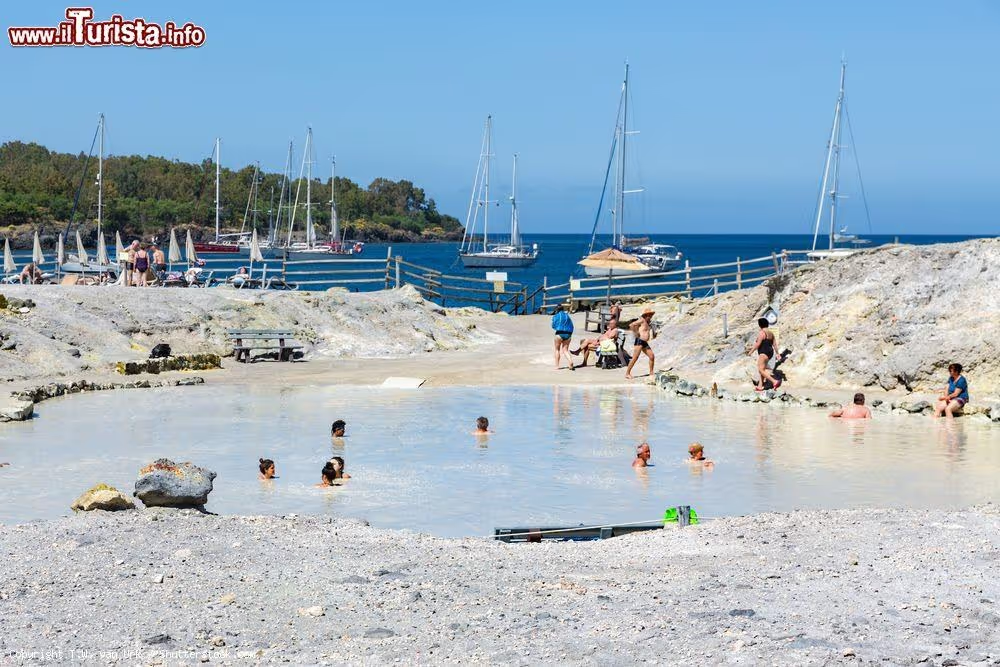
The thermal springs on Vulcano are a group of volcanic geothermal features in the Baia di Levante, a few minutes walk from Porto di Levante ferry terminal. Three zones make up the site: the Pozza dei Fanghi, a natural mud pool fed by sulphurous vapours and briny volcanic water at around 28 degrees; the Acque Calde, a stretch of sea warmed by submarine fumaroles; and an onshore fumarole field. The water is classified as sulphurous-salso-bromo-iodine and weakly radioactive. The Pozza dei Fanghi has been intermittently closed since 2020.
Is the Vulcano mud pool (Pozza dei Fanghi) open?
The Pozza dei Fanghi mud pool has been closed periodically since early 2020 due to volcanic gas emissions above safe limits. In May 2025 the closure order was revoked and the site briefly reopened, but it was reported closed again by June 12 2025. As of April 2026 the status is uncertain. Always verify the current status with the managing company Geoterme Vulcano at geoterme.it before planning a visit specifically for the mud pool. The Acque Calde warm sea and the fumaroles remain separately accessible and are not affected by mud pool closures.
Are the Vulcano thermal springs suitable for children?
No. The Vulcano thermal springs are not recommended for young children. Visitor accounts and on-site advisories note that families with small children have been turned away, and that the hot zones and volcanic gas emissions present genuine safety hazards. The Pozza dei Fanghi water is mildly radioactive, and the maximum recommended bathing time for adults is 10-15 minutes. Pregnant women must not enter the mud pool. Adults should maintain close supervision of older children who do visit the Acque Calde beach area, keeping them away from submarine vent zones.
How do I get to Vulcano from the Sicilian mainland?
Vulcano is reached from Milazzo, Sicily, which is the main hydrofoil and ferry hub for the Aeolian Islands. Liberty Lines operates regular hydrofoils from Milazzo to Vulcano with a crossing time of approximately 45 minutes; ferries are slower. Milazzo is approximately 45 minutes from Messina by train or car. From Naples and other mainland ports, seasonal hydrofoil services also connect to the Aeolians in summer. Once on Vulcano, the thermal area is a five to ten minute walk from the Porto di Levante terminal.
Do I need to prepare anything special for the Vulcano thermal baths?
2026-09-21
Updated September 21, 2026
Thermal Springs at Vulcano Island, Italy
Volcanic mud pool, warm sulphurous sea, and fumaroles near Vulcano's port. Mud pool intermittently closed since 2020. Acque Calde warm sea remains open.
Access Level
Easy to reach (no hike)
What to Wear
Swimsuit required
Address
Porto di Levante, 98050 Lipari (ME), Sicily, Italy
Find a place to stay
Compare prices near this exact spot across Booking.com, Expedia and more.
See nearby stays →
Overview
About Thermal Springs at Vulcano Island
Thermal Springs at Vulcano Island, Italy are a group of volcanic geothermal features in the Baia di Levante on the northeastern coast of Vulcano, one of the seven main Aeolian Islands off Sicily. The island is part of the active volcanic arc of the Aeolian archipelago, and its thermal waters have been known and used for therapeutic purposes since antiquity. According to Roman mythology, Vulcano was the forge of Vulcan, god of fire; the island also gives all volcanoes in the world their name. The most recent major eruption of Gran Cratere della Fossa occurred between 1888 and 1890.
The thermal area divides into three zones. The Pozza dei Fanghi is a natural mud pool near the port, fed by sulphurous vapours, briny water, and volcanic clay. Water is sulphurous-salso-bromo-iodine and weakly radioactive, reaching 40-80 degrees Celsius at source and around 28 degrees in the pool. The Acque Calde is the adjacent warm sea section, heated by submarine fumaroles. The third zone is the onshore fumarole field.
The Pozza dei Fanghi has been subject to periodic closures since 2020 due to elevated volcanic gas emissions. It briefly reopened in May 2025 but was closed again by June 2025. Always confirm current status with Geoterme Vulcano before visiting. The Acque Calde and fumarole field remain accessible year-round.
Location & Access
Getting to Thermal Springs at Vulcano Island
Thermal Springs at Vulcano Island are within easy walking distance of the Porto di Levante ferry terminal on Vulcano, which is the first stop for ferries and hydrofoils departing from Milazzo on the Sicilian coast. From the terminal, turn right and follow the cobbled path between the yellow sulphur-stained rock mounds toward the Laghetto di Fanghi sign; the mud pool area is a five to ten minute walk. Vulcano is accessed from Milazzo by hydrofoil in approximately 45 minutes or by slower ferry. Liberty Lines operates a regular service. Milazzo is reached from Messina by train or road in approximately 45 minutes.
The island is small enough to navigate entirely on foot. No car is needed. The thermal area is at the northeastern end of the island near Porto di Levante, while the famous black sand beach of Spiaggia Sabbie Nere is at Porto di Ponente, approximately one kilometre away on the western side. The Gran Cratere della Fossa hike begins from Strada Provinciale and takes about 60-90 minutes to the summit, offering views across the Aeolian Islands. Hot springs near Milazzo are often planned as a day trip from the Sicilian coast, and Vulcano is conveniently the closest Aeolian island to the mainland.
The Acque Calde warm sea beach has sunloungers, umbrellas, and a small bar on site. Coin-operated showers are available; bring coins. The sulphur smell is strong throughout the thermal area and noticeable from the port.
Suitability & Accessibility
Who the Vulcano Island Thermal Springs Suit
Thermal Springs at Vulcano Island suit travellers seeking a raw, geologically active thermal experience with historic character. The site is a genuinely natural volcanic phenomenon rather than a managed spa; expect an elemental setting, a strong sulphur smell, and conditions that change based on the volcanic activity beneath the surface. It is well suited to adults comfortable with unmediated natural environments who want to combine thermal bathing with the crater hike and a day on the black sand beaches.
The site is not recommended for children. Multiple visitor accounts and on-site advisories note that families with young children have been turned away, and that the hot zones and gas emissions present genuine hazards for small children who cannot reliably stay clear of the dangerous areas. The water is also mildly radioactive. Adults should observe the recommended maximum time in the Pozza dei Fanghi of 10-15 minutes per session; pregnant women should avoid it entirely.
Wheelchair access is not confirmed. The thermal beach and volcanic terrain are uneven, and the approach path is not adapted for mobility aids. Those looking for accessible terme in Italy will find more suitable facilities at managed resorts. The Acque Calde warm sea is reached across a black sand beach, which is not wheelchair accessible in the standard sense.
Safety & Etiquette
Thermal Springs at Vulcano Island Safety Tips
Thermal Springs at Vulcano Island require careful attention to multiple real hazards. The water in the Pozza dei Fanghi is mildly radioactive; signs on site recommend a maximum of 10-15 minutes in the pool per session. Pregnant women must not use the mud pool. The strong concentration of hydrogen sulphide (H2S) gas emitted by the fumaroles can cause nausea and headaches in sensitive individuals; those with respiratory conditions should keep a safe distance. Do not place your face close to any fumarole vent.
In the Acque Calde warm sea zone, water temperatures vary significantly by location. Near active submarine vents, temperatures can be high enough to cause scalding. Always test the temperature before settling in any area, and wear water shoes to protect your feet from hot sand and rocks near vent areas. Do not wear silver jewellery to the site; the sulphur will turn it black immediately and the smell may linger for days in both jewellery and swimwear. Bring old swimwear you can dispose of afterward.
The Pozza dei Fanghi has been closed since 2020 with brief intermittent reopenings. Check the current status with Geoterme Vulcano before travelling specifically for the mud pool. The Acque Calde beach and fumaroles are separately accessible and do not depend on the mud pool's operating status. Coin-operated showers are essential after any contact with the sulphurous water; buy tokens at the entrance before entering. The smell of sulphur is notoriously persistent and can last several days on skin and hair.
Frequently Asked Questions
1
What are the Thermal Springs at Vulcano Island?
The thermal springs on Vulcano are a group of volcanic geothermal features in the Baia di Levante, a few minutes walk from Porto di Levante ferry terminal. Three zones make up the site: the Pozza dei Fanghi, a natural mud pool fed by sulphurous vapours and briny volcanic water at around 28 degrees; the Acque Calde, a stretch of sea warmed by submarine fumaroles; and an onshore fumarole field. The water is classified as sulphurous-salso-bromo-iodine and weakly radioactive. The Pozza dei Fanghi has been intermittently closed since 2020.
2
Is the Vulcano mud pool (Pozza dei Fanghi) open?
The Pozza dei Fanghi mud pool has been closed periodically since early 2020 due to volcanic gas emissions above safe limits. In May 2025 the closure order was revoked and the site briefly reopened, but it was reported closed again by June 12 2025. As of April 2026 the status is uncertain. Always verify the current status with the managing company Geoterme Vulcano at geoterme.it before planning a visit specifically for the mud pool. The Acque Calde warm sea and the fumaroles remain separately accessible and are not affected by mud pool closures.
3
Are the Vulcano thermal springs suitable for children?
No. The Vulcano thermal springs are not recommended for young children. Visitor accounts and on-site advisories note that families with small children have been turned away, and that the hot zones and volcanic gas emissions present genuine safety hazards. The Pozza dei Fanghi water is mildly radioactive, and the maximum recommended bathing time for adults is 10-15 minutes. Pregnant women must not enter the mud pool. Adults should maintain close supervision of older children who do visit the Acque Calde beach area, keeping them away from submarine vent zones.
4
How do I get to Vulcano from the Sicilian mainland?
Vulcano is reached from Milazzo, Sicily, which is the main hydrofoil and ferry hub for the Aeolian Islands. Liberty Lines operates regular hydrofoils from Milazzo to Vulcano with a crossing time of approximately 45 minutes; ferries are slower. Milazzo is approximately 45 minutes from Messina by train or car. From Naples and other mainland ports, seasonal hydrofoil services also connect to the Aeolians in summer. Once on Vulcano, the thermal area is a five to ten minute walk from the Porto di Levante terminal.
5
Do I need to prepare anything special for the Vulcano thermal baths?
Several preparations are strongly recommended. Bring old swimwear that you can discard afterward, as the sulphur smell is extremely difficult to remove and will likely render your swimsuit unwearable. Do not wear silver jewellery anywhere near the site, as sulphur turns it black instantly. Bring water shoes for the hot sand and rocky vent areas. Buy shower tokens at the entrance before entering the water. Carry drinking water and bring a change of clothes. Accept that a faint sulphur smell may remain on your skin for several days regardless of how thoroughly you shower.
Gallery
No pictures available for this hot spring.
Location
Address:
Porto di Levante, 98050 Lipari (ME), Sicily, Italy
Find a place to stay
Compare prices near this exact spot across Booking.com, Expedia and more.
See nearby stays →
38.404
14.967
Thermal Springs at Vulcano Island, Italy
Text LinkPorto di Levante, 98050 Lipari (ME), Sicily, Italy
More hot springs in Italy
Some accommodation links on this site are affiliate links. If you book through them, we may earn a small commission at no additional cost to you. This helps keep hotspringsguides.com free to use.